Beatles Anthology 4: The Archival Miscalculation
When Apple Records announced Anthology 4 in August 2025, the rollout had all the hallmarks of a major Beatles event. Cryptic teasers appeared on the band’s website and social media pages on August 19th—numbers 1 through 4 cycling across screens, Instagram slideshows filling those digits with covers from the previous Anthology albums. Hours later, photos of the vinyl and CD releases leaked online. Two days after that, on August 21st, came the official announcement: Anthology 4 would arrive November 21st, coinciding with the Disney+ premiere of a remastered and expanded version of the original Beatles Anthology documentary series.
For fans who had waited nearly three decades since Anthology 3 wrapped up the series in 1996, this felt like Christmas morning. The original trilogy had been a masterclass in archival release, giving devotees unprecedented access to alternate takes, studio banter, and the creative evolution of songs they’d loved for decades. The promise of a fourth volume suggested there were still treasures hidden in the Abbey Road vaults, still stories left to tell about the greatest band in rock history.
What arrived on November 21st, however, proved to be something quite different—and the backlash was both swift and severe.
📼 The Content Problem: Recycling Instead of Revealing 📼
The fundamental issue with Anthology 4 became clear the moment the track listing was revealed: unlike its predecessors, this wasn’t primarily an archival excavation. Of the album’s 36 tracks, only 13 are genuinely unreleased material. The remaining 23 tracks had already seen the light of day through various official releases over the years. For a fanbase that has spent decades analyzing every available recording, hunting down bootlegs, and memorizing the details of every session, this felt less like revelation and more like repackaging.
The Anthology series had established a clear contract with its audience. These weren’t greatest-hits compilations or remastered editions of familiar albums—they were windows into the creative process, chances to hear the Beatles work through arrangements, try different approaches, and gradually shape the songs that would define popular music. Anthology 1 (1995), Anthology 2 (1996), and Anthology 3 (1996) had delivered on that promise with remarkable consistency, offering fans the kind of material they couldn’t get anywhere else over those two landmark years.
Anthology 4 broke that contract. While it did include some new material spanning the Beatles’ recording years from 1963 to 1969, the ratio felt wrong. Fans weren’t necessarily opposed to revisiting previously released material if it was recontextualized or presented alongside substantial new discoveries. But when over 60% of an Anthology album consists of tracks you already own, it’s hard not to feel shortchanged.
🎵 The Missing Pieces: What Fans Really Wanted 🎵
The disappointment deepened when fans considered what wasn’t included. The Beatles’ recording archive is legendary not just for what’s been released, but for what remains locked away—and fans have specific wish lists built up over decades of reading session logs, bootleg trading, and interviews with engineers and insiders.
At the top of many lists: “Revolution” take 20, a longer, slower, bluesier version of the song that John Lennon reportedly preferred to the harder-rocking single version. Beatles scholars have discussed this take for years, but it’s never received an official release. Similarly, “Helter Skelter” take 3—a marathon 27-minute version that represents the song in its most raw, extended form—has been the white whale of Beatles outtakes. The abbreviated version that appeared on The Beatles (the “White Album”) is intense enough; fans have long wondered what the full, unhinged performance sounded like when the band was pushing into uncharted sonic territory.
Perhaps most frustratingly absent was “Carnival of Light,” Paul McCartney’s 14-minute experimental piece recorded during the Sgt. Pepper’s Lonely Hearts Club Band sessions in January 1967. Created for an avant-garde event called the Million Volt Light and Sound Rave, the piece features distorted guitars, organ, percussion, and the Beatles’ voices played backwards and at varying speeds. Since then, McCartney has described it as “indulgent” but interesting, and while he’s expressed willingness to release it over the years, the other Beatles (particularly George Harrison before his death) were reportedly less enthusiastic. Its inclusion would have represented a genuinely significant archival discovery—a substantial piece of previously unheard Beatles music from their creative peak.
These aren’t obscure fan fantasies; they’re well-documented recordings that have been discussed in Beatles literature for decades. Their absence from Anthology 4 made the album feel safe, conservative, and unwilling to take risks or truly delve into the deeper corners of the archive. If you’re going to break a nearly 30-year silence and add a fourth volume to a beloved series, shouldn’t you be bringing something genuinely substantial to the table?
💰 The Box Set Backlash: Making Fans Pay Twice 💰
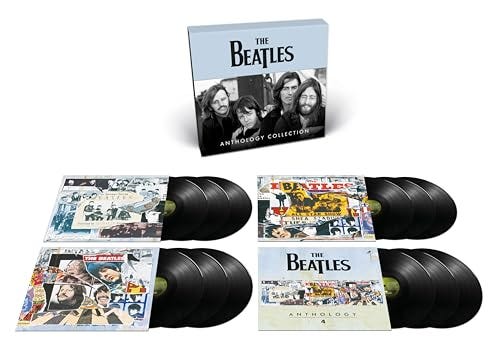
As if the content concerns weren’t enough, Apple Records’ initial release strategy created a separate wave of criticism. When pre-orders opened, the only physical option available was the Anthology Collection box set—a package containing all four Anthology volumes bundled together at a premium price.
For fans who had purchased Anthology 1, 2, and 3 when they were released in the mid-1990s—and quite possibly upgraded them to CD, vinyl, or digital formats over the intervening years—this felt like a calculated insult. The implicit message was clear: if you want access to Anthology 4 in a physical format, you’ll need to buy three albums you already own. The box set pricing meant fans were looking at spending hundreds of dollars, with the majority of that cost going toward redundant copies of material they’d owned for decades.
The fan outcry was immediate and loud enough to force a reversal. Apple Records eventually announced that Anthology 4 would be available as a standalone release in both 2-CD and 3-LP formats. But the damage was done. The fact that the label’s first instinct had been to bundle the new material with old products suggested a cynical approach to the fanbase—treating them as consumers to be maximally monetized rather than devoted enthusiasts whose passion had kept the Beatles commercially relevant for over half a century.
The standalone release announcement was positioned as Apple Records “listening to fans,” but it’s hard to give them much credit for eventually doing what should have been the obvious approach from the beginning. Many fans noted the irony: the Beatles themselves had often battled against exploitative industry practices, yet here was their own label employing the very tactics they might have rebelled against.
This essay continues below. Click on the title of this product to view on Amazon. As an Amazon Associate, I earn from qualifying purchases.
Anthology Collection (2025 Edition)
🔊 The Remix Controversy: Clearing the Air on “Free as a Bird” 🔊
Anthology 4* does include one genuinely novel element: new remixes of “Free as a Bird” and “Real Love,” the two “reunion” tracks created in the mid-1990s when the surviving Beatles constructed new songs around John Lennon’s demo recordings. Both songs have been reworked by Jeff Lynne using the same machine-learning audio restoration technology that powered 2023’s “Now and Then”—technology capable of extracting Lennon’s vocals from the original cassette demos with unprecedented clarity.
The results generated genuinely divided opinions, particularly regarding “Free as a Bird.” Many critics praised the 2025 remix as a significant improvement over the original 1995 version. The technological advances of the past three decades allowed engineers to isolate Lennon’s voice with remarkable precision, removing hiss, hum, and the sonic degradation that comes from a home-recorded cassette tape that had sat in an archive for years. Some reviewers described hearing nuances in Lennon’s vocal performance that were simply inaudible in the original mix—subtle inflections, breathing, the intimate quality of his delivery that had been buried under layers of noise and the additional instrumentation the surviving Beatles added.
However, not everyone viewed crystal clarity as an unqualified improvement. A vocal contingent of fans and critics argued that something intangible had been lost in the pursuit of technical perfection. The original “Free as a Bird,” with all its imperfections and its slightly ghostly quality, felt like a genuine artifact—a transmission from the past, with all the distance and melancholy that implies. The hiss and imperfection were part of the emotional texture, reminding listeners that this was indeed a voice from beyond, a fragment preserved and honored rather than corrected and modernized.
These critics worried that the new mix, in its eagerness to make Lennon’s voice as clear as possible, had inadvertently stripped away some of the charm and poignancy that made the original release so moving. There’s something about imperfection that can be profound—the scratch in a vinyl record, the tape hiss on an old recording, the artifacts that remind us we’re hearing something that traveled through time to reach us. By removing all of that, does the technology bring us closer to Lennon, or does it create a kind of uncanny valley where we’re hearing something that’s almost too clean, too processed, too detached from its origins?
It’s worth noting that this debate isn’t new. Similar arguments have erupted with nearly every Beatles remix project, from the controversial stereo mixes of the 1980s to Giles Martin’s recent remixes of Sgt. Pepper and the White Album. There’s always a tension between preservation and presentation, between honoring the original artifact and using new tools to realize what the creators might have done if they’d had access to modern technology. With “Free as a Bird” and “Real Love,” that tension is particularly acute because we’re dealing with songs that already exist in a liminal space—neither truly vintage Beatles recordings nor purely posthumous constructions, but something in between.
🎭 What It All Means: Legacy Versus Commerce 🎭
Stepping back from the specific complaints, Anthology 4 reveals something important about how legacy artists’ catalogs are managed in the streaming era, and how even the Beatles—perhaps especially the Beatles—aren’t immune to the tensions between artistic integrity and commercial opportunity.
The original Anthology project in the mid-1990s felt like an event driven by the artists themselves, particularly Paul McCartney and George Harrison, who were deeply involved in selecting material and shaping the narrative. It coincided with a genuine reunion moment, with the surviving Beatles coming together to create new music and reflect on their shared history. There was a sense of purpose beyond mere commerce—a desire to tell their story on their own terms, to reclaim their narrative from decades of outside interpretation, and to give fans access to the creative process in a way that few artists had ever attempted.
Anthology 4, arriving in 2025, feels different. McCartney is now the only surviving Beatle, and while he presumably approved the project, it’s hard not to sense the influence of corporate decision-making. The heavy reliance on previously released material, the initial box-set-only strategy, the calculated timing to coincide with the documentary rerelease—these all suggest a project conceived primarily as a revenue stream rather than an artistic statement.
This isn’t to say there’s no value in Anthology 4. The 13 unreleased tracks are presumably interesting to serious fans, and the new remixes represent a legitimate attempt to use modern technology to enhance historical recordings. But the ratio feels off, the priorities seem skewed, and the overall package suggests that whoever was driving these decisions didn’t quite understand—or didn’t quite care—what made the original Anthology series special.
The fan backlash, particularly the successful campaign to force a standalone release, demonstrates something heartening: Beatles fans aren’t a passive audience to be manipulated. They have expectations built on decades of engagement with the music, they understand the difference between a genuine archival project and a cash grab, and they’re willing to make noise when they feel the Beatles legacy is being mishandled. Their response to Anthology 4 was essentially a demand: if you’re going to use the Beatles name, live up to the standards that name represents.
🎸 The Final Verdict: A Lesser Addition to a Legendary Series 🎸
Anthology 4 ultimately stands as the weakest entry in a series that had previously set a high bar for how major artists could present their archival material. It’s not without merit—those 13 unreleased tracks will find their audience, and the remix debate around “Free as a Bird” touches on interesting questions about preservation versus restoration. But measured against what it could have been, against what fans hoped for, and against the standard set by its predecessors, it falls disappointingly short.
The album feels like a product caught between eras and purposes. It’s not quite the archival treasure trove that the first three volumes represented, with their deep dives into alternate takes and working versions. Nor is it a bold reimagining of the Beatles catalog for a new generation, leveraging modern technology to create something genuinely novel. Instead, it occupies an uncomfortable middle ground—a collection that’s too familiar to excite longtime fans and too fragmented to serve as anyone’s introduction to the Beatles’ creative process.
For a band whose creative ambition knew few boundaries, whose willingness to experiment and push boundaries defined their career, this fourth volume feels unusually safe and calculated. The Beatles themselves were never about playing it safe. They were about taking risks, following their creative instincts even when those instincts led them into unfamiliar territory, and treating their audience as intelligent listeners capable of appreciating complexity and experimentation.
Anthology 4 doesn’t embody those values. It’s a product that seems more concerned with managing a brand than honoring a legacy, more interested in generating revenue than in genuinely illuminating the Beatles story. The fan backlash reveals that the audience recognizes this, and they’re not willing to accept it quietly.
Perhaps the most damning assessment is this: Anthology 4 is a Beatles release that feels inessential. Not everything needs to be released, not every anniversary needs to be commemorated with new product, and not every archival project serves the music or the legacy. Sometimes the most respectful approach is to leave well enough alone, to let the existing catalog speak for itself, and to only return to the vault when you have something genuinely significant to offer.
The Beatles deserve better. Their fans certainly do. And the Anthology series, which concluded so strongly in 1996, deserved a better coda than this.