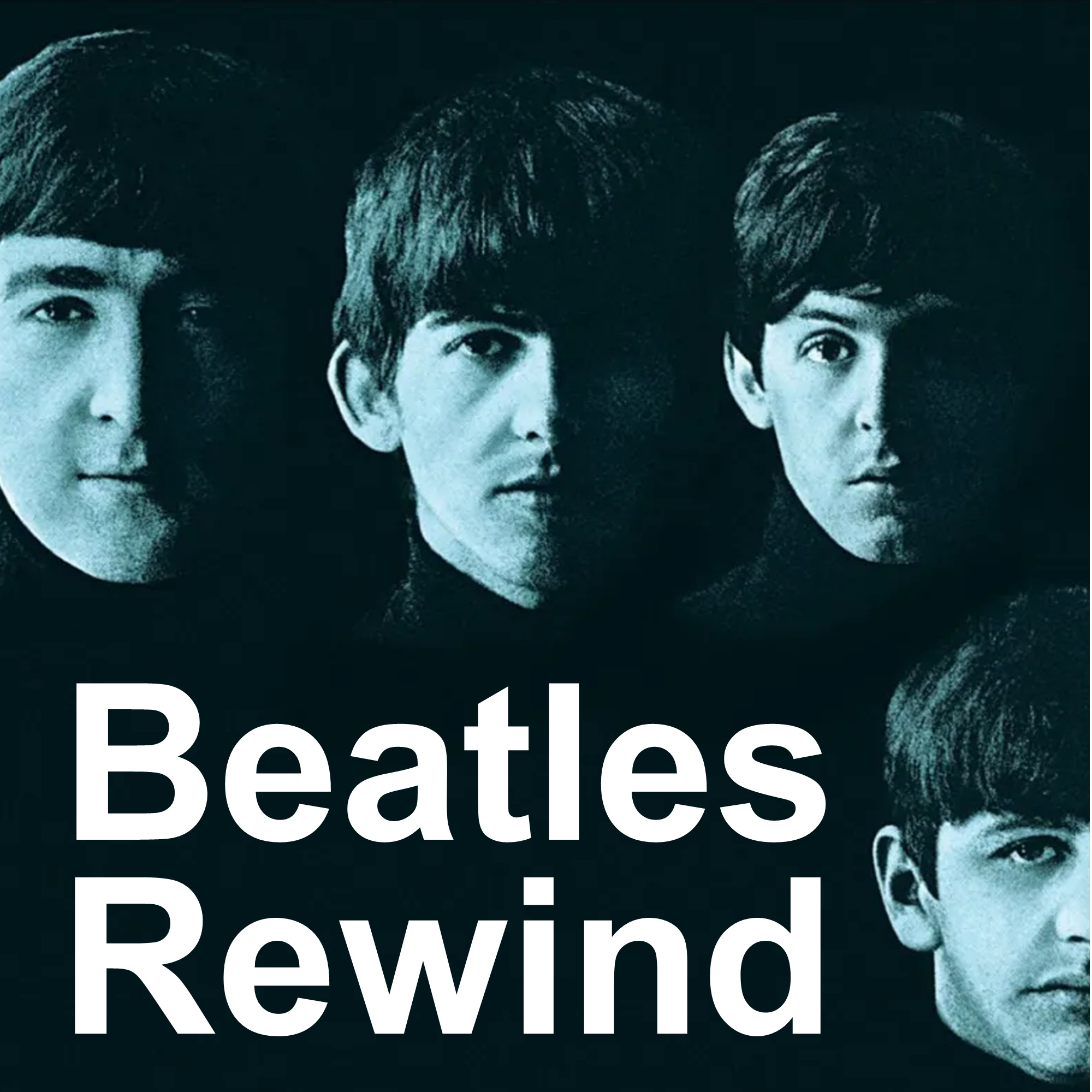
The irony is almost too perfect: The Beatles, arguably the most innovative and groundbreaking songwriters in rock history, were sued for plagiarism. The band that revolutionized popular music, that created entirely new approaches to recording, arrangement, and composition, stood accused of stealing from others. Yet this apparent contradiction reveals something fundamental about artistic creation itself—that even the most original artists build upon what came before, and that the line between inspiration and theft has always been blurrier than copyright law suggests.
As Picasso famously said, “Good artists copy, great artists steal.”
Later, Steve Jobs admitted: “Good artists copy, great artists steal. And we have always been shameless about stealing great ideas.”
Indeed, truly great artists don’t just imitate - they take an idea or technique, absorb it completely, and transform it into something so thoroughly their own that it becomes, sometimes, unrecognizable as borrowing. It’s about appropriation and transformation rather than mere copying.
Paul McCartney acknowledged this reality with characteristic directness, stating the Beatles would take from others just as others took from them Rolling Stone, while John Lennon dismissed concerns about exploitation by calling their borrowing an act of love rather than theft. But five Beatles songs in particular pushed the boundaries of acceptable borrowing—sometimes crossing into territory that demanded legal resolution.
The Practice Was Part of Rock and Roll’s DNA
Before examining specific Beatles songs, it’s essential to understand the context. In the early days of rock and roll, musical borrowing wasn’t just common—it was foundational to the genre. Lennon explained that in their early years, he would often carry another artist’s song in his head, only consciously changing the melody when recording because he knew legal action might otherwise follow. This wasn’t cynical calculation; it was how young musicians learned their craft, absorbing influences and gradually developing their own voices.
The blues tradition, from which rock and roll emerged, had always treated songs as communal property, with artists freely adapting and reinterpreting each other’s work. Chord progressions, bass lines, and guitar licks circulated like currency. What made borrowing acceptable—or transformed it into something original—was what the artist did with the source material.
1. “My Sweet Lord”: The Most Expensive Melody in Rock History
George Harrison’s 1970 solo single became the first number-one hit by a former Beatle, a spiritual anthem that blended Christian and Hindu traditions. 🙏 It also became the most notorious plagiarism case in rock history.
Just months after its release, Harrison was sued by the publisher of “He’s So Fine,” a 1963 hit by the Chiffons, for copyright infringement. ⚖️ The similarities were undeniable—both songs shared nearly identical melodic motifs repeated in the same sequence, set to identical harmonies. On August 31, 1976, Judge Richard Owen ruled that Harrison had subconsciously plagiarized the Chiffons’ tune.
Harrison maintained his innocence. 🎼 He claimed he’d drawn inspiration from the Christian hymn “Oh Happy Day” by the Edwin Hawkins Singers during a 1969 European tour, not from the Chiffons. In his autobiography, Harrison acknowledged that once people pointed out the similarity, he wondered why he hadn’t noticed it himself, admitting it would have been easy to change a note here or there without affecting the song’s emotional impact.
The judge ruled that Harrison had access to “He’s So Fine” and that the songs were virtually identical in musical terms, making it copyright infringement even though accomplished subconsciously. 💰 Harrison was ultimately ordered to pay $587,000 to ABKCO Industries, owned by former Beatles manager Allen Klein, who had purchased the rights in 1978. The case dragged on until 1998, becoming one of the longest in U.S. legal history.
Ringo Starr defended his bandmate, noting that countless songs have been written with other melodies in mind, and calling Harrison very unlucky that someone wanted to make his song a test case. 🥁 The verdict established the controversial legal concept of “subconscious plagiarism,” with profound implications for the entire music industry.
2. “Come Together”: Chuck Berry’s Lyrical Ghost
The opening track of Abbey Road demonstrates how a single borrowed line can haunt a songwriter. 👻 The 1969 classic included a line directly lifted from Chuck Berry’s 1956 song “You Can’t Catch Me”. Berry sang about a flat-top character moving up, and Lennon’s version featured “Here come old flat-top/He come groovin’ up slowly,” a fairly direct lift of Berry’s “Here come a flat-top/He was movin’ up with me”.
When Lennon played an early version for the other Beatles, McCartney immediately pointed out its similarity to Berry’s song, and Lennon acknowledged it was rather close, prompting them to slow it down and add a swampy bass line to differentiate it. 🐊 But the lyrical similarity remained.
Morris Levy, whose company Big Seven Music Corporation owned the rights to “You Can’t Catch Me,” took Lennon to court. 📄 Wanting to avoid protracted litigation, Lennon agreed to record at least three songs owned by Levy’s company on his next release. He recorded a straightforward cover of “You Can’t Catch Me” along with two versions of Lee Dorsey’s “Ya Ya” to satisfy the settlement.
Lennon later defended the song, stating he’d been writing obscurely around an old Chuck Berry concept, and that while he left the flat-top line in, the song remained independent of Berry or anyone else. 🎤 He noted he could have changed it to something like “Here comes old iron face,” but felt the song stood on its own merits.
3. “I Saw Her Standing There”: The Bass Line That Fit Perfectly
The opening track of the Beatles’ debut album Please Please Me features one of rock’s most instantly recognizable bass lines. 🎸 It’s also one of the most honest cases of musical borrowing in the Beatles catalog, because Paul McCartney openly admitted he used the bass riff from Chuck Berry’s “Talkin’ About You,” playing exactly the same notes, and that it fitted their song perfectly.
This exemplifies McCartney’s philosophy about borrowing bass lines—that if a particular bass pattern serves a song ideally, there’s nothing wrong with adapting it. 🎶 Bass lines and drum patterns have traditionally enjoyed more legal protection than melodies, as they’re considered more functional than expressive. The Beatles learned they could lift these elements without running afoul of copyright law.
The lyrics to “I Saw Her Standing There” also resemble those of Berry’s “Little Queenie”, adding another layer of Berry’s influence to what became a Beatles classic. 💿 Yet because the overall composition was sufficiently different, and because bass lines weren’t typically protected, no lawsuit materialized. The song became an enduring testament to the Beatles’ ability to transform influences into something distinctly their own.
4. “I Feel Fine”: Bobby Parker’s Borrowed Riff
Bobby Parker’s 1961 song “Watch Your Step” featured a propulsive guitar riff that the Beatles performed live in 1961 and 1962, before borrowing its central lick for “I Feel Fine.” 🎵 The similarity is unmistakable—both songs open with a racing, repetitive guitar figure built on similar scales.
John Lennon named “Watch Your Step” as one of his favorite songs, and the Beatles made no secret of their admiration for Parker’s work. 🤝 When asked about the similarity in an MSNBC interview, Parker noted that McCartney was his friend, but jokingly suggested they should have provided some compensation for songs they borrowed from. The interviewer blurted out that they’d stolen his riff, to which Parker humorously replied he was pleased the interviewer said it.
The forever upbeat Bobby Parker was simply flattered that the Beatles liked his work, and when he met them, he was happy to settle the matter with a handshake—though he joked they might have lined his hand with something more substantial. 😊 This gentlemanly resolution reflects the earlier era’s more casual approach to musical borrowing, before massive commercial stakes made every similarity a potential lawsuit.
Lennon’s love for the riff was so strong that he later adapted the guitar part again for a second Beatles single, “Day Tripper”. 🚂
5. “Revolution”: The Intro That Sounds Too Familiar
The introduction to “Revolution” bears a striking resemblance to Pee Wee Crayton’s 1954 blues single “Do Unto Others”. 🎼 The opening guitar figure is so similar that listeners familiar with Crayton’s work immediately recognize the connection. Whether this constitutes homage or appropriation depends largely on one’s generosity of interpretation.
Unlike the other examples, this borrowing generated no lawsuit and little public controversy. 📰 Crayton’s recording remained relatively obscure compared to the Beatles’ global reach, and by 1968, when “Revolution” was released, the song existed in a different commercial universe than Crayton’s blues recordings. But the similarity is undeniable, representing one of the Beatles’ more blatant appropriations of earlier blues material.
The track demonstrates how the Beatles absorbed not just the spirit of blues and early rock and roll, but sometimes their specific musical phrases, recontextualizing them for a new generation of listeners who might never encounter the originals. 🔄
Honorable Mention: “Lady Madonna” and the Fats Domino Tribute
While not exactly theft, “Lady Madonna” deserves mention as a song so obviously inspired by another artist that it completed a full circle of influence. 🔁 McCartney recalled sitting at the piano trying to write a bluesy boogie-woogie piece that reminded him of Fats Domino, so he started singing a Fats Domino impression, which took his voice to an unusual place. He based the piano part on Humphrey Lyttelton’s 1956 rendition of “Bad Penny Blues”, which had been produced by George Martin soon after he took over at Parlophone.
The tribute was so obvious that Fats Domino covered the song on his 1968 album, with McCartney possibly telling producer Richard Perry that the song was “based on Fats,” leading to Domino’s version. 🎹 Domino’s recording became his 77th and final U.S. chart hit, a poignant ending to a legendary career, sparked by a Beatles song written in his honor.
The Larger Irony: Innovation Through Imitation
The supreme irony of the Beatles’ borrowing is that it coexisted with unprecedented originality. 🌟 The same band that lifted bass lines and guitar licks also invented backward tape loops, created the concept album, pioneered multitrack recording techniques, and fundamentally changed what popular music could be. They transformed the cultural landscape while simultaneously drawing from it.
McCartney admitted the Beatles were “the biggest nickers in town,” calling them “plagiarists extraordinaire”. 🎭 Yet this admission doesn’t diminish their achievements—it contextualizes them. The Beatles didn’t create in a vacuum; they stood on the shoulders of Elvis Presley, Chuck Berry, Little Richard, Carl Perkins, and countless other pioneers of rock and roll and rhythm and blues.
What distinguished the Beatles wasn’t that they never borrowed—it was what they did with what they borrowed. 🔨 They absorbed influences like sponges, then squeezed out something transformed and new. When they took Chuck Berry’s flat-top character, they placed him in a surreal, psychedelic context that was quintessentially Beatles. When they borrowed bass lines, they embedded them in songs with sophisticated harmonies and production techniques that Berry never employed.
The My Sweet Lord case established that even subconscious borrowing constitutes infringement, a ruling that sent shockwaves through the music industry. ⚡ How can artists be held liable for melodies they don’t consciously remember hearing? The verdict suggested that musicians needed to police not just their conscious creative choices, but their musical memories—an impossible standard that highlighted the absurdity of applying rigid legal frameworks to the fluid, cumulative process of artistic creation.
Yet despite the lawsuits and settlements, the Beatles’ legacy of borrowing and transforming ultimately enriched popular music rather than impoverishing it. 🌍 They introduced millions of young listeners to the sounds of Chuck Berry, Fats Domino, and other pioneers by filtering those influences through their own sensibility. They proved that originality isn’t about creating from nothing—it’s about the alchemy of combining influences in ways that produce something genuinely new.
The story of Beatles borrowing is ultimately about the nature of creativity itself. 🎨 All artists are thieves to some degree, collecting sounds and ideas and remixing them into novel combinations. The Beatles simply did it more successfully, more visibly, and more lucratively than most—which made them bigger targets when questions of ownership arose. But their willingness to acknowledge influences, even as they transformed them beyond recognition, stands as a more honest approach to artistic creation than the fiction of pure originality that copyright law often assumes.
In the end, the Beatles weren’t attacked for plagiarism despite being innovative—their innovation made their borrowing more visible and their success made it more legally consequential. 🎯 The greatest songwriters of the 20th century learned by imitating their heroes, then surpassed them by making those influences unrecognizable. That’s not irony—that’s how music has always worked.