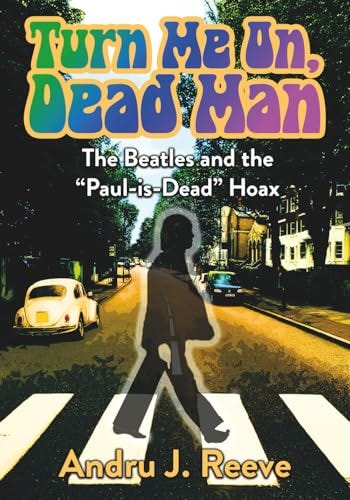
In the fall of 1969, a rumor swept across college campuses and airwaves that would become one of the most bizarre episodes in rock history. The story: Paul McCartney of the Beatles had died in a car crash on November 9, 1966, and the surviving band members—John, George, and Ringo—had replaced him with a double, an imposter named William Campbell, who had supposedly won a Paul McCartney impersonator contest. Students and disc jockeys pored over album covers and songs claiming to uncover hidden “clues” that the Beatles had supposedly planted to reveal the truth.
Fans played “Revolution 9” backwards to hear a phrase that sounded like “turn me on, dead man.” They examined the Abbey Road album cover, which showed Paul walking barefoot (symbolizing death in various cultures) and out of step with the others, creating what believers saw as a funeral procession. They noted that on the Sgt. Pepper cover, Paul wore a patch reading “OPD” (allegedly meaning “Officially Pronounced Dead.”) Headlines in major newspapers, radio shows that devoted entire programs to “clue hunting,” and late-night dorm room debates fueled by everything from marijuana to genuine confusion turned the rumor into a cultural phenomenon that consumed the final months of the 1960s and became a defining moment in the relationship between rock stars and their fans.
The book Turn Me On, Dead Man by Andru J. Reeve tells the complete story of how the “Paul-Is-Dead” hoax spread like wildfire across America and beyond, and why so many otherwise rational people—college students, journalists, and even some music industry professionals—believed it despite all evidence to the contrary. From a phone call to Detroit radio station WKNR-FM by a caller who identified himself only as “Tom” and claimed to have proof of Paul’s death, to a satirical review by University of Michigan student Fred LaBour published in The Michigan Daily on October 14, 1969, that was meant as a clever joke but became front-page news across America and was treated as investigative journalism, the book traces the rumor’s rapid rise through the media ecosystem of 1969. Reeve meticulously documents how LaBour’s fictional “clues”—including the license plate “28IF” on Abbey Road (Paul would have been 28 if he had lived, though he was actually 27), the supposed hidden messages in “Strawberry Fields Forever” (where Lennon allegedly says “I buried Paul” though he actually says “cranberry sauce”), and the “Paul is dead” proclamation supposedly audible when “Number 9” from “Revolution 9” is played backwards—were picked up by major newspapers like The New York Times, television programs including national news broadcasts, and radio stations across the country desperate for sensational Beatles content that would drive ratings and keep audiences engaged.
Mr. Reeve also publishes a Substack devoted to the topic: https://andrujreeve.substack.com/archive
With careful research and rare material from newspapers, radio transcripts, internal Beatles press statements, and firsthand accounts from DJs like Russ Gibb of WKNR-FM, students who participated in the frenzy, and reporters who covered the story as it exploded across the media landscape, Reeve reconstructs how a six-week period from mid-October to late November 1969 convinced thousands—perhaps millions—of young people that the Beatles were sending secret messages about their fallen bandmate through their album art and music. The book reveals how WKNR-FM devoted hours of programming to “clue hunting” with listeners calling in with their own discoveries, how Life magazine sent a photographer to Paul’s farm in Scotland to prove he was alive (resulting in a famous cover story where an irritated Paul McCartney complained about the intrusion into his privacy), and how the Beatles’ own press office at Apple Corps struggled to respond to the mounting hysteria without adding fuel to the fire or seeming dismissive of fans’ genuine concerns. Apple’s press officer, Derek Taylor, found himself in the impossible position of denying something so absurd that denial itself seemed to lend it credibility, while the Beatles themselves were torn between amusement and frustration at the whole affair.
This essay continues below. Click on the title of this book to view on Amazon. As an Amazon Associate, I earn from qualifying purchases.
Turn Me On, Dead Man: The Beatles and the “Paul-is-Dead” Hoax
More than a simple catalog of supposed “clues” found on Magical Mystery Tour (where Paul allegedly appears without shoes on the inside gatefold), The White Album (where “Glass Onion” contains the line “here’s another clue for you all, the walrus was Paul,” with believers claiming the walrus was a symbol of death in some cultures), and Abbey Road (the most scrutinized cover, where the four Beatles cross the street in what was interpreted as a funeral procession with John as the priest, Ringo as the undertaker, Paul as the corpse, and George as the gravedigger), this book explores the rumor’s social and cultural impact during a turbulent time in American history. It examines why people in 1969—a year marked by Woodstock, the Manson murders, and growing disillusionment with Vietnam—were ready to believe in elaborate conspiracies about their favorite band. Perhaps because the Beatles themselves had become almost mythological figures, transcending mere celebrity to become cultural touchstones whose every move was analyzed for deeper meaning, or because the counterculture was primed to see hidden meanings everywhere and reject official narratives from the establishment. The “Paul is dead” phenomenon fit perfectly into a worldview that believed nothing was as it seemed, that secret messages were everywhere, and that the truth was always hidden just beneath the surface.
Reeve analyzes how the media fueled the fire by treating the hoax as legitimate news rather than dismissing it as obvious nonsense—editors and producers recognized that Beatles content sold papers and attracted viewers, and the stranger the story, the better it performed. Networks and stations gave airtime to “experts” analyzing backwards recordings and album cover symbolism with the same seriousness they might apply to political analysis. The book examines what this phenomenon reveals about fame, rumor, and the power of storytelling in popular culture, particularly in an era before the internet when rumors could spread rapidly through radio and word-of-mouth but couldn’t be easily fact-checked. The book also considers how the hoax reflected deeper anxieties about authenticity in an age of increasing media manipulation, celebrity death (coming just a few years after the shocking assassinations of JFK, MLK, and RFK), and whether the Beatles had somehow fundamentally changed after 1966 when they stopped touring and their music became more experimental, studio-bound, and psychedelic. To many fans, the post-1966 Beatles seemed like different people—more serious, more artistic, less accessible—and the “Paul is dead” theory provided a literal explanation for this perceived transformation.
Reeve also explores the role of Fred LaBour’s original Michigan Daily article in extraordinary detail, showing how a college student’s satirical joke became the blueprint for the entire conspiracy theory. LaBour had written his review as an elaborate put-on, inventing clues and meanings out of whole cloth, but his deadpan delivery and seemingly meticulous attention to detail convinced readers he was serious. Within days, his “discoveries” were being repeated on radio stations as fact, and LaBour found himself at the center of a media storm he never intended to create. The book includes interviews with LaBour (who went on to become a bluegrass musician under the name “Too Slim”) reflecting on his role in the phenomenon and his mixed feelings about having started one of rock’s most enduring conspiracy theories.
Detailed, witty, and grounded in historical evidence rather than speculation, Turn Me On, Dead Man preserves one of the strangest and most fascinating chapters in the history of rock music and mass media—a moment when critical thinking gave way to collective delusion, when album covers became religious texts to be decoded with Talmudic intensity, when spinning records backwards became a form of investigative journalism, and when a generation proved that they wanted to believe in something extraordinary, even if that something was the death and replacement of a beloved musician. Reeve’s account is both a time capsule of late-1960s media culture, capturing the paranoia, playfulness, and desperation for meaning that characterized the era, and a cautionary tale about how easily misinformation can spread when people want to believe, when media outlets prioritize sensationalism over fact-checking, and when the line between entertainment and reality becomes dangerously blurred. In many ways, the “Paul is dead” hoax of 1969 prefigured our current age of viral misinformation, conspiracy theories, and the challenge of separating truth from fiction in a media-saturated world—making Reeve’s book not just a historical curiosity but a relevant examination of how rumors become reality when enough people choose to believe.