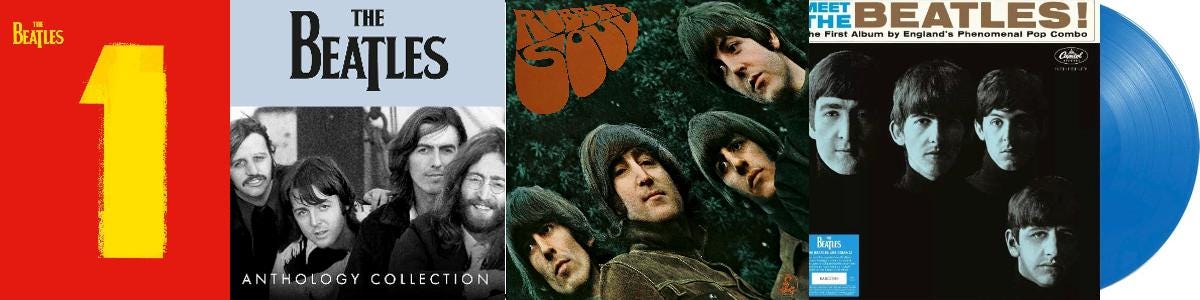
It is one of the great ironies of music history: the man with the most raw, expressive voice in rock and roll couldn’t stand the sound of it. To the rest of us, John Lennon’s voice was an awesome force of nature. To John, it was an annoyance that needed to be “fixed.” He constantly cornered producer George Martin with the same desperate plea: “Smother it.” He wanted his vocals buried in double-tracking, drenched in reverb, or warped by effects—anything to make him sound like “someone else” or, as he often put it, “the man on the moon.” 🎙️ Today, we might call this a form of audio dysphoria, a disconnect between the voice the world hears and the one the artist hears in their own head.
The “Tomato Ketchup” Philosophy
Martin recalled this struggle in his book Summer of Love, still sounding a bit baffled by it all:
“John had an inborn dislike of his own voice which I could never understand, as it was one of the best voices I’ve heard” He was always saying to me: ‘Do something with my voice! You know, put something on it. Smother it with tomato ketchup or something. Make it different.’”
While Paul McCartney was happy to let his pure, sweet vocals sit front-and-center, John wanted a jagged, soulful friction. He didn’t want a pop song; he wanted an atmospheric haunting.
The Science of Why We Cringe 🧠
This wasn’t just rock-star neurosis; it’s physics that affects everyone. When you speak, you hear yourself through bone conduction. Your skull vibrates, acting like a private subwoofer that makes your voice richer, but only to you.
The playback you hear is what the rest of the world hears: just vibrations traveling through air. When John listened to his tapes, he wasn’t hearing the “hero version” from inside his head; he was hearing a thinner, nasally stranger. For a man whose entire identity was tied to his art, this wasn’t just a “bad recording”—it was an identity crisis played back at 15 inches per second.
The Lennon Toolkit: Engineering an Identity 🛠️
John’s vocal insecurity wasn’t just a quirk—it actually forced the Abbey Road engineers to invent the future of music.
* The “Instant Clone” (ADT): John hated the “boring” work of singing a song twice to get a thick sound. So, the engineers birthed Artificial Double Tracking (ADT), creating a second, slightly delayed "ghost" vocal on a separate tape machine, which is then layered back over the original to create a thicker, more shimmering sound. 👯♂️
* The “Naked” Microphone: Instead of keeping a proper, professional distance, John would get uncomfortably close to the mic. He wanted to capture the grit and the “honest” imperfections that most 1960s stars were desperately trying to polish away. 🎤
* The Spinning Speaker: For Tomorrow Never Knows, John gave the engineers a bizarre mission: “Make me sound like the Dalai Lama chanting from a mountaintop.” They solved it by feeding his voice through a Leslie speaker—a massive, rotating cabinet meant for organs. It gave him that swirling, underwater sound that signaled the end of the “traditional” John Lennon. 🎡
* Beyond the swirling mountain-top sound of “Tomorrow Never Knows” and the intimate, high-treble sighs of “Girl,” John Lennon’s vocal dissatisfaction pushed two other tracks into legendary territory:
“Strawberry Fields Forever” (The Impossible Stitch) 🍓
John was so unhappy with the initial, “light” version of this song that he asked for a second, much heavier orchestral version. When he couldn’t decide between the two takes, he gave Martin the impossible task of joining them together. Because they were in different keys and speeds, the tape had to be manipulated—speeding up one and slowing down the other. This inadvertently gave John’s voice a thick, slightly “slurred” and dreamlike quality that he felt masked his natural tone enough to match the song’s surreal mood. 😵💫
“Revolution” (The Red-Line Distortion) ⚡
For the single version of “Revolution,” John didn’t just want a “rock” sound; he wanted a “dirty” sound. He insisted that the engineers plug the guitars and his microphone directly into the recording console, intentionally “red-lining” the equipment to create a fuzzy, distorted crunch. He wanted his voice to sound broken and aggressive, hiding the “purity” of his singing behind a wall of electronic grit. He reportedly told the engineers, “It doesn’t sound ‘heavy’ enough,” until the distortion was so thick it was practically melting the speakers. 🎸
The Haunted Androids of Today
John was the pioneer of a struggle that defines modern music. We see it in Thom Yorke, who treats his voice like a “haunted android,” hiding behind vocoders and glitchy layers. We see it in Billie Eilish, who turned vocal insecurity into a superpower by whispering directly into your ear, using the microphone as a shield rather than a stage. 🎚️
Even Freddie Mercury—arguably the greatest singer ever—was obsessed with how his teeth affected his resonance. It seems the more legendary the voice, the more the artist wants to change it.
The Sonic Self-Correction (The “Delete” Key) ⭐🔄
There is a strange comedy in seeing superstar singers treat their greatest hits like an embarrassing old yearbook photo. It seems the more beloved a voice becomes, the more the artist wants to go back and scrub it from history. 😂
* Bono’s Radio Reflex 😬: The U2 frontman has spent years apologizing for his early performances on his iconic songs. He’s admitted that hearing his younger self on the radio makes him physically wince, claiming he didn’t actually figure out how to “sing” until decades into his career. 📻
* The Swift Restoration 💿✨: While the “Taylor’s Version” project is a genius business move to reclaim her masters, it’s also a massive, multi-million dollar “do-over.” By re-recording her catalog, she isn’t just owning the rights; she’s effectively deleting her thin, teenage vocals and replacing them with the powerhouse resonance of the artist she eventually became. 👩🎤
* Lorde’s Tech Critique 📱: Even though it made her a global phenomenon, Lorde famously—er, notably—trashed her breakout hit “Royals.” She didn’t just dislike the song; she compared the entire production to a tinny, 2006-era Nokia ringtone.
* The James Blunt Burnout 😩: Blunt turned his success into a self-deprecating art form. He openly admitted that his monster hit “You’re Beautiful” became so inescapable that even he started to find his own voice annoying, turning his biggest triumph into a source of personal “audio-aversion.” 🤢
The Final Echo
We hear it in “Girl,” where Lennon’s heavy sighs were compressed into high-treble “hisses,” and we hear it in “Across the Universe,” where he sounds like he’s singing from the far side of a galaxy.
John Lennon spent his career running away from his own sound, trying to find a “mask” that felt right. But here is the magic: in trying to sound like a man on the moon, he ended up sounding more human than anyone else. The very cracks and grit he tried to “smother with ketchup” are the reasons we are still listening to him on vinyl sixty years later. Sometimes, the things we hate most about ourselves are the only things the world can’t forget. 🌙