In December 1961, long before they became famous outside Liverpool, The Beatles added “Please Mr. Postman” to their live repertoire, making it their third Tamla song after the Miracles’ “Who’s Lovin’ You” and Barrett Strong’s “Money (That’s What I Want).” The song became a staple at their live concerts at Liverpool’s Cavern Club, where Billy Hatton of the Four Jays recalled seeing one of the Beatles’ first live performances of it, calling it “a Wow moment.”
Since the original Marvelettes version hadn’t made it into the British charts, few in the UK knew the song, allowing the Beatles to make it their own among all Liverpool groups. John Lennon sang lead vocal with the same reckless abandon he usually reserved for songs like “Twist And Shout”—matching the rough desperation he heard in the original.
For their recording on With the Beatles in 1963, John Lennon sang lead with Paul McCartney and George Harrison providing backing vocals, while all three added handclaps. Due to their different vocal range from the Marvelettes, the Beatles modulated their version into A major. Between recording two takes of overdubs, the band added handclaps while Lennon double tracked his original vocal. The intensity of their performance drew critical acclaim: Music critic Robert Christgau considered the Beatles’ covers of “Please Mr. Postman” and “Money” as two of the band’s best ever recordings, “both surpassing the superb Motown originals.”
Origins of the Motown Classic
The song The Beatles had fallen in love with was written by Georgia Dobbins, William Garrett, Freddie Gorman, Brian Holland and Robert Bateman, and became the debut single for the Marvelettes on Motown’s Tamla label. The song’s creation involved multiple contributors: William Garrett originally wrote it as a blues tune and gave it to his friend Georgia Dobbins, a founding member of the Marvelettes, who transformed it into a doo-wop song before Motown songwriters Brian Holland, Robert Bateman and Freddie Gorman further refined it. One particularly authentic detail: Freddie Gorman himself was a real-life postman, lending extra authenticity to the lyrics.
The Marvelettes’ version achieved historic significance by becoming the first Motown song to reach number one on the Billboard Hot 100 in late 1961, also topping the R&B chart. The recording featured lead vocalist Gladys Horton, whose delivery combined desperation and hope in equal measure. An interesting footnote to the recording session: among the musicians was Marvin Gaye on drums, who was serving time as a session musician, just after the commercial failure of his debut album.
This essay continues below. As an Amazon Associate, I earn from qualifying purchases.
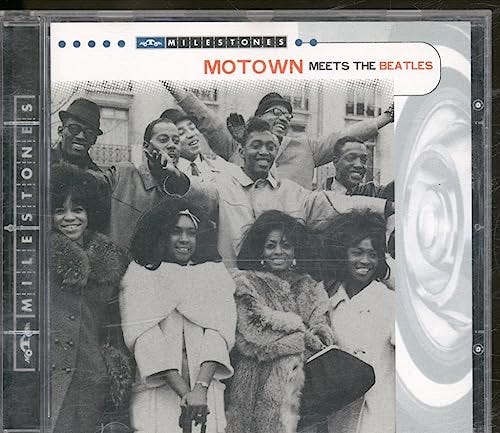
Motown Meets The Beatles (Audio CD)
The British Invasion’s Love Affair with Girl Groups
The practice of male rock groups covering songs originally performed by female vocal groups, particularly from the Motown stable, was not merely common during the early 1960s—it was fundamental to the British Invasion sound. The Beatles displayed an early interest in girl group music, covering songs by groups like the Shirelles, the Cookies, and the Donays.
Liverpool had a connection with Motown. British label Oriole Records represented Tamla Motown in the UK, and with its busy docks, Merseyside was the biggest source of Motown records in Britain. As Mersey Beat magazine founder Bill Harry explained, Liverpool bands adapted Motown songs to fit the developing Liverpool sound—the basic three guitars/drums/harmony lineup, creating a hybrid he called “the Mersey Motown sound.”
The Beatles weren’t alone in this practice. British beat groups from the late 1950s played American music for their friends, imitating all kinds of hit sounds—from Chuck Berry to the Shirelles, from Carl Perkins to the Isley Brothers. However, The Beatles took this admiration further than most of their contemporaries, making Motown covers a central part of their identity during their formative years.
What Attracted The Beatles to Motown
The Beatles’ attraction to Motown—and to “Please Mr. Postman” specifically—went far beyond simple musical appreciation. As Ringo Starr recalled, the shared love of Motown helped the band gel: “When I joined The Beatles we didn’t really know each other, but if you looked at each of our record collections, the four of us had virtually the same records. We all had The Miracles, we all had Barrett Strong and people like that. I suppose that helped us gel as musicians, and as a group.”
The musical appeal was multifaceted. The song tapped into a youthful emotional reservoir and brought teenage girlhood to the forefront of American music in a way rarely seen before. John Lennon understood the song’s emotional core well, singing it with the same reckless abandon he usually reserved for songs like “Twist And Shout”—matching the rough desperation in Gladys Horton’s pleading vocal.
Music critic Tim Riley praised The Beatles’ version as having “tremendous” beat, sounding “perilously close to falling apart at any minute,” calling it “the most reckless and completely irresistible playing” and “the most flammable rock ‘n’ roll they’ve given us since ‘She Loves You.’”
The Original Artists’ Reactions
The Motown artists’ reactions to Beatles covers of their songs were overwhelmingly positive and deeply appreciative. Smokey Robinson expressed what became a representative sentiment when discussing The Beatles’ cover of “You Really Got A Hold on Me”: “When they recorded it, it was one of the most flattering things that ever happened to me. I listened to it over and over again, not to criticise it but to enjoy it... They were not only respectful of us, they were down-right worshipful.”
Robinson continued: “Whenever reporters asked them about their influences, they’d enter into a euphoria about Motown. I dig them, not only for their songwriting talent, but their honesty.”
In a 2010 interview, Robinson recalled meeting The Beatles before they became globally famous, sharing: “One of the things I loved when they became popular was that they were the first really popular white band—or white artists that I had heard—who came right out and said, ‘We grew up and were very influenced by Black music and by Motown.’ I really loved them for that, and I thought it was so wonderful they would say that.”
This open acknowledgment was crucial and historically significant. White artists have a long and problematic history of plagiarising and stealing the music of Black artists without credit, but The Beatles never shied away from an opportunity to discuss the importance of Black music on developing their own sound.
Lennon, reflecting in the 1970s, said:
“I’ll never stop acknowledging it: Black music is my life,” he told Jet magazine in 1972. “The Beatles and Sgt. Pepper and all that jazz – it doesn’t mean a thing. All I talk about is 1958 when I heard [Little Richard’s] ‘Long Tall Sally,’ when I heard [Chuck Berry’s] ‘Johnny Be Good,’ when I heard Bo Diddley. That changed my life completely.” Lennon was even more emphatic about Chuck Berry specifically: “Berry is the greatest influence on Earth. So is Bo Diddley and so is Little Richard. There is not one white group on Earth that hasn’t got their music in them – and that’s all I ever listened to. The only white I ever listened to was [Elvis] Presley on his early music records, and he was doing black music.”
Financial Impact and Career Boosts
The Beatles’ covers did translate into tangible financial benefits for Motown and its songwriters. The Beatles’ recording of “Please Mr. Postman” for their second UK album With The Beatles generated substantial music-publishing royalties for Motown and its writers: Brian Holland, Robert Bateman, Georgia Dobbins, Freddie Gorman and William Garrett.
Berry Gordy, recognizing the rising popularity of The Beatles in the UK, agreed to lower royalty rates for use of the songs, as he was thrilled to have The Beatles recording tracks from his roster. This was a calculated business decision that paid dividends beyond immediate royalties. In the wake of The Beatles’ soul covers on With the Beatles, Motown’s presence in Britain increased significantly, and within a few short years, groups like The Four Tops, The Supremes, and Martha Reeves were achieving substantial chart success on both sides of the Atlantic.
The song itself proved to be an enduring copyright. “Please Mr. Postman” evolved into one of Motown’s most enduring and successful copyrights, with the Carpenters’ 1974 cover topping the Billboard Hot 100 in early 1975.
Awareness and Appreciation
Did the Marvelettes and other Motown artists know who The Beatles were when they discovered the covers?
Smokey Robinson mentioned meeting “the Beatles in London before they became the Beatles Beatles,” suggesting the Motown artists were aware of them during their rise but before their explosive global fame in 1964. This relationship became reciprocal, with Motown artists eventually recording their own covers of Beatles songs, collected on the 1995 CD Motown Meets The Beatles, featuring 14 covers by top-tier Motown acts including The Supremes, The Four Tops, Stevie Wonder, The Temptations, and Marvin Gaye.
Artistic Assessments
Regarding the quality of The Beatles’ performances, opinions varied—though the appreciation from the original artists remained consistent. One critic noted that hearing the Marvelettes’ original left them “just as satisfied,” calling it “a rare thing with the Beatles, who, as I insist, almost always improved on the songs they covered, at least from a ‘technical’ angle.”
However, some fans of the original remained loyal. As one listener commented, the debate between versions continues, with some arguing the Beatles version was too pop-oriented and lacked the soul and fire of the original—though others countered that both versions were classics in their own right.
Cultural Significance
The story of “Please Mr. Postman” and The Beatles represents more than a simple cover song narrative. The Beatles’ cover, slightly faster and more rock-oriented, brought the song to a new audience and was emblematic of how deeply American R&B had permeated British pop sensibilities, helping to forge a bridge between Motown and the British Invasion and creating a musical feedback loop that enriched both traditions.
The Beatles learned from the Motown Sound, covering their early songs and emulating Smokey Robinson’s smooth singing style and eloquent songwriting techniques, while Motown artists thanked The Beatles for their support by covering their songs—creating a symbiotic relationship between the two musical movements.
The mutual respect, the financial benefits to the songwriters, the career boosts for Motown’s UK presence, and the genuine artistic appreciation from both sides created a model for how cultural exchange in popular music could work at its best. The Beatles didn’t merely borrow from Motown; they celebrated it, acknowledged it, and helped introduce it to a wider audience—all while the Motown artists themselves expressed gratitude for the attention and recognition their work received from one of history’s most influential bands.