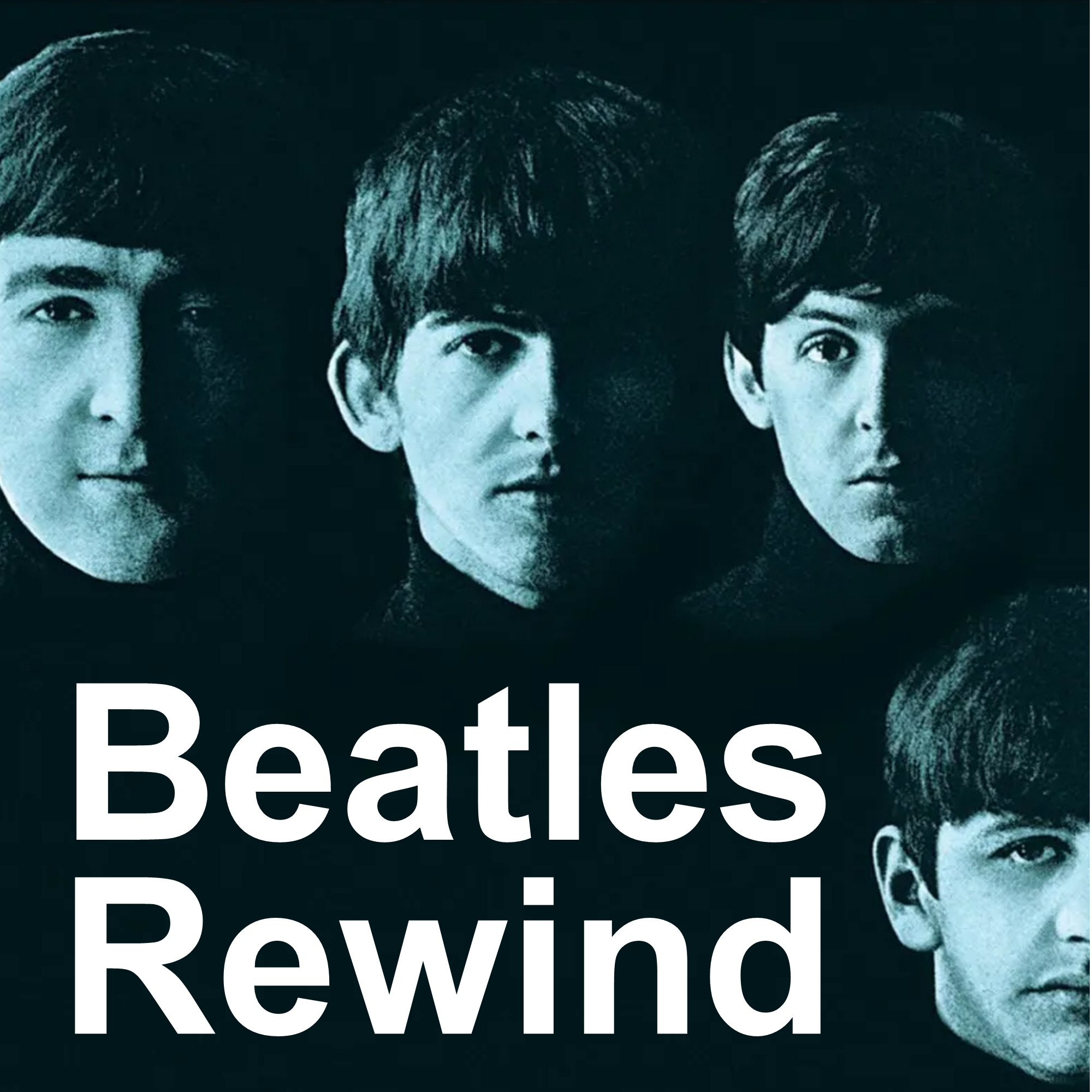
The Beatles and Rush: An Unlikely Musical Kinship 🎸🎵
At first glance, The Beatles and Rush seem to inhabit entirely different musical universes. One was a quartet of working-class Liverpudlians who conquered the world with three-minute pop songs and matching suits. The other was a Canadian power trio known for twenty-minute prog-rock epics about dystopian futures and Ayn Rand novels. Yet beneath these surface differences lies a fascinating web of connections, influences, and mutual respect that reveals how deeply The Beatles’ revolutionary approach to music-making shaped even the most seemingly dissimilar artists who followed.
The Technical Connection: Paul’s Pick 🎸
Geddy Lee’s admiration for Paul McCartney’s pick-playing technique is more significant than it might initially appear. In the bass-playing world, this is actually a meaningful stylistic choice that reveals deeper musical philosophy. McCartney’s use of a pick (or plectrum) gave his bass lines a distinctly bright, articulate attack that cut through The Beatles’ increasingly complex arrangements. This wasn’t the norm in the 1960s, when most bassists used their fingers to create warmer, rounder tones.
Lee adopted a similar approach, using a pick to achieve the aggressive, cutting tone that became central to Rush’s sound. In progressive rock, where the bass often needs to function as both rhythmic foundation and melodic counterpoint—sometimes simultaneously—that pick-driven clarity becomes essential. Both McCartney and Lee played their basses like lead instruments when the song demanded it, and the pick gave them the articulation to make every note count in dense, layered arrangements.
But the connection goes deeper than technique. Both bassists shared a fundamental approach: the bass wasn’t just a rhythm instrument relegated to the background. It was a melodic voice with its own story to tell.
The Reluctant Bassist: A Shared Origin Story 🎶
Here’s where the connection gets really interesting: both Paul McCartney and Geddy Lee became bassists almost by accident—and that accident may have been one of the best things that ever happened to rock music.
McCartney started as a guitarist. When The Beatles’ original bassist Stu Sutcliffe left the band in 1961 to pursue art in Hamburg, someone had to fill the role. McCartney reluctantly switched to bass, initially viewing it as a step down from the more glamorous guitar. But because he came to the instrument as a guitarist and melodic songwriter rather than as a traditional rhythm section player, he approached the bass completely differently. He thought in terms of melody, counterpoint, and hooks—not just root notes and rhythm.
Geddy Lee’s path was remarkably similar. He started as a guitarist in Rush’s early days, but when their original bassist Jeff Jones left the band in 1968, Lee had to take over both bass and lead vocal duties. Like McCartney, he brought a guitarist’s sensibility to the bass, thinking melodically rather than just holding down the bottom end.
This shared origin story is crucial to understanding why both bassists revolutionized their instrument. Traditional bassists learned to serve the rhythm, to stay in the pocket, to be felt rather than heard. McCartney and Lee learned to think like lead players who happened to be playing bass. They brought melodic ambition, harmonic sophistication, and lead-instrument thinking to an instrument that had traditionally been subordinate.
The result? McCartney created bass lines like “Come Together,” “Something,” and “I Want You (She’s So Heavy)” that are instantly recognizable melodies in their own right. Lee crafted bass parts on songs like “YYZ,” “Tom Sawyer,” and “Freewill” that function as lead lines while simultaneously anchoring the rhythm. Neither man would have approached the instrument this way if they’d started as traditional bassists. 🎵
The DIY Studio Revolution 🎚️
Perhaps the most profound connection between The Beatles and Rush lies in their shared approach to the recording studio as an instrument itself. The Beatles’ work with George Martin at Abbey Road fundamentally changed how rock bands thought about record-making. Albums like Sgt. Pepper’s Lonely Hearts Club Band, Revolver, and The White Album demonstrated that the studio wasn’t just a place to document live performances—it was a laboratory for sonic experimentation. 🔬
Rush absorbed this lesson completely. By the time they were recording albums like Hemispheres and Permanent Waves, they were spending months in the studio, meticulously crafting sounds, experimenting with synthesizers, and treating the recording process as a creative act in itself rather than mere documentation. Neil Peart’s elaborate percussion setups, Geddy Lee’s layered synthesizers and bass parts, and Alex Lifeson’s textured guitar work all reflected The Beatles’ influence: the idea that you could create in the studio sounds that might be impossible to reproduce live but were perfect for the recorded medium.
The Beatles proved that a rock band could be ambitious in the studio without losing their essential identity. Rush took that permission and ran with it, creating some of the most sonically complex rock music of the 1970s and 80s. ✨
The Concept Album Legacy 💿
The Beatles didn’t invent the concept album, but Sgt. Pepper certainly popularized it and demonstrated its commercial viability. The idea that an album could be a unified artistic statement rather than just a collection of singles was revolutionary in 1967.
Rush took this concept and expanded it to almost absurd lengths. 2112 featured a twenty-minute side-long suite. Hemispheres had songs that spanned entire album sides. Even their more accessible later work often featured thematic connections and narrative threads connecting songs. The Beatles showed that rock albums could be Art with a capital A; Rush ran with that idea into the realm of progressive rock’s most ambitious excesses. 🎭
Melodic Sophistication 🎼
Despite their different styles, both bands shared a commitment to melodic sophistication that set them apart from many of their peers. The Beatles’ melodies—particularly McCartney’s—were remarkably complex while remaining accessible. Songs like “Eleanor Rigby,” “Here, There and Everywhere,” and “For No One” featured unusual intervals and harmonic movements that shouldn’t have worked in pop music but somehow did.
Rush’s melodies were more angular and less immediately accessible, but they shared that same ambition. Geddy Lee’s vocal lines often moved in unexpected ways, and the instrumental melodies woven through songs like “La Villa Strangiato” or “YYZ” showed a band unafraid of musical complexity. Both bands understood that you could challenge listeners without alienating them, that sophistication and accessibility weren’t mutually exclusive. 🌟
The Power of the Three-Piece 🎸🥁🎹
After The Beatles broke up, the individual members’ work actually provides an interesting connection to Rush’s approach. Paul McCartney’s work with Wings, particularly on albums like Band on the Run, showed how a smaller ensemble could create full, complex sounds. George Harrison’s All Things Must Pass demonstrated the power of multi-tracking to create orchestral rock arrangements with limited personnel.
Rush took this to an extreme. As a three-piece, they had to find ways to fill sonic space, leading to Geddy Lee’s use of bass pedal synthesizers (allowing him to play bass and keyboards simultaneously), Alex Lifeson’s intricate layering of guitar parts, and Neil Peart’s enormous drum kit. The Beatles’ studio innovations in multi-tracking and overdubbing showed Rush how a small number of musicians could create massive, complex soundscapes. 🎛️
Literary Ambition 📚
Both bands showed unusual literary ambition for rock musicians. The Beatles moved from simple love songs to more complex lyrical territory, with songs like “Eleanor Rigby,” “A Day in the Life,” and “I Am the Walrus” showing influences from literature, art, and experimental writing.
Rush took this even further. Neil Peart’s lyrics drew from science fiction, fantasy, philosophy, and literature, creating rock songs about individualism, dystopian futures, and philosophical concepts. While The Beatles’ literary influences were more oblique and often filtered through psychedelia and surrealism, both bands showed that rock lyrics could aspire to something beyond simple expressions of teenage emotion. ✍️
Breaking the Rules 🚀
Perhaps most fundamentally, both bands shared a willingness to break the established rules of rock music. The Beatles proved you could put a string quartet on a rock song (”Yesterday”), that rock albums could open with orchestra sounds and fake audiences (Sgt. Pepper), that you could create a number one hit with a seven-minute song full of distinct movements (”Hey Jude”). 🎻
Rush proved that you could have a hit single with lyrics about individualism drawn from Ayn Rand (”2112”), that rock concerts could feature extended instrumental passages and virtuosic playing rather than just hit singles, that a power trio could create music as complex as anything produced by larger prog-rock bands with multiple keyboardists. 🎪
The Canadian Connection 🍁
There’s also something to be said about the outsider perspective both bands brought to rock music. The Beatles came from Liverpool, not London—they were provincial outsiders who crashed the metropolitan music scene. Rush came from Canada, outside the traditional centers of rock music in America and Britain. Both bands had to work harder to be taken seriously, and both developed distinctive identities partly because they weren’t trying to fit into existing London or LA or New York scenes. 🌍
Mutual Respect 🤝
Members of Rush have consistently cited The Beatles as a foundational influence. In interviews over the years, all three members have discussed how The Beatles’ evolution from simple pop to complex studio experimentation provided a roadmap for their own artistic development. The Beatles showed that a rock band could grow, could change, could experiment, and could take their audience with them on that journey.
And while The Beatles were no longer together during Rush’s rise to prominence, individual Beatles acknowledged the impressive musicianship of 1970s progressive rock bands. The technical virtuosity that Rush represented was, in some ways, a logical extension of the increasingly complex arrangements The Beatles were creating in their final years together. 💫
Conclusion: Different Buildings, Same Blueprint 🏛️
So while The Beatles and Rush might seem like musical opposites—one all pop hooks and cultural revolution, the other all odd time signatures and science fiction lyrics—they share fundamental DNA. Both believed the recording studio was an instrument. Both thought rock music could be artistically ambitious without being pretentious. Both featured bass players who treated their instrument as a melodic voice—and remarkably, both of those bassists came to their instrument reluctantly, bringing a guitarist’s melodic sensibility that revolutionized bass playing. Both showed that you could challenge your audience without losing them.
Geddy Lee’s comment about Paul McCartney’s pick playing is really just the visible tip of a much deeper connection. It’s a small technical detail that points to a larger philosophical alignment: both musicians believed in clarity, in making every note count, in using their instruments to serve the song while pushing boundaries. And both men became revolutionary bassists precisely because they weren’t traditional bassists—they were guitarists and songwriters who happened to pick up the bass and refused to play it the conventional way.
The Beatles built the template for artistic ambition in rock music. Rush studied that template carefully and used it to construct their own towering prog-rock cathedral. Different buildings, same blueprint. 🎵✨🎸