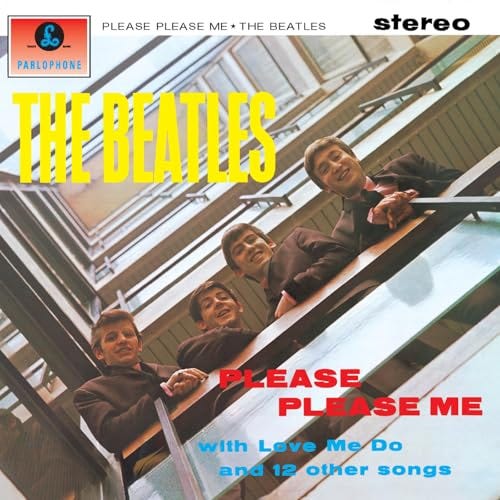
When Ringo Starr stepped up to the microphone to sing “Boys” on Please Please Me in 1963, he belted out lyrics celebrating boys with an enthusiasm that might seem puzzling to modern listeners. “I’m talking about boys, yeah yeah, boys!” he sang, without a hint of irony or any attempt to change the pronouns. For a song that was clearly written from a female perspective, this could seem like an odd choice. But the story of “Boys” reveals something essential about the early Beatles: they were a working band who loved rock and roll, and they weren’t particularly interested in overthinking the details.
The Original: A Shirelles Classic 🎵
“Boys” was written by Luther Dixon and Wes Farrell and originally recorded by the Shirelles in 1960 as the B-side to “Will You Love Me Tomorrow.” The Shirelles’ version was playful and confident—a girl-group celebration of male admirers that perfectly captured the innocent teenage romance of early 60s pop. The song wasn’t particularly sophisticated musically or lyrically, but it had an infectious energy and a driving beat that made it perfect for dancing.
The Beatles discovered “Boys” the same way they discovered much of their early repertoire: through their obsessive consumption of American R&B and rock and roll records. During their Hamburg days and their residency at the Cavern Club in Liverpool, the Beatles built their reputation by covering American hits, and girl-group songs were a significant part of that mix. They also performed the Shirelles’ “Baby It’s You” and the Cookies’ “Chains,” demonstrating their appreciation for the sophisticated pop coming from New York’s Brill Building.
Why Ringo Sang It 🥁
The answer to why Ringo sang “Boys” is straightforward: every member of the Beatles needed material for their live shows, and Ringo needed songs to sing. In the early Beatles, the democratic distribution of vocal opportunities was important for band chemistry. John and Paul were the primary singers and songwriters, George got his moment (singing “Chains” and “Do You Want to Know a Secret” on the same album), and Ringo needed something too.
Ringo had been singing “Boys” in the Beatles’ live sets since joining the band in August 1962, and he’d actually been performing it even earlier with Rory Storm and the Hurricanes, his previous group. It was simply part of his repertoire—a high-energy number that worked well in the frantic pace of a rock and roll show. When the Beatles recorded Please Please Me in a marathon single-day session on February 11, 1963, they were essentially capturing their live act. “Boys” was included because it was already road-tested, Ringo knew it cold, and it gave him a featured moment on the album.
The song also suited Ringo’s limited but effective vocal range. It didn’t require sophisticated phrasing or extended notes—just enthusiasm, good time-keeping (which Ringo had in abundance as a drummer), and the ability to sell the raw energy of early rock and roll. Ringo once described his singing voice as “fairly limited,” and the Beatles were smart enough to choose material that played to his strengths rather than exposing his weaknesses.
The Gender Question: Did Anyone Care? 🤔
Here’s where it gets interesting: apparently, almost no one cared about the gender flip at the time. In interviews over the years, the Beatles rarely discussed it, and contemporary reviews of Please Please Me didn’t fixate on the oddity of a young man singing about boys. There are a few possible explanations for this surprising lack of commentary.
First, gender-bending in song wasn’t entirely uncommon in early rock and roll. Artists routinely covered songs without changing pronouns—it was about finding good material, not about perfect narrative consistency. The focus was on the energy and the beat, not the literal meaning of every lyric. Rock and roll had an inherent playfulness that allowed for these kinds of apparent contradictions.
Second, the Beatles’ version of “Boys” was so aggressive and energetic that it transcended the specific meaning of the lyrics. Ringo’s vocal delivery, backed by the band’s driving rhythm, transformed the song from a girl-group celebration into a pure expression of rock and roll excitement. The word “boys” in this context became almost abstract—it was just part of the rhythmic thrust of the song.
Third, and perhaps most importantly, audiences in 1963 were experienced at not overthinking things. The expectation was that bands would cover songs, sometimes imperfectly, and listeners were more interested in the overall vibe than in narrative coherence. The Beatles were giving their fans fast, exciting rock and roll, and the specifics of who was singing about whom took a back seat to the sheer energy of the performance.
That said, there is some evidence that the oddity wasn’t completely invisible. Paul McCartney later acknowledged the strangeness in interviews, noting that they were aware they were singing a girl’s song but didn’t think it mattered much. In the context of the Beatles’ early career, when they were still primarily a cover band finding their footing, authenticity meant being true to the spirit of rock and roll, not necessarily being literal about every lyric.
This essay continues below. As an Amazon Associate, I earn from qualifying purchases.
Please Please Me (Includes “Boys”)Remastered
Why They Didn’t Change “Girls” 💭
The obvious question is: why didn’t they just change “boys” to “girls” and solve the problem? The answer reveals something about the Beatles’ approach to their craft in this period. First, they were purists about the material they loved. Changing the lyrics would have felt like disrespecting the original—these were songs they revered, not raw material to be rewritten at will.
Second, the word “boys” has a specific rhythmic and phonetic quality that “girls” doesn’t quite match. “Boys” is a harder, more percussive sound that cuts through a rock arrangement more effectively. Try singing “girls, girls, girls” with the same driving emphasis, and you’ll notice it doesn’t quite have the same punch. The Beatles, with their finely tuned ears for what worked on stage, may have instinctively recognized this.
Third, there’s a performative aspect to consider. Part of what made the Beatles exciting was their willingness to throw themselves completely into a performance, even when it meant singing from an unusual perspective. This same quality would later allow them to inhabit the characters in songs like “She’s Leaving Home” or “Maxwell’s Silver Hammer” without it seeming strange. They were performers, not just songwriters, and they understood that commitment to the material mattered more than strict biographical accuracy.
The Recording and Its Place in Beatles History 🎸
“Boys” was recorded during that legendary single-day marathon session that produced the Please Please Me album. The Beatles recorded ten songs in about thirteen hours, supplementing the four tracks they’d already released as singles. The goal was to capture the energy of their live performances, and producer George Martin wisely chose to record most of the songs in just a few takes, preserving the raw excitement that might be lost with excessive polishing.
“Boys” was knocked out quickly—the released version is take one, with minimal overdubs. You can hear the live-in-the-studio energy: Ringo’s slightly breathless vocal, the driving rhythm from his own drum kit (played by someone else while he sang, likely George), and the raw guitar work from John and George. It’s not perfect, but it’s vital and exciting in a way that a more polished recording might not have been.
The song’s placement on Please Please Me is also telling. It appears toward the end of side one, strategically positioned as a high-energy burst that would keep listeners engaged. The Beatles and George Martin understood album sequencing even at this early stage, and “Boys” served an important purpose: it was a showcase for Ringo, a crowd-pleaser, and a reminder that the Beatles were fundamentally a rock and roll band.
Interestingly, “Boys” was one of the songs the Beatles dropped relatively early from their live sets as they evolved. Once they began writing more of their own material and developed more sophisticated songs for Ringo (eventually including classics like “Yellow Submarine” and “With a Little Help from My Friends”), they had less need for cover material that didn’t quite fit their developing image. The last known performance of “Boys” was in 1965, as the band was transitioning from touring act to studio innovators.
What It Tells Us About the Early Beatles ✨
The story of “Boys” encapsulates something essential about the early Beatles that sometimes gets lost in their later mythology. They were, first and foremost, a working rock and roll band who loved American R&B and didn’t overthink things that didn’t need overthinking. They were more interested in capturing the spirit of the music they loved than in perfect narrative consistency.
This practical, unpretentious approach would serve them well even as they evolved into more sophisticated artists. The same band that sang “Boys” without changing the pronouns would later write “Eleanor Rigby” and “A Day in the Life”—not because they abandoned their roots, but because they maintained that same commitment to serving the song rather than worrying too much about what people might think.
The fact that Ringo sang about boys with such unself-conscious enthusiasm, and that audiences accepted it without much comment, reminds us that early rock and roll had a playfulness and a freedom that sometimes got lost as popular music became more self-serious. Sometimes a song is just a song, a beat is just a beat, and boys are just boys—even when they’re being sung about by another boy.
Why This Matters 💫
In our current era of careful attention to representation and identity in popular music, “Boys” might seem like an amusing historical curiosity—a moment when the Beatles didn’t think through the implications of their choices. But perhaps there’s another way to see it: as an example of how the sheer joy and energy of rock and roll could transcend the literal meaning of lyrics. The Beatles weren’t making a statement about gender or sexuality by keeping the original pronouns; they were simply playing music they loved with total commitment.
This doesn’t mean modern artists shouldn’t be thoughtful about the messages in their music—they should. But the story of “Boys” reminds us that sometimes the best approach to art is to serve the material with complete conviction, even when it doesn’t make perfect logical sense. The Beatles understood that rock and roll was about energy, excitement, and emotional truth, not literal biographical consistency.
In the end, “Boys” remains a testament to the early Beatles’ unpretentious love of rock and roll, their democratic approach to band dynamics, and their willingness to embrace the music they loved without overthinking every detail. Ringo sang about boys because that’s what the song was about, and he sang it with enthusiasm because that’s what the song required. Sometimes the best explanation is the simplest one: it rocked, so they played it.
As an Amazon Associate, I earn from qualifying purchases.
MEGA: The Beatles Building Set with 681 Pieces, 4 Poseable Action Figures and Ed Sullivan Stage, with LED Lights (for Adult Collectors)