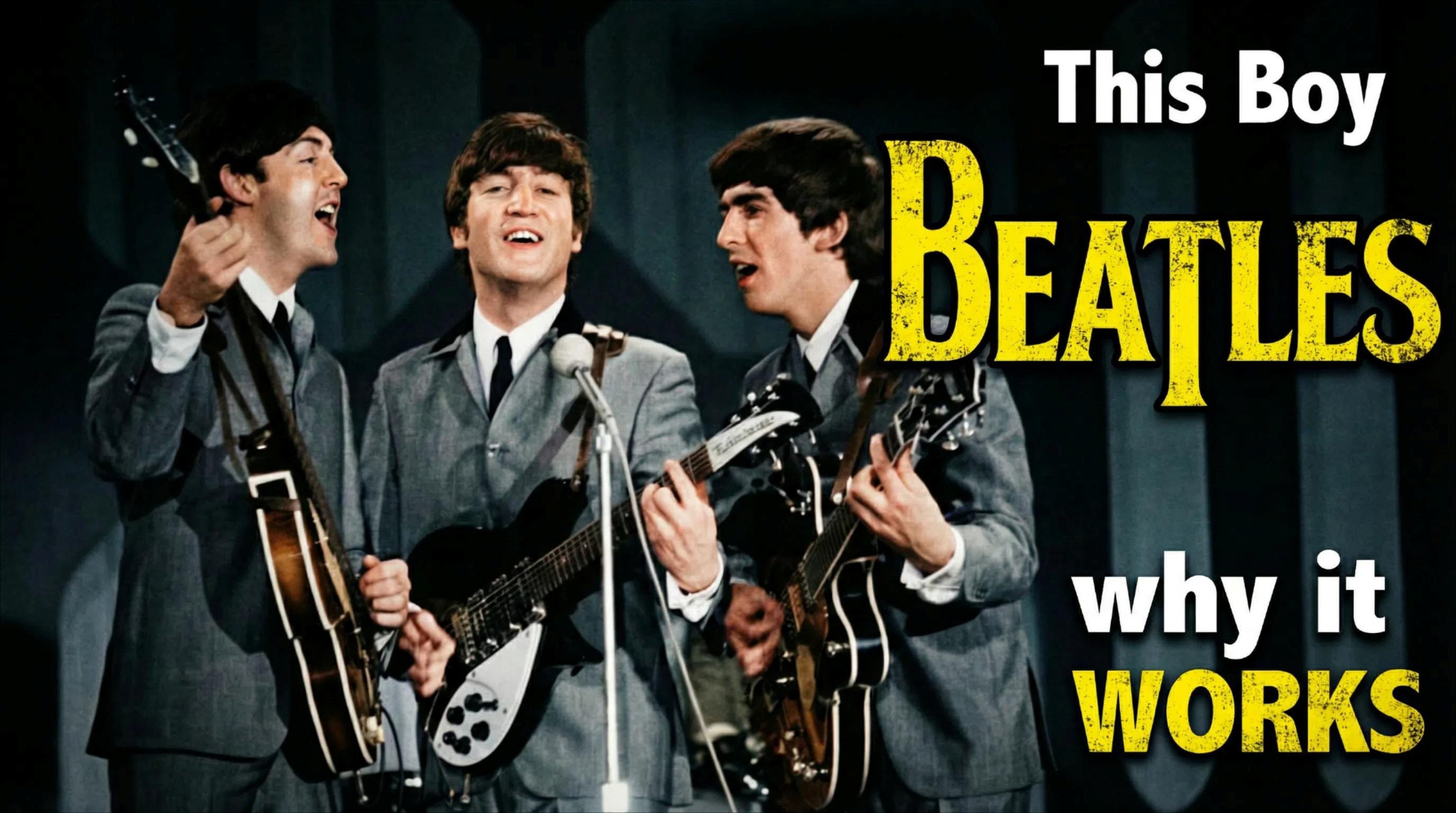
When John Lennon sat down in a Southport hotel room during the autumn of 1963, he had one mission: to write a song that would showcase The Beatles’ three-part harmony like never before. The result was “This Boy,” a deceptively simple B-side that would become one of the most emotionally sophisticated recordings of their early period—and a turning point in how pop music could express adult heartbreak.
The Motown Obsession That Changed Everything
By late 1963, Lennon was completely consumed by American soul music, particularly Smokey Robinson & The Miracles. He’d been listening to “You’ve Really Got a Hold on Me” obsessively, studying Robinson’s ability to convey vulnerability and yearning through vocal delivery. “This Boy” was Lennon’s attempt to capture that Detroit sound—what he called “black music”—and transplant it into The Beatles’ repertoire. He wanted that ache, that pleading quality that made Motown records feel like someone was confessing their deepest secrets directly into your ear.
The song’s structure betrayed its influences immediately. Built on the classic “doo-wop” progression that powered countless 1950s standards—”This Boy” connected The Beatles back to their musical roots while simultaneously pushing forward into more complex emotional territory. This wasn’t “She Loves You” exuberance or “I Want to Hold Your Hand” optimism. This was loss, jealousy, and the desperate hope that someone might come back after realizing what they’d given up.
The Single-Microphone Magic
On October 17, 1963, The Beatles gathered in Studio 2 at Abbey Road to capture “This Boy” on tape. Over the course of 15 takes, they worked to perfect something that couldn’t be faked or fixed in post-production: the physical blend of their three voices. John, Paul, and George stood around a single microphone, so close they could feel each other’s breath, creating harmonies that didn’t sound like three separate voices but rather like a single, shimmering instrument.
This proximity—this literal closeness—is what gives “This Boy” its distinctive sonic quality. There’s an intimacy to the recording that makes the listener feel like they’ve stumbled into a private moment. The 12/8 time signature adds to this atmosphere, creating a swaying, lounge-ballad feel that was miles away from the driving rock and roll The Beatles were getting famous for. This was sophisticated, grown-up music dressed in pop-song clothing.
The Bridge That Happens Only Once
Here’s where “This Boy” reveals its true genius: the dramatic double-middle-eight section—the sweeping 'Till he sees you cry' sequence—appears only once in the song’s structure.
That bridge becomes precious—a moment of vulnerability that flashes and then retreats, leaving us wanting more but understanding that some feelings can’t be summoned on demand.
The Live Performance Ritual
The Beatles didn’t leave that single-microphone magic in the studio—they brought it to the stage. Throughout 1963 and 1964, “This Boy” became a showcase moment in their live performances, with John, Paul, and George clustering around a single microphone, replicating that intimate Abbey Road technique in front of every audience. It wasn’t just a stage gimmick; watch the footage below and you’ll see them leaning into the same mic, making eye contact, sharing inside jokes, while nailing harmonies that most bands couldn’t achieve in a controlled studio environment. Those three-part harmonies required the singers to hear and respond to each other in real time, adjusting their distance from the mic to create natural dynamic balance. It was a technique borrowed from earlier vocal groups—doo-wop quartets, barbershop singers, and Motown acts like The Miracles—but it was exceedingly rare for a rock band playing electric instruments.
Why It Still Matters
“This Boy” represented a crucial evolution in The Beatles’ artistry. It proved they could handle adult emotions—jealousy, regret, the complex pain of watching someone you love with someone else. The lyrical content went far beyond the innocent hand-holding of their other 1963 hits, expressing feelings that resonated with listeners who needed pop music to grow up alongside them.
The song also established a template The Beatles would refine throughout their career: the idea that B-sides didn’t have to be throwaway tracks, that album cuts could be as carefully crafted as singles, and that commercial success didn’t require artistic compromise. “This Boy” was proof that you could make sophisticated music that still connected with millions of fans.
When you listen to “This Boy” today, you’re hearing the moment The Beatles stopped being just a pop phenomenon and started becoming artists who would change the possibilities of popular music. That single bridge—appearing once, impossibly beautiful, and then gone—captures everything they would become: ambitious, emotionally honest, and unwilling to follow anyone else’s rules about what pop music should be.
That hotel room in Southport produced more than just another song. It produced a blueprint for how heartbreak should sound: intimate, sophisticated, and heartbreakingly real. And it all happened around a single microphone, in 15 takes, on an ordinary Thursday afternoon in October 1963.