This is a paraphrased transcript. Listen to get the full experience
Jordan
[Orchestral overture]
Imagine a new technology drops today, right?
And the government immediately moves to ban it.
They claim it’s going to fundamentally corrupt the youth and cause the absolute collapse of the state.
You’d probably think it was, I don’t know, a biological weapon.
Or maybe some kind of unregulated neuroimplant.
Alex
Exactly.
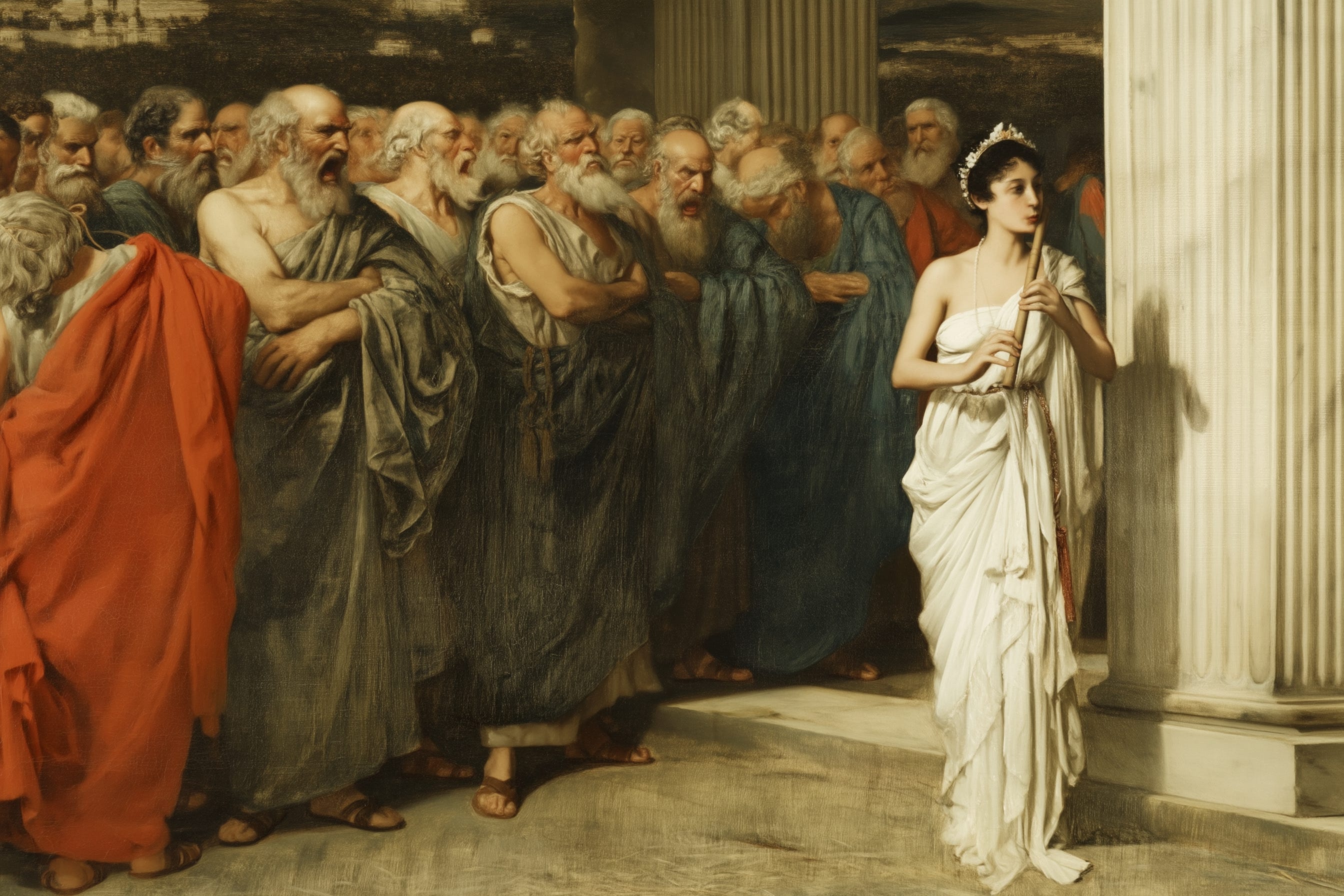
But if you rewind to about 380 BCE, Plato was making that exact argument about a new type of flute.
It is just a stunning historical reality.
We tend to think of the history of music as this upward trajectory of universal celebration.
Jordan
Right, where society just marvels at the next great masterpiece or a cool new instrument.
Alex
Yeah, but if you look at the primary sources, the reaction to new musical expression is almost always sheer, unadulterated terror.
Jordan
Which is exactly what we are getting into today.
Welcome to The Deep Dive.
Our mission today is to track the overarching through-lines of this fear.
We want to figure out why new music and new music tech always seem to terrify society.
And what’s uniquely different about the panics you see in your social feeds today versus what’s exactly the same.
And what conclusions we can draw about the future of human expression.
Okay, let’s unpack this.
Alex
The most striking realization from this research is that while the target of the panic constantly evolves, shifting from ancient lyres to 19th-century ballroom dances to 2026 AI track generators, the underlying rhetoric remains shockingly consistent.
It’s basically the same script every time.
Jordan
It really is.
To understand the AI anxiety we’re living through right now, we have to look at how early societies viewed music.
They didn’t see it merely as an art form.
They saw it as a highly dangerous technology of the physical body.
Alex
Let’s explore that, because the level of state control over a melody in antiquity is wild.
You mentioned Plato warning that musical innovation leads to lawlessness.
Jordan
Oh yeah. He thought it was a direct threat to the state.
Alex
But it wasn’t just a Western phenomenon.
In early Confucian statecraft, there was a massive push to banish the regional music of Zheng.
Jordan
Right, because it was classified as lewd.
Alex
Exactly. It was treated like a political hygiene issue.
Imagine the government banning a Spotify playlist because they genuinely believe it’s a threat to national security.
Jordan
It sounds absurd now, but as history progresses, that fear transitions into a fear of music corrupting the soul.
Which brings us to the religious panic.
Alex
If you read Augustine of Hippo, he agonizes over his own physical reactions to music.
Jordan
He felt guilty just for reacting to a song?
Alex
Totally. He felt like a criminal because he was more moved by the singing than the religious message.
Jordan
That’s incredible.
Alex
And it escalates.
Figures like John Chrysostom and later Puritan clergy framed dancing as a direct portal to evil.
Jordan
The Puritans did not mess around with dancing.
Alex
Not at all. Increase Mather literally described it as a devil’s procession.
Jordan
And then by 1816, the waltz is causing panic in London.
Alex
Yes, it was called an indecent foreign contagion.
Jordan
Because people were touching.
Alex
Exactly. That same anxious gaze appears again with the hula in the 1820s.
Missionaries framed it as morally disruptive and socially dangerous.
Jordan
It really does feel like they treated music as a kind of malware.
Alex
That’s exactly the pattern.
The state or church is the operating system, and new music is treated like a virus that hacks the body.
Jordan
That brings us to something the sources call “demonology by metaphor.”
Alex
Right. It’s about externalizing agency.
Instead of saying “I like this,” people say “the music is making me do it.”
Jordan
So the music becomes the villain.
Alex
Exactly. It absolves the listener of responsibility.
Jordan
But in the 20th century, the language changes.
Alex
Yes. The panic becomes scientific.
Ragtime was described as a public health issue.
Jazz was said to “demoralize the brain.”
Jordan
And those claims were often wrapped in racialized pseudoscience.
Alex
Exactly.
And that continues into rock and roll, where the focus shifts to physical behavior and neurological harm.
Jordan
Which leads us to the PMRC era.
Alex
Yes. The rhetoric becomes statistical moralism.
Explicit lyrics were linked to social epidemics like violence and suicide.
Jordan
So taste becomes framed as measurable harm.
Alex
Exactly. It transforms opinion into urgency.
Jordan
Then we get the machine panic.
Alex
John Philip Sousa warned in 1906 that mechanical music would destroy the human soul.
Jordan
Which sounds exactly like modern AI critiques.
Alex
It’s the same argument.
Later, unions protested synthesizers, fearing job loss.
Jordan
Which gets reframed as protecting culture.
Alex
Exactly. Economic anxiety becomes moral concern.
Jordan
Then we enter the digital era.
Alex
Yes. The panic moves into the legal system.
Home taping was “killing music.”
Sampling cases invoked biblical language.
Jordan
“Thou shalt not steal” in a court ruling is wild.
Alex
And then Napster and file sharing escalate everything.
Jordan
The industry calls users pirates.
Alex
Yes, turning consumers into criminals.
Jordan
But none of it stops the technology.
Alex
No. It just delays adaptation.
Jordan
Which brings us to today.
Alex
The authenticity crisis.
AI is framed not as corrupting us, but as replacing us.
Jordan
That’s the shift.
Alex
The fear is now an ontological insult.
Jordan
Meaning?
Alex
The fear that human creativity isn’t unique.
That it can be replicated.
Jordan
That’s a very different kind of panic.
Alex
Yes, but the pattern remains the same.
Panic, litigation, normalization.
Jordan
And eventually, integration.
Alex
Exactly.
Jordan
So what’s the takeaway?
Alex
Moral panics over music are rarely about the music itself.
They’re about power.
Economics.
Control.
And who gets to define authenticity.
Jordan
Every terrifying new technology eventually becomes just another tool.
Alex
Which leads to two questions you should always ask.
Jordan
Who is losing money?
Alex
And who is losing control?
Jordan
And maybe one more.
If machines can imitate everything…
Alex
What happens when there’s nothing left to imitate?
Jordan
Maybe the future of rebellion is just humans being gloriously imperfect.
Alex
Messy, offbeat, unmistakably human.
Jordan
Let’s hope so.
Thanks for joining us on The Deep Dive.
Until next time.