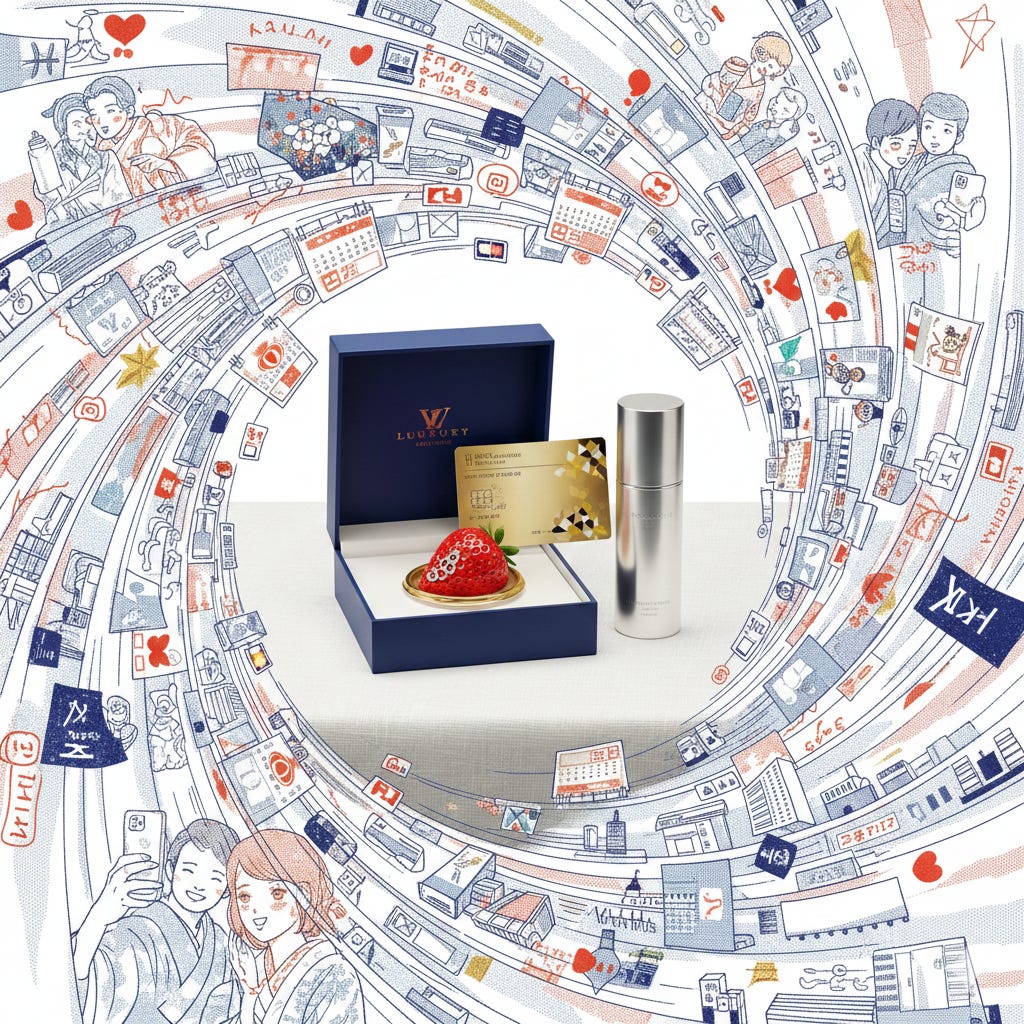
The scene is a Tokyo regional office in late February. A European luxury brand manager is laughing at a presentation about “White Day.” They see it as a transparent ploy by the National Confectionery Industry Association to sell white chocolate. They decide to ignore it, focusing instead on their global “Spring Awakening” campaign.
By March 15th, they are staring at a massive missed opportunity. While they were waiting for “organic” consumer interest, their competitors—who understood the Sanbai Gaeshi (Triple Return) mandate—have captured the entire quarter’s discretionary spend from every salaryman in the country. This wasn’t a “gimmick” they missed; it was a mandatory debt-collection window.
This is not a culture issue. This is a Reciprocal Debt Failure.
To a Western executive, the idea of Christmas as a “date night” or White Day as a “return gift day” feels like shallow commercialism. This is a fatal misdiagnosis. In Japan, these days are not about “romance” as an emotion; they are about Reciprocity as Social Governance.
The reason Christmas is for couples (not families) and White Day exists at all is rooted in the “Switching Logic” of the Japanese holiday system.
* The Christmas Shift: In the West, Christmas is a family obligation, leaving New Year’s for social partying. In Japan, New Year’s (Oshogatsu) is the non-negotiable family ritual. This left a “festive void” in late December. In the 1980s bubble economy, media engines (like An-An magazine) and J-Pop icons (like Yumi Matsutoya) successfully rebranded Christmas Eve as the “Ultimate Date Night” to fill this void.
* The Valentine’s Error: Due to a 1950s translation error by a chocolate company, Valentine’s Day in Japan became a day where women give to men.
* The White Day Correction: Because Japanese society operates on O-kaeshi (the mandatory return gift), a one-sided Valentine’s Day created massive social tension. White Day was not “invented” as a gimmick; it was “engineered” as a release valve for the social debt men incurred on February 14th.
This is not a Gimmick. This is a Permission Structure.
The irreversible insight is this: In Japan, consumer spending is driven by “The Requirement to Respond,” not “The Desire to Buy.”
White Day is the most prominent example of the Response Logic. It is the day the “market” gives men permission—and an obligation—to spend exactly 3x the value of the gift they received (the Sanbai Gaeshi rule). If your brand is not positioned as a “Valid Response,” you are invisible to the consumer.
This logic is why “White Day” isn’t a gimmick: it’s a structural necessity. If a man fails to provide a White Day gift, he isn’t just “unromantic”—illegally in the eyes of the social system, he is a “debt defaulter.”
The Strategic Reframing
* Not Marketing Gimmickry → Social Infrastructure: White Day provides the “Answer” to the “Question” asked on Valentine’s Day. Brands that treat it as a “sale” fail; brands that treat it as a “solution to a debt” win.
* Not Western Christmas → The “Blank Canvas” Opportunity: Because Christmas has no religious or family weight in Japan, it is a high-stakes performance of luxury. It is the only night of the year where the “Set Menu” (the pre-determined, high-priced package) is the only acceptable choice.
The Bottom Line
Your global team sees a “gimmick” where the Japanese consumer sees a “deadline.” If you don’t provide a clear, high-status “Answer” to the seasonal debt, you aren’t being “authentic” to your brand—you are simply being useless to a consumer who is under immense pressure to perform.
Over to You
Where in your product lineup is the “Sanbai Gaeshi” (Triple Return) solution that a panicked Japanese consumer can use to settle their social debt?