There is a kind of exhaustion that sleep cannot reach.
It is the exhaustion of carrying a life that no one else seems to feel responsible for. Of being surrounded by people and still wondering who would notice if you began to disappear. Of hearing that you belong while discovering, when you need something, that belonging comes with very little help.
I keep returning to three words: a shared life.
I mean a life in which what happens to you matters to someone besides you. A life in which your hunger changes what someone does with their abundance. Your exhaustion changes what someone asks of you. Your absence is noticed, and your presence is wanted even when you have nothing useful to offer.
That is a question for all of us. What would it mean to live as though our neighbors have a claim on our care?
Jesus placed love of neighbor beside love of God. In Matthew 22, the command to love our neighbor as ourselves belongs alongside the command to love God with our whole being. We have spent centuries finding ways to make the first command sound spiritual while making the second optional.
But the neighbor has a body. The neighbor needs somewhere to sleep. The neighbor may be frightened, underpaid, grieving, or so worn down that answering a simple message feels like another task they cannot manage.
Loving that person requires something of our actual lives.
In Luke 10, a man asks Jesus who counts as his neighbor. Jesus answers with a wounded person beside a road and a Samaritan who stops. The Samaritan allows another person’s suffering to interrupt his journey. He tends wounds, arranges shelter, pays for care, and makes provision for what comes afterward.
The story ends with an instruction to do likewise.
I wonder how much of our communal life would change if we took the afterward seriously. We can be remarkably generous during a crisis. The harder question is who remains when the urgency fades and the need continues. Who checks again? Who remembers that grief outlasts the funeral, that illness outlasts the fundraiser, that losing a job can unsettle a household long after everyone else has returned to normal?
A shared life has room for the afterward.
The biblical insistence on caring for widows brings this responsibility close to home. In the world of those texts, losing a husband could leave a woman without income, protection, or standing. Scripture repeatedly places responsibility for her wellbeing upon the people around her. Her loss must matter to the community.
There is a human truth here that reaches anyone who has lost a partner. The person who knew the rhythms of the day is gone. The one who noticed whether you had eaten, remembered what worried you, or helped carry the ordinary weight of living is no longer there. Bereavement can take away an entire pattern of shared life.
Community cannot replace that person. It can help keep grief from becoming abandonment. It can remember that the surviving person still needs companionship when the visitors have gone home. It can make sure that a household becoming smaller does not make a life less visible.
Caring for the widow asks us to keep showing up where a shared life has been broken.
The first believers understood that faith created responsibilities between them. Acts 2 describes people sharing meals and possessions, directing resources toward those who needed them. Their fellowship reached into the material conditions of their lives. The person with less was someone whose need mattered to the whole.
That is the part we must recover.
Because there are people among us who have learned to earn their place through usefulness. They organize, encourage, give, volunteer, and hold everything together. Everyone knows whom to call when something needs doing. Far fewer people know when that same person needs help.
And there are people who cannot keep up that performance. Their resources are gone. Their bodies have limits. Their grief is inconvenient. They need to know whether there is still a place for them when they cannot carry their usual share.
Community must be able to answer yes, and then give that yes a practical form.
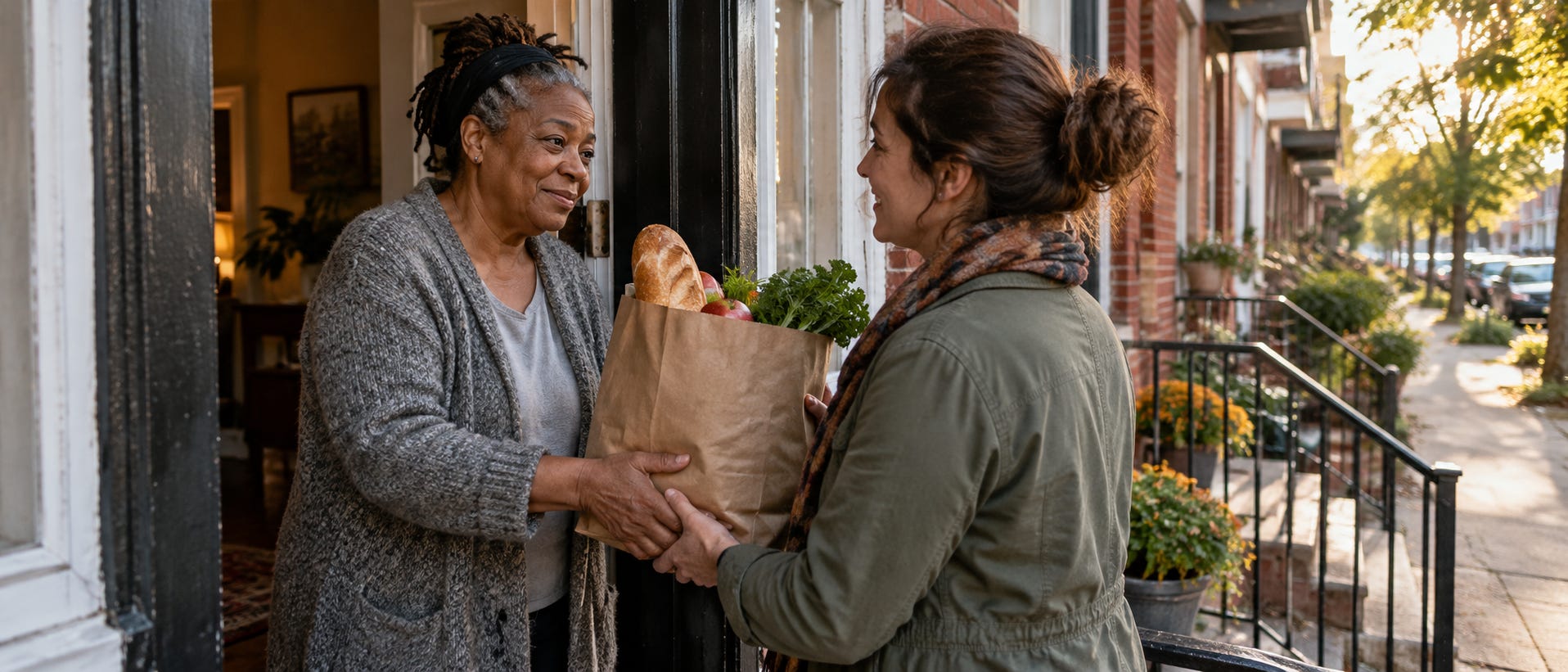
A meal. A ride. Someone willing to listen without turning pain into an assignment. A person who remembers the appointment and asks how it went. Enough trust to say, “I cannot manage this alone,” without wondering whether honesty will cost you your welcome.
These ordinary acts teach us something about love: another person’s reality is allowed to change our plans.
And that responsibility follows us into public life.
Civic responsibility is one of the ways we decide whether our neighbors’ lives matter. A budget determines whether help exists. A policy determines who can receive it. A vote helps place power in hands that can protect people or make their lives harder.
Under the Trump administration, the 2025 law expanded SNAP work requirements and removed specific exemptions for veterans, people experiencing homelessness, and certain young adults who had aged out of foster care. Other exemptions may still apply, but the direction deserves moral scrutiny. Behind those categories are people trying to eat. Source: Virginia Department of Social Services
As a Christian, I believe we have a responsibility to ask what these decisions do to the neighbor. Who bears the burden? Who has to navigate another barrier while already struggling? What happens when a person needs help and the answer is another demand to prove they deserve it?
The command to love does not end at the edge of a ballot.
We cannot offer someone kindness at our table and stop caring about what happens to them beyond it. Our concern must follow them into the conditions that shape their days. Love of neighbor calls us to examine the power we support, the policies we excuse, and the suffering we have learned to discuss as though no actual person is enduring it.
I have no interest in a Christianity that teaches us to sing about mercy while becoming comfortable with cruelty.
Christ’s self-giving love for the church, described in Ephesians 5, gives us a picture of love that accepts a cost for the beloved’s good. His command in John 13 places that love among his followers: we are to love one another as he has loved us. That demands more than affection for people whose lives already fit comfortably beside ours.
It asks us to make room.
Room for the neighbor we do not understand. Room for the person whose needs will take longer than we hoped. Room for people who have been told, repeatedly, that the welcome will begin once they become someone else.
Making that room also means sharing responsibility. A community cannot survive by exhausting its most generous people. Care needs enough hands that someone can rest. Receiving help must be as welcome as offering it. We need to be able to take turns being strong.
So let this be an invitation to begin where you are.
Think of someone whose life touches yours. Ask how they are, and leave enough time for an honest answer. Offer something you can actually sustain. Return when you said you would. If you have been carrying too much, let someone know what help would look like.
Then carry that same attention into your civic life. Learn what a proposed policy would mean for the people affected. Contact the officials who represent you. Vote with your neighbor’s wellbeing in view. Support the work that makes care available, and challenge the decisions that make suffering easier to ignore.
We do not have to wait until our own lives are perfect to participate in a shared one. We can begin with what we have, and we can begin by admitting what we need.
Somewhere within reach of us, a person is wondering whether their life matters enough for anyone to show up.
May our answer have hands.
May it have time.
May it have the courage to become public.
And may we build a life together in which those who ask for care can find it, those who give care can receive it, and belonging becomes something we can trust.
A shared life.
God, teach us to live one.