There’s a strange rewriting of the gospel happening in America—not by skeptics, but by those who claim to defend it. The Trump era didn’t deceive the Church. He said the quiet part out loud. He told us exactly who he was, and millions of professing Christians voted not in spite of his cruelty but because of it. They wanted someone who would make them feel powerful again. In exchange, they traded the moral credibility of the Church for a fleeting illusion of control. Like Esau trading his birthright for a bowl of political stew, they sold their inheritance for the taste of dominance. This isn’t about politics. It’s about theology. Because when pulpits bless corruption, when hatred is baptized and mercy mocked, it isn’t the gospel of Jesus being preached—it’s the gospel of power.
George Orwell warned that totalitarianism thrives when language is emptied of meaning. “Freedom is slavery. Ignorance is strength.” The evangelical right has written its own catechism: “Cruelty is courage. Lies are loyalty. Power is righteousness.” They have traded the language of the kingdom for the slogans of empire. And like Orwell’s 1984, we are told not to believe our own eyes. Integrity is weakness. Empathy is compromise. Truth is whatever the Leader says it is. The Church that once claimed to speak truth to power now kneels before it, and calls that idolatry patriotism. Margaret Atwood’s The Handmaid’s Tale was meant as fiction, not prophecy. Yet as pulpits praise patriarchy and women are told their highest calling is obedience, the fiction begins to sound uncomfortably familiar.
The ministers defending this movement aren’t doing so by accident. They already believe God’s kingdom is a gated community. They preach a gospel where “For God so loved the world” somehow doesn’t include immigrants, queer people, or the poor. But the real Jesus said, “Whatever you have done unto the least of these, you have done unto Me.” The kingdom of God has always been a table, not a throne. It is where the hungry are fed, not where the powerful feast. Yet too many pulpits have confused hierarchy with holiness, and privilege with providence. This alliance with Trumpism has revealed that for many, the faith was never about holiness—it was about hierarchy. Not about the Word, but about weaponizing religion to protect comfort and control.
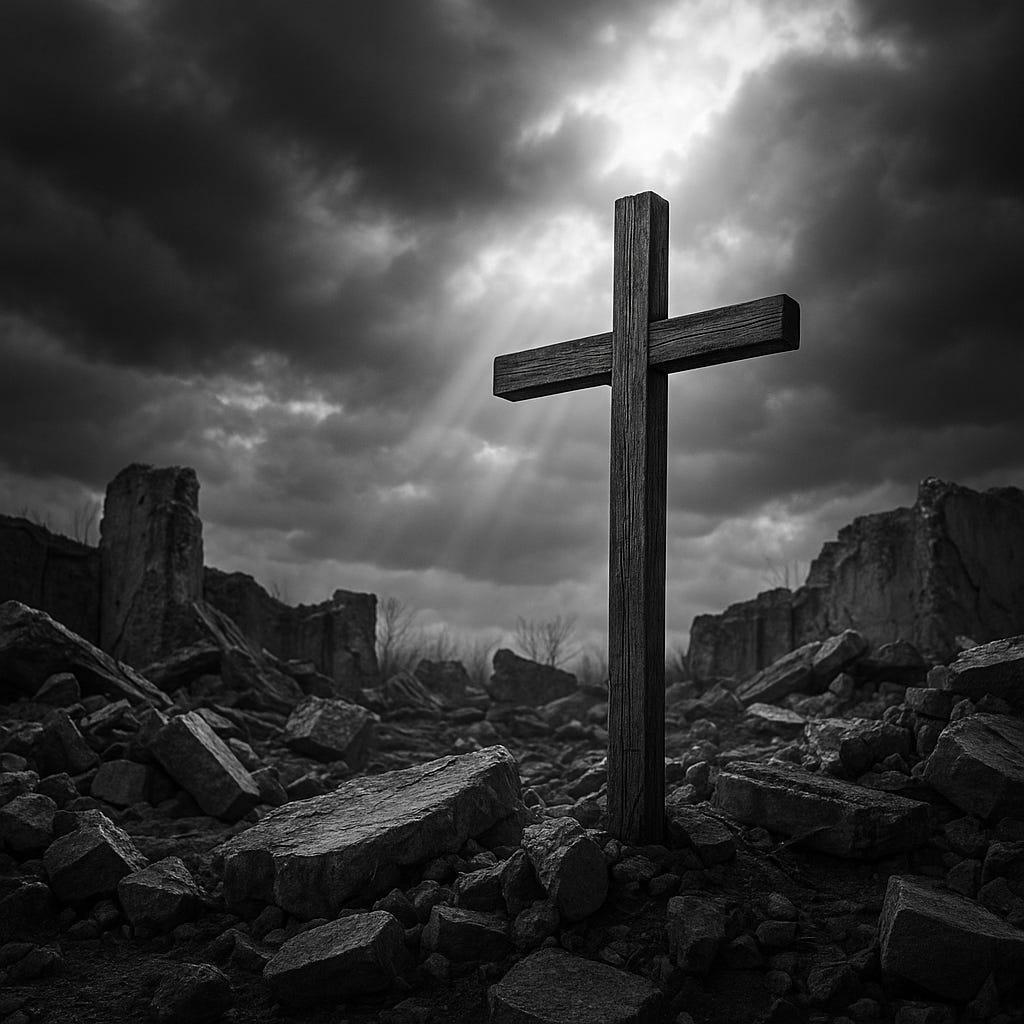
People aren’t trading democracy because they were tricked; they’re trading it because power feels intoxicating. They are willing to destroy the country if it means they don’t have to share it. That isn’t patriotism—it’s idolatry. When people who claim the name of Christ defend lies, cruelty, and corruption simply because it grants them dominance, they are no longer worshiping God. They are worshiping Caesar. They have turned the cross into a cudgel and the gospel into a campaign slogan. And in doing so, they have betrayed the One who said the meek—not the mighty—shall inherit the earth.
The Church must repent—not for losing power, but for lusting after it. Jesus never promised us control; He promised us a cross. He never told us to dominate; He told us to serve. He never told us to win; He told us to love. When the people of God trade compassion for conquest, they cease to be the people of God. This is not rebellion—it is lament. And like the prophets before us, we must name what has gone wrong, even if our voices tremble while doing it. Silence is complicity, and complicity is consent. Every time the Church chooses silence over truth, it adds another brick to the wall separating it from its own soul.
And yet, even now, God is raising voices that refuse to bow. Voices that remember that Jesus did not die to make America great—He died to make the world whole. The kingdom of God does not arrive on Air Force One. It is born in hearts that choose mercy over might, truth over tribalism, and grace over greed. The power of the gospel is not in how loudly we shout it, but in how faithfully we live it. Perhaps the true awakening won’t thunder from pulpits, but whisper through the lives of those who choose love over power.
This is not a political essay—it is a lament. I write it as one who still believes that the gospel of Jesus is radically inclusive, utterly non-partisan, and deeply subversive to empire. For God so loved the world. All of it. No exceptions. The kingdom belongs to the peacemakers, the merciful, the poor in spirit, and the persecuted. And until the Church remembers that, we will keep mistaking dominance for devotion and mistaking the flag for the cross. Because when faith weds itself to fear, it gives birth to tyranny.
Yet grace is more stubborn than fear. Long after power fades and false gospels crumble, love will still be building what hate tried to destroy. The cross will outlast every empire, still calling us back to mercy.