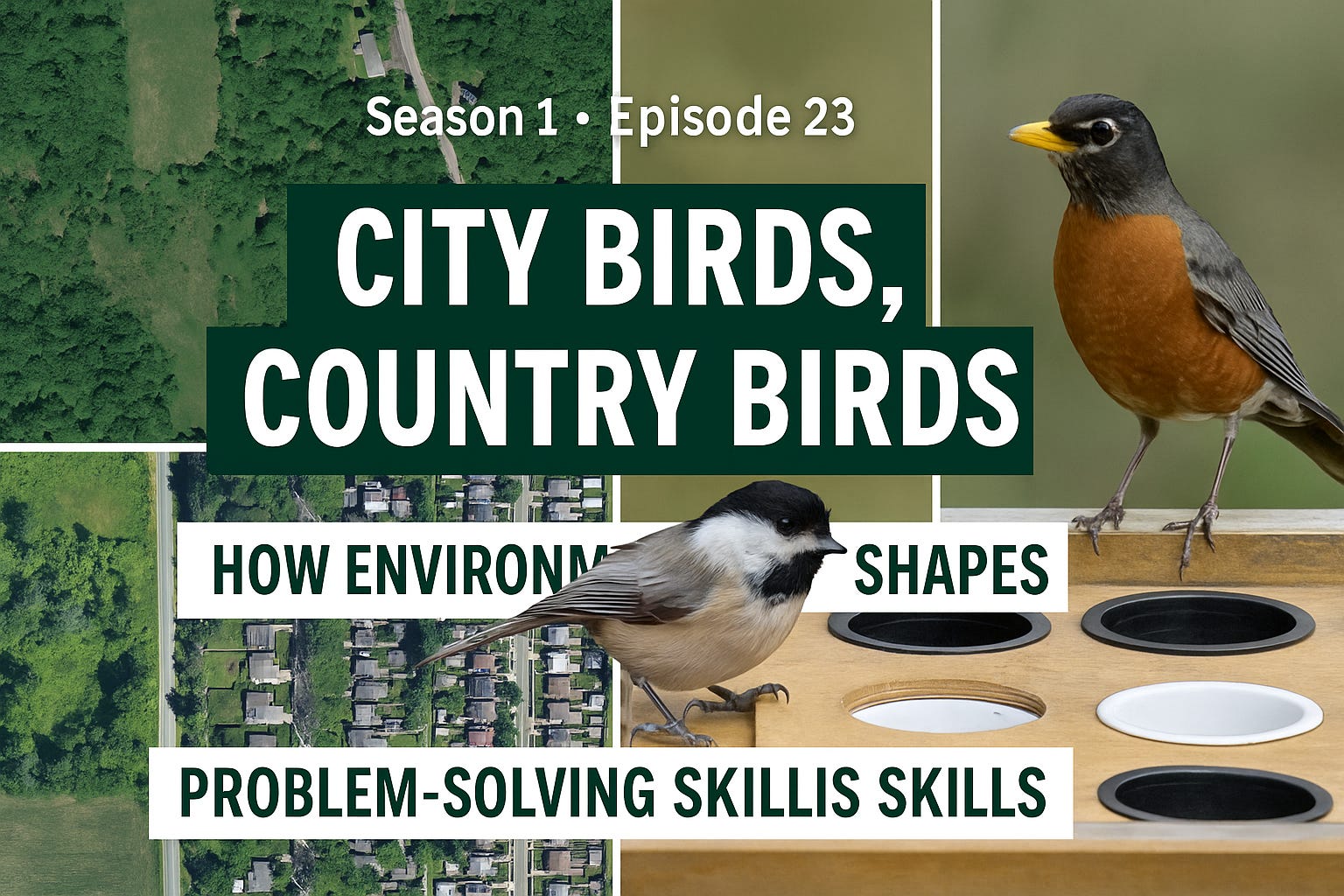
n this episode, we explore a fascinating field study that examines how songbirds living in different environments—urban backyards, rural forests, suburban edges—approach new challenges. Researchers deployed custom-built, puzzle-based feeders across 20 sites in Illinois to test birds’ neophobia, problem-solving ability, and behavioral flexibility.
The findings turned expectations upside down.
Although many lab studies suggest that urban birds are better problem-solvers, this real-world experiment revealed the opposite: rural forest birds—especially black-capped chickadees—were the only ones who consistently attempted and solved the feeder puzzles. Urban and suburban birds visited freely during the habituation stage, but once solving was required, they largely abandoned the feeders.
The study also uncovered key environmental and behavioral factors driving this pattern.Mammal competitors—like squirrels and raccoons—dominated urban sites, discouraging birds from using the window bird feeder. Birds in rural forests, with fewer competing species and fewer alternative food sources, showed increasing efficiency over time and mastered the puzzle more quickly. The study’s phase diagram on page 31 clearly shows the escalating complexity birds faced—from open feeders to color-coded lids used in association and reversal tasks.
This episode unpacks what these findings reveal about avian cognition, motivation, environmental pressures, and why studying animals in the wild sometimes tells a very different story than studying them in the lab.