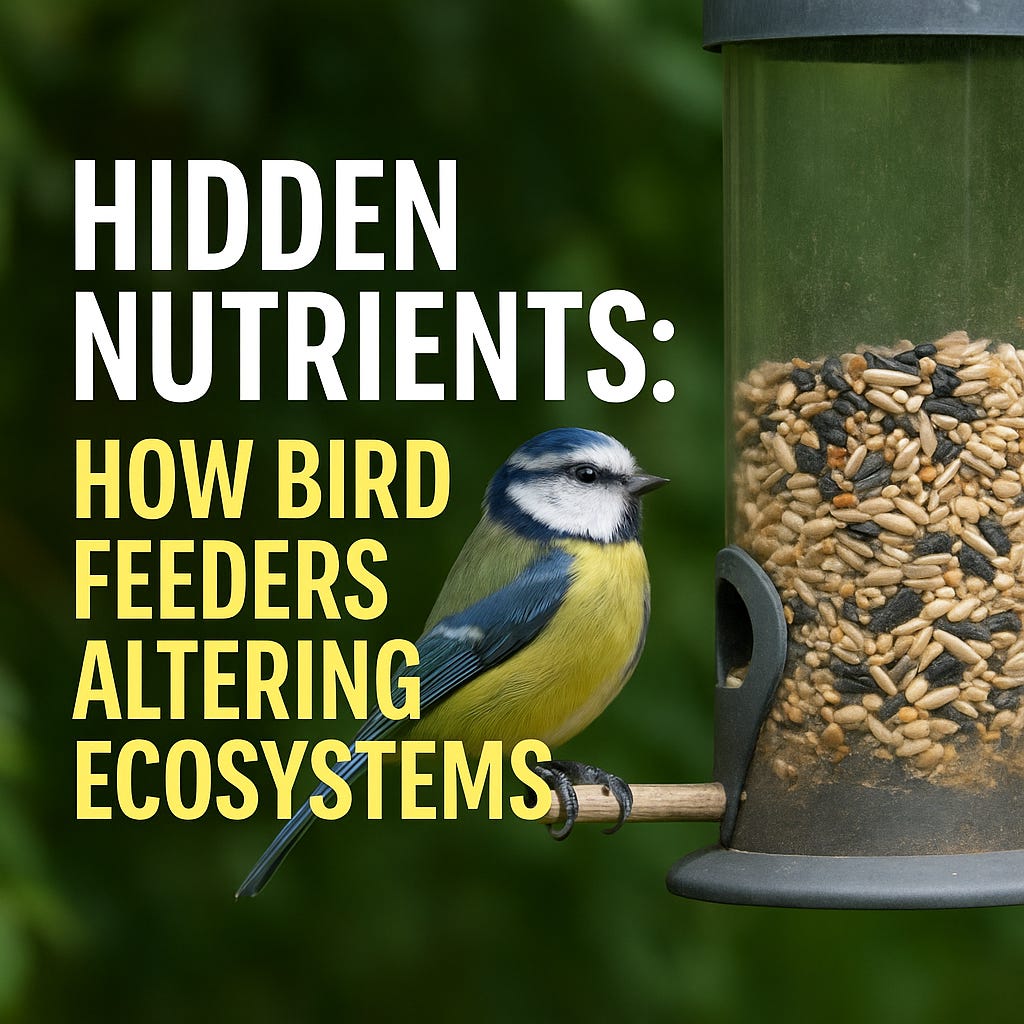
Bird feeders may seem like a simple way to enjoy wildlife or help birds through tough seasons, but new research reveals that feeding birds introduces powerful nutrient subsidies into the environment, with ripple effects far beyond what most people imagine.
In this episode, we explore a groundbreaking study published in People and Nature that investigates how the food we place in backyards moves through local ecosystems. The research shows that garden bird feeding doesn’t just influence bird behavior and populations -it alters phosphorus cycles, nutrient flows, and ecological dynamics in surprising and sometimes overlooked ways.
We unpack how these nutrient-rich foods accumulate in the environment, how they affect species interactions, and what this means for biodiversity in urban and suburban areas. You’ll learn:
* How bird feeders unintentionally modify nutrient inputs into ecosystems
* How birds redistribute these nutrients across space, affecting plants, soil, and other wildlife
* Why phosphorus from a window bird feeder acts like a quiet ecological engine
* How human neighborhoods are becoming hotspots of unintended nutrient enrichment
* What this means for responsible feeding and sustainable wildlife support
Through this episode, you’ll gain a deeper understanding of the hidden ecological consequences of one of the world’s most popular wildlife hobbies. It’s a fascinating look at how small, everyday actions can shape nutrient cycles, influence biodiversity, and subtly, but meaningfully, change the natural systems around us.
Join us as we dive into the science behind these hidden nutrient pathways and explore how intentional, informed feeding practices can help support healthier ecosystems.