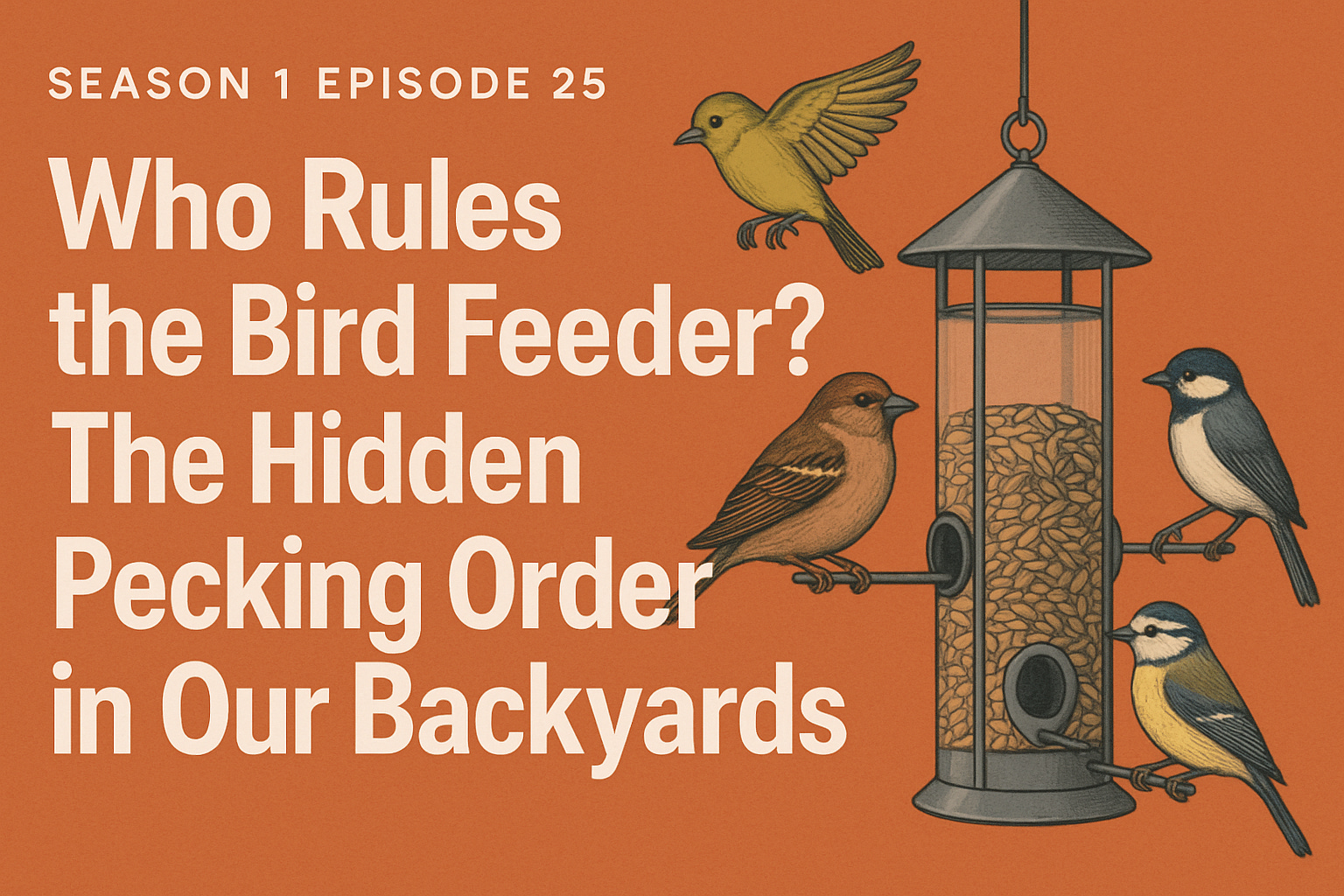
In this episode, we unpack a fascinating study that looked at what really happens at our backyard bird feeders—and why some birds always seem to get the best snacks. Researchers watched ten common garden bird species compete for two types of food: easy-to-eat sunflower hearts and harder, hull-intact sunflower seeds. They recorded more than 800 competitive interactions, capturing a surprisingly strict pecking order among species.
The key finding? Body size predicts dominance. Heavier species—like house sparrows and greenfinches—regularly chased lighter birds away and claimed the higher-value food (sunflower hearts). Meanwhile, smaller species such as coal tits and blue tits had to settle for the more time-consuming seeds or grab quick bites before being pushed aside. The dominance–body mass pattern is clearly illustrated in the chart on page 6, which shows species rank rising sharply with body weight.
The study also found that dominant birds spent more time on feeders and pecked more slowly, while subordinate birds fed quickly and nervously—behaviors visible in the foraging graphs on page 8. This “eat fast or get out” strategy may help them avoid fights but could also expose them to risks like higher predation or reduced time for essential activities like territory defense.
Ultimately, this research shows that backyard feeding doesn’t benefit all birds equally. By giving dominant species first access to the best food, we may unintentionally widen the gap between “winner” and “loser” species in our gardens—an important consideration for conservation and bird-friendly feeding practices.