About this episode
What if the reason American streets keep getting built wrong isn’t that engineers are careless, but that a whole profession is missing from the room?
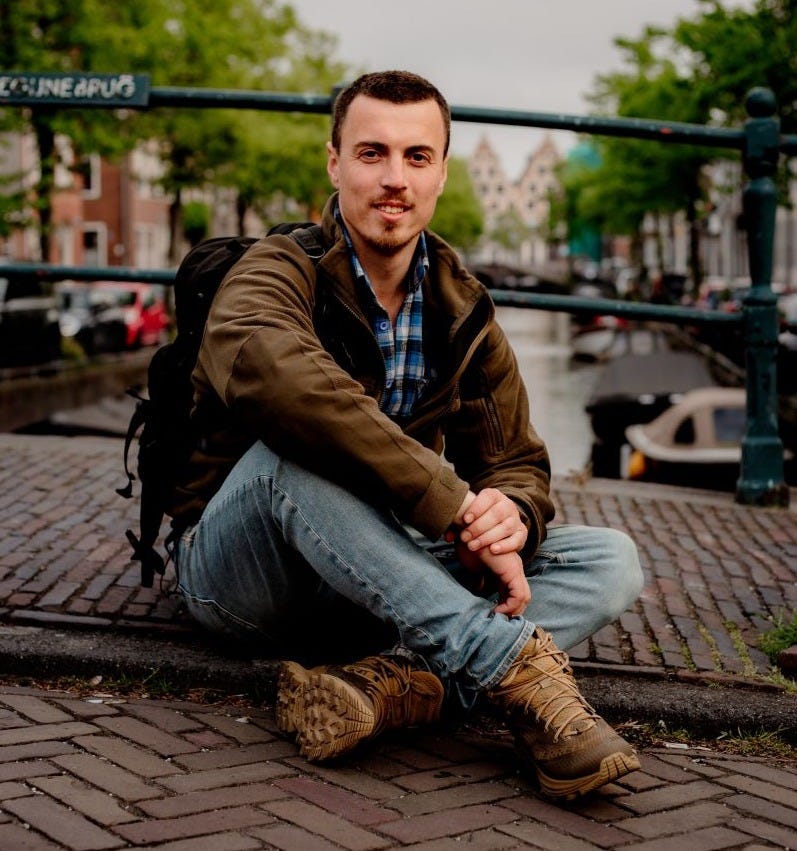
In this episode Seth Zeren talks with Steffen Berr, a civil engineer trained in California who moved to the Netherlands to learn and practice in a human-centered transportation system. Steffen made the case in his essay “America Has No Transportation Engineers”: in the Netherlands, transportation engineers and civil engineers are educated on separate tracks and work side by side, while in the US, civil engineers inherit transportation decisions they were never trained to make, so those decisions end up hard-coded into manuals.
They talk about why “double it for safety” fails on roads, how outsourcing spreads responsibility until no one owns a project, the role of professional licensure, how Steffen talked his way into a Dutch firm by learning Dutch in seven months, and why Morgan State University’s transportation engineering program is worth a look. Steffen also walks through a redesign of a crossing near Sacramento State, shares what he learned serving in Ukrainian air defense, and previews his forthcoming book on the science of movement.
Links
Articles
* America Has No Transportation Engineers, Steffen Berr, Next City (also republished by Strong Towns)
* American-Dutch engineer calls out root problem with American DOTs, Streetsblog USA profile of Steffen
Books
* Paved Paradise: How Parking Explains the World, Henry Grabar
* Recoding America, Jennifer Pahlka
* The High Cost of Free Parking, Donald Shoup
* The Death and Life of Great American Cities, Jane Jacobs
* On Movement, Steffen Berr (forthcoming working title)
Organizations and programs
* Arcadis, the consultancy where Steffen worked as a designer
* City of Haarlem, where Steffen worked as a traffic advisor
* Strong Towns, founded by Chuck Marohn
* Morgan State University, Transportation & Urban Infrastructure Studies, home of an ABET-accredited B.S. in Transportation Systems Engineering
* Sierra College and Sacramento State, where Steffen studied
* ASCE Mid-Pacific Student Symposium, the student competition Steffen mentions
* ASCE “Raise the Bar” (Policy 465), the push to require a master’s degree for licensure
* HS2, the UK high-speed rail project
* Not Just Bikes (YouTube)
* BicycleDutch, Mark Wagenbuur
* Jonathon Stalls / Pedestrian Dignity
Build the Next Right Thing is a reader-supported publication. To receive new posts and support my work, consider becoming a free or paid subscriber.
Transcript
Seth: Hello and welcome to the New School for City Builders. I’m your host, Seth Zeren, a recovering city planner turned neighborhood developer in Providence, Rhode Island. This is a podcast about how we can transform the education of city builders. If we want to change how our cities and towns work, we need to change the people who run them. We need a new generation of city builders: architects, engineers, planners, developers, city managers, and civic leaders. We need a new school for city builders.
Today I’m joined by Steffen Berr. Steffen is a civil engineer who designs transportation infrastructure to connect communities. Steffen has a BS in civil engineering in the US, but then moved to the Netherlands to learn and work in a human-centered transportation system. Steffen, welcome to the New School for City Builders.
Steffen: Thanks so much for having me. I would say I’m still a recovering American civil engineer, but I became a Dutch transportation engineer.
Seth: That’s going to be really interesting to talk about, that transition. The reason I reached out to you is you wrote a piece, maybe a couple of years ago now, for Next City entitled “America Has No Transportation Engineers.” That’s a spicy take. What do you mean?
Steffen: That title is something that I thought about for a very long time when I was writing this, because I was trying to come up with how I could describe the problem in just a single sentence. I wrote this article after I had worked in the Netherlands for around two years. I’d worked for the private company Arcadis, which is a Dutch company that does civil engineering work and transportation work for Dutch cities as a private consultant. And then I was also working for the City of Haarlem, I believe, at the time.
Working in the profession, I worked in the US industry, I worked in the Dutch profession, and I just noticed how projects were handled differently: the phases that projects would move through, how people would work on it. It differed quite a lot from my experience in the US. There’s lots of arguing in the US, and people say, “Man, these guys are uneducated, they’re stupid, they’re out of touch,” or “They’re bought by the car lobby,” or something like this. And I thought there’s a more fundamental issue here. How do I describe it?
The conclusion I came to was that there’s a completely missing profession in the whole project delivery process in the United States. In the Netherlands, you have both transportation engineers and civil engineers working on projects at the same time. Whereas in the US, it seems like you only have civil engineers, not really any transportation specialists.
It’s kind of like if you’re trying to build a building and you have a structural engineer and you don’t have an architect. That’s where so many of the issues in these transportation projects come from: there’s truly not a transportation expert who works on these projects. And the reason that these transportation experts don’t work on the projects is that we are not producing them at the university level, because there’s no separate education track for them.
It was never about trying to call somebody unqualified or stupid. It was just saying people are trying to do something they haven’t been properly prepared for, and how could anybody do it if they haven’t gotten the proper qualifications? So it’s not necessarily a criticism of the civil engineers. It’s just saying that you need a civil engineer and you need the transportation engineer, and the transportation engineer is missing.
Seth: That’s really interesting. Civil engineering as a concept, I’ve talked with other folks about this, comes out of the division between military engineering and civil engineering. The military engineers build the forts, civil engineers build the bridges and the roads, and so civil engineering as a discipline has come up as the civil side of building stuff. And today, if you go to a civil engineering program in the United States, there are a few different “specializations,” in air quotes, that you can do, but it’s generally a very generalist education. Everyone’s expected to take structures, everyone’s expected to take geotechnical, everyone probably has to take highway engineering; there’s that one class that people will take. Walk us through the different specializations that do exist in American civil engineering and why that’s not adequate preparation for what you’re describing as an alternate role.
Steffen: Civil engineering has five classical subfields, as the US system is set up: transportation, structures, environmental, water resources, and geotechnical. Geotechnical focuses on foundations, retaining walls, things like this; soil is the most complex material in the world. Transportation is anything having to do with roads and streets. Structures is anything to do with upright structures. Water resources has to do with dams, aqueducts, things like that. And environmental engineering has to do with handling environmental issues on a large scale, like how to decontaminate a construction site. For example, if you had an army base with lots of toxic chemicals, how do we engineer the environment to make it safe again for other uses? So those are the classic five.
I think you actually hit on something when you said a civil engineer will take highway engineering, and that goes to show you a lot. A civil engineer is going to know a lot about how to build the structure of the road itself: where the drainage pipes go, where the culverts go, what the slope of the road is, what the cross section of the asphalt surface is, how thick certain layers need to be. But what you’re not learning about is the nature of what’s using the road, and how the road itself needs to be configured in relation to everything else.
Civil engineers take introduction to highway engineering, but in this class you’re not learning where highways are supposed to go. Are highways supposed to run through cities? What impact do highways have on cities? Are highways a better solution? Why only highways? If you make everything based on highways, maybe you’ll think of all roads as highways.
In a way, you kind of answered the question right there: there are all of these pre-questions that need to be figured out before you even start building your road, and you need a professional to set them up and solve them. Instead of that phase, all these assumptions get made instead, for example that traffic will always grow, more roads are always better, wider is always better, and they get written into codes. So all of this real transportation engineering ends up basically getting automated and coded, and then the civil engineer takes over. A lot of times people yell at the civil engineer, but the real issue is upstream, where all of this has been automated because we’re missing the person who’s supposed to do this work.
Seth: Right. If you’re an architect or a developer designing a building, you’re going to hire a structural engineer to make sure it doesn’t fall down. But you’re giving the structural engineer direction on how big it is, mostly what it’s made out of, and what uses are going into it. You’re giving them a bunch of parameters, and those parameters come from an awareness of a bunch of other values (economic values, user values, aesthetic values) that the engineer designing the structure doesn’t really have to pay attention to. They’re just saying, “I have to build this envelope with these concerns. How do I do that?”
But on the transportation side, there’s a missing person. What we end up doing is saying roads and highways are a civil engineer thing, so the civil engineer is in charge of deciding what should go where and how. And because it is technical, and because there are all these rules that have been written and are in place, it can feel very daunting, not just to a private citizen but even to an elected official, to tell the engineer what they want. Whereas I, as a developer, can tell the civil engineer working for us, “I need it to do this,” and they’re basically going to do that within reason, because I’m the principal and I’m paying their bills. But when we come to the public sector and we’re designing public infrastructure like roads, there’s a missing agent making those trade-offs and decisions, saying our goal here is X, Y, and Z, and we’re going to spend this cost to get this benefit. There’s no one doing that.
Steffen: And that’s why it’s so hard to challenge these assumptions. The civil engineer doesn’t know what actually leads to these assumptions, so the civil engineer is not qualified to start changing them. And the kicker is that if they did want to change all these things, they would have to take on the professional liability. They haven’t been educated on how to, so why on earth would you?
Seth: Right. So it becomes a very defensive kind of...
Steffen: Yeah. It’s “I need to protect myself. I’m just trying to follow the rules.” And the civil engineer says, “Well, the rules say this; complain about the rules.” In a way, they do have a point. That’s why I said it’s not just that these guys are dumb or out of touch. There’s really something fundamental missing.
When scientific fields mature, they often branch out into different specializations, and that’s why we have architecture and we have structural engineering. Now imagine if we didn’t have architecture and you needed to build a city. You have a bunch of structural engineers and no architects to come up with good designs. So instead you come up with a manual of what you kind of know works: you can build this, this, and this, and that’s it, and you have to do it this certain way. Everyone just starts arguing about the manual instead. The structural engineers follow what the manual says, and eventually your city will probably look like s**t, because it looks very unorganic, like somebody just followed a script without knowing what they were doing.
Seth: It’s like you’re just filling in a spreadsheet. To take a little detour: when I was a city planner, I was really struck that there didn’t seem to be a lot of reasoning or thinking going on in the engineering department. This is going to sound pretty bad, but what I eventually realized is they were consulting their rule book and their tables, and that was determining what was feasible. This was strange to me, because my dad is a mechanical engineer. In electrical and mechanical engineering, a lot of other fields of engineering, there isn’t a book where everyone just follows the rules, because you’re trying to build an engine or some complex system. You’re operating under a bunch of constraints, including economic constraints, and you’re trying to build a useful product for people. But for some reason, civil engineering feels almost more like an actuarial table: “I need one of these. Check box, fill out the thing.”
Steffen: More bureaucracy, yeah.
Seth: And I think part of that is because there is, in some ways, a correct concern about the risks. You mentioned liability. In structural engineering, you really don’t want the building to fall down. I actually talked with Chuck Marohn from Strong Towns about this a long time ago, and he said when he was in engineering school, they had an assignment to design a dam. They go through all the equations, figuring out how it should be laid out, and the final step of the process was: double it. Just to be sure.
In some sense that could make sense in those other fields. But in transportation, because you’re dealing with a complex system, “double it for safety” actually ends up not working. It generates danger when you just say, “Well, we’ll do extra, do more.” That’s the wider lanes, the more lanes, the bigger streets. If you double the size of the steel member in a building, sure, it’s stronger. But doubling the size of the road doesn’t make it a better road.
Steffen: With those things in the engineering department you talked about, there probably is engineering going on, where they’re trying to figure out how to get the road to fit within the constraints of the natural environment, or where the drainage goes. That’s the engineering part; that’s where the civil engineer really excels. But all of this other stuff gets decided by codes, because no one else knows how to approach it.
Engineering often starts with a challenge or a question, and this is often absent in transportation engineering in the US. For example, there’s no overarching goal like “We need to reduce traffic by ten percent in the city. How do we design the road to have ten percent less traffic? How do we make that happen?” That question never gets asked, so there’s never an engineering question to solve. It’s just: there’s a developer coming in, we need to build a grid pattern, blah, blah, blah. And then it is very much like bureaucracy.
In the Netherlands, the whole process starts with a challenge and how to answer the question. The first person who works on it is a transportation engineer saying, “I need to design a system that engineers a solution to this challenge.” Then the transportation engineer hands it off to the civil engineer and says, “How do we structurally build this road and how do we do the drainage?” And the civil engineer solves that challenge. Of course there are codes and best practices in the Netherlands too; every field has that, especially structures, with standard beam sizes and concrete sizes. But you’re much more free to think. You hit the nail on the head about it often feeling more like bureaucracy in the States.
Seth: You studied civil engineering in the United States and then went to the Netherlands to practice, so we’ll come back to that in a second. It seems to me that to do this other thing we’re talking about, engineering where there are a lot of human users making independent decisions, it would take psychology, maybe even sociology, certainly economics, and understanding the role of transportation infrastructure in the greater project of the city or town, which doesn’t exist just to have roads and move cars. It has a bunch of other purposes, and you’re serving those purposes. It seems like a transportation engineering education would have to be a little different, a little broader, maybe a little more humanistic, with more social sciences, if you’re going to understand those trade-offs. That’s different from sizing the beam or the thickness of the asphalt.
Steffen: Yeah, and that’s also why it’s a different track. These things are always changing, especially at the university level, so if someone from the Netherlands is checking everything I say, I’m speaking generally. You have civiele techniek, civil engineering, and then verkeerskunde, traffic engineering, and they’re two different tracks where you study different things and solve different problems. I think you have to take four to six AutoCAD classes or something like this, so you really learn how to use the tool. You have to take a mandatory internship that lasts at least six months, I think. And there are quarterly projects or something like this. So there’s lots of practical experience that comes with it.
As for the social science stuff, how it works in the Netherlands is the university program is a bit shorter. I believe it’s three years, but it’s more specialized, because the Dutch education system is more specialized. You get split into three different tracks before you even get to university, and quite often people arrive at university having had, I would say, a more balanced and expansive general education. So the university doesn’t have to educate people on things high school never covered, and it can focus more on the specifics.
Seth: So a lot of that liberal arts, general education stuff is just happening in high school.
Steffen: For lack of a better word, yes. And you don’t have to go to university to do this. There’s a second track, and another route you can go through. Quite often people go through different tracks and end up in the same company, in the same position. It’s kind of hard to describe, but it’s more specialized and separated. What really struck me was when I asked one of my coworkers how many courses of this stuff she had to do. It was ten to twelve, whereas I had one to two. Of course she knows more than I do.
Seth: So how did you decide to become a civil engineer in the first place?
Steffen: When I went into engineering, I started at Sierra College in California, which, for anyone wondering whether to go to community college, I can’t recommend highly enough. They start you off with a two-year general engineering degree where you’re taking all your physics and math prerequisites. Of all the tracks of engineering, I was very interested in materials engineering, but I liked that in civil engineering you can really see what you’re working on. I’ve always found infrastructure in games like SimCity very interesting. I didn’t have to make myself be interested in it; I found it interesting because I’m constantly interacting with it.
When I went into civil engineering, the transportation track appealed to me a lot, because when I was taking these classes it felt like we didn’t actually have a lot of things figured out well. I liked how it often overlapped with other subjects like psychology and the environment. It seemed less like “check this code book,” which is what it’s like if you want to be a structural engineer. It felt more rounded out, and there were things to figure out and to improve. So senior year of college, when I was taking introduction to highway engineering, I decided I wanted to go the transportation track, and I got lucky enough to take, I believe, two electives.
Seth: And did you say you worked in civil engineering in the US before you moved to the Netherlands?
Steffen: I did. I worked for just under two years for a private consultant that did projects all over California.
Seth: And that was transportation engineering with them? So you got a flavor of American transportation engineering.
Steffen: Yeah. I first worked as an intern at several places, in civil engineering and on the transportation side of things. I worked for a government agency, a private design company, and a construction company, so I tried a little flavor of everything. Then I worked with this private consultant for close to two years.
The starting track of how this works is they make you a junior designer in a program like AutoCAD. Your job is to draw out the designs on the computer for all these projects, and someone else is making the fundamental decisions. So you’re learning the mechanics of how to design everything, and that’s really where your education begins. But when you start finishing other people’s designs, that’s when you start asking: Why is this decided this way? Why do we put it here?
Seth: There’s a real dynamic, true of a lot of the city building professions, that it’s fundamentally apprenticeship. You can learn a certain amount in school to be useful, but in engineering and architecture you have to get hours for your licensure, you have to go through a lot of field time. One consequence is that a lot of your education happens at existing firms that are already operating in the current ecosystem. If you’re learning transportation engineering, you’re probably working for a firm that does a lot of work for the DOT in your state, which means they’re following the rules...
Steffen: You’re learning all the lingo: “Follow DT 22-30,” or whatever. You’re learning the bureaucracy of it. And it’s kind of funny, because each class of new people goes in and nobody wants to question things. It’s like a game of chicken, where someone finally says, “Is it just me, or does this all seem completely ridiculous to you guys too?” But nobody really wants to say it, because you enter a world where everybody seems collectively insane, and most people just assume...
Seth: “Am I the crazy one?”
Steffen: Yeah. Obviously some of those people just don’t care; they want the paycheck, or it makes sense to them. But there are definitely people who think, “This doesn’t seem right,” and they just assume it’s them and that they need to learn more about the system for it to make sense.
Seth: That’s one of the places where there is some hope in American civil engineering: more and more civil engineers are realizing that some of the stuff we’re doing doesn’t make any sense. We’re trying to get them over that preference falsification line, where they understand that just because the system doesn’t make sense doesn’t mean they’re crazy. But it’s hard, because there are licensure boards and state accreditation bodies, there’s an institutionalized culture, and you can get in trouble if you step too far out of line.
Steffen: There were two events that really made me feel like I was in the Matrix. One: you always have to do a cost estimate for projects, and what they had us do was go through a spreadsheet of past projects and just average it out. I thought, wait a minute, if we’ve been doing this for five or six years, how did we start? I’m just summarizing someone else’s summary. This doesn’t make any sense at all. Why are the costs for all these projects so different?
The other one was when we had days-long discussions about the exact place a certain sign would go, or we’d sometimes have to custom design signs. And I thought, this is not engineering. The contractor should be figuring this out, not me. What are we talking about here, whether the sign goes six inches to the right or six inches to the left? This is ridiculous.
Seth: And again, you’re also not trained in graphic design or the science of human perception, which might be relevant if you’re doing really careful sign design.
Steffen: Yeah, something really just felt off. In the US, they often have to put some kind of geographic coordinate for where the sign is supposed to go. Here, we just say “put sign here” and leave it up to the contractor to decide exactly where it goes, which makes sense. The contractor actually knows where everything is, the contractor is educated on proper sign placement, and they can do a better job placing the sign in person than we ever could from behind a computer screen.
Seth: This is a bit of a tangent, but one of my first experiences was running a large construction project at my first development firm. It was a big site project, several acres; we were tearing one building down and rearranging the site circulation, and there was a culvert involved that we had to not collapse. I remember we did this very detailed design that I had to get through permits, where we presumed somehow that we would know what was going to happen. And of course, as soon as we put a backhoe in the ground, it didn’t work out that way. So what was the point of this expensive design work? We needed it to get the permit, but it was never going to amount to anything. I needed to give enough direction, but a lot of it was going to be figured out in the field, because it’s a complex environment.
Sometimes we front-load a lot of the design decisions, and then everyone down the line is given permission to be stupid, because it’s not their job to think. They just put the sign where it is on the plan, even if that’s a bad idea, because their contract says to follow the plan. No one actually has to engage their brain; in some sense, they’re encouraged not to. But that’s an impossibility, because you can’t solve all the complexity of the world from a CAD screen in an office building across town. That’s just not how the world works.
Steffen: And there’s not a single person who’s responsible for solving it. That’s again the issue, what I feel is missing. This also gets into an additional problem: it’s easier to become aware of this issue when you’re doing most of your work for a city in-house. What happens now is you have distributed insanity, where everything is contracted out to different companies. Company A has to do the permit application, company B has to come up with the designs, and the city audits. Even though the city’s managing it, there’s no one person directly dealing with all of these parts who can say, “This is insane.” There’s no one person you can go to and say, “Let’s just knock this out in an afternoon and talk about what’s actually logical,” and that all the contractors can come to and say, “Let’s figure this out.”
If you’re splitting it up between ten people, in a theoretical world that could still happen. And this is also an issue in the Netherlands. It just never happens that way. That’s how you get all these awkward executions and, quite often, a justifiably frustrated public, because they want a person to talk to and yell at, and that person doesn’t exist. You can’t just go to Bob in the office who made a ridiculous sign choice. It used to be that way.
Seth: Part of the reason we’ve done that is because then there’s no one to yell at. We’ve distributed authority so no one can really be blamed.
Steffen: It’s also said to be more efficient, and in a way it is, if nothing ever changes, like a factory where things stay exactly the same and you have many competitors. But unless it’s a massive project, it almost never works out that way. I also talked to the City of Haarlem about this. Of course, I was just a humble traffic advisor, but I said, “Guys, so many of these projects would be better if we just did them internally, because then we’d have a stronger sense of ownership over all this stuff and we could notice all these extra issues.” They didn’t necessarily disagree, but that’s a city administration decision.
Seth: Yeah, it’s above our pay grade. It reminds me of a book by Jen Pahlka called Recoding America. It’s specifically about the challenges the federal government has implementing IT projects, particularly the case of HealthCare.gov, which she worked on with a number of other people coming from the tech industry to fix the government website. It was the same kind of thing: they had umpteen different contractors, the work was all parceled out in different ways, and no one was actually running the project at a core level. No one was fundamentally accountable, no one who could throw sharp elbows, make decisions, and move the thing forward because we’ve got a deadline to hit.
Steffen: I got that sense with HS2, the UK project, too. I worked on it a little bit. It was just subcontractor after subcontractor.
Seth: So part of what you’re describing is that it would be better for a lot of these things to have a principal in charge who’s responsible and has the authority to actually run the project.
Steffen: At least for small projects, like maintenance work. You have to redo a certain number of streets every year; you’re already planning for it, you’re already allocating money. So instead of hiring a private company, maybe it’s more cost efficient to have someone do it internally. You can always have an extra person check the work, or have a company audit it. There are ways to do this. And it used to be this way in a lot of cities.
Seth: Right. They used to do a lot more for themselves.
Steffen: If you don’t mind, Seth, there’s one more thing to add, because I feel like it’s really important. The Netherlands does not have a licensure system. The PE, the whole idea of engineers having a specialized license, is very much an Anglo idea. You’ll see that system in the US, Canada, the UK, Australia, and New Zealand. But in a lot of countries, for example the Netherlands, it does not exist. There’s no special license or credential. The word “engineer” is not legally protected. It’s treated like mechanical engineering or computer science; you don’t need a special piece of paper saying you can program. It’s a fundamental difference.
Seth: There are a lot of things that are different about the Anglosphere than the rest of the planet, as it happens. I imagine there’s something from common law that relates to the question of liability...
Steffen: You always need somebody to sue.
Seth: Yeah, you need someone to sue, and then somebody to insure them, and then somebody to make sure the person you’re insuring is a reasonable person. So there’s that layering.
Steffen: But think about how risky programming can be, with cybersecurity, or healthcare. Doctors are licensed, and that makes sense.
Seth: Or mechanical engineers don’t get PEs, and they design jet engines. I hear that might be a risky operation.
Steffen: Exactly. And it’s actually much safer, if you look at what people actually get killed by. I think there are many reasons for licensure, and I don’t know how many people are going to watch this, but I think one big motivator is that it’s done to artificially throttle the supply of qualified people, which leads to an increase in salaries. If you say a qualified PE must work on this, guess what? There’s going to be a lot more demand for PEs, and they get paid a lot more money.
And the American Society of Civil Engineers, I don’t know exactly who’s responsible, but when I was going to school they were talking about requiring a master’s if you want to become a licensed civil engineer. Which, guess what, throttles the supply even more. I don’t think forcing a transportation engineer to take one extra class in a master’s program is going to fundamentally qualify them. Yes, there are other reasons for it, but I think we have to be honest and say, “Hey guys, there are also selfish reasons this is being proposed.”
Seth: And for the universities too. They’re very happy to force everyone to get a master’s degree they can charge a bunch of money for. So there’s a collaborative cartel effect, where the civil engineers at the middle of the system use the power of the state to protect their guild. I’m a real estate broker, a realtor, and we’re also a protected guild. It’s much easier to get into, but there are still exams and requirements and credentials, and it’s protected by the power of the state; not just any random person can do it. It’s fundamentally a guild. It creates a smaller pool of people that can police itself and extract economic rents.
Steffen: You could still keep it, but this is also why adding transportation is harder, and why civil engineers are more defensive. Now they have this piece of paper that says they know better than everybody else. Maybe that paper is valid when it comes to structural load calculations and drainage, but it does not apply to lots of other things. I’m not going to tell you to abolish the licensure system; I have no idea what would replace it or what that would entail. But I do like to explain to people that you’re making a mistake if you assume licensure is how it is in most of the world. It is not.
Seth: That perspective, that other countries do it differently and they’re not all dead, makes it possible to imagine different ways of configuring things.
So how did you decide to move to the Netherlands?
Steffen: It was a confluence of multiple things. Near the end of college, I got the sense that I wanted to move to Europe, because I started to become aware of how important things like walkability were. It was important for me to live in a place where I could walk and not have to drive everywhere. I noticed I was much happier as a person and felt less socially isolated when I lived somewhere walkable. Unless I could afford to live in San Francisco, that’s probably not likely in a lot of the US, and the whole idea of moving to Europe seemed like a big adventure.
But I had two problems coming out of college. The first is you’re broke, and the second is you’re not a hundred percent sure what you want to do. So I wanted to work first to earn some money. That solved question one. Question two was where exactly I wanted to go with my career. While I was working in this collectively insane system, I thought, I’d like to move to the Netherlands, because the more I learned about it, the more I realized these are the real experts on solving a lot of problems we can’t solve in the US.
When you’re stuck behind a desk doing some project you know is not going to work, you start spending time on YouTube watching things like Not Just Bikes. Not Just Bikes was just starting at this point, and I thought, damn it, this guy is saying exactly what I’m saying. If I ever make a YouTube channel, people are going to think I’m just copying him. There are also other YouTubers like BicycleDutch. It was kind of like that shining light on a hill: this is proof that I’m not insane, that there’s a better way to do this. So I wanted to go there and get experience working there. I did all of this education because I wanted to improve things. I didn’t just want to collect the paycheck, and I realized I was very unlikely to be able to do that in the US.
Seth: And how did the Dutch take you, as an American civil engineer? Were they skeptical? How did you get your way in?
Steffen: It’s a hard field to go into as a foreigner, because it’s one of the few fields where you must speak Dutch. You work for a city; you can’t tell city staff they have to talk to you in English. All the codes are written in Dutch, all the designs are in Dutch. So when I moved, I spent seven months in deep, intensive study trying to learn the language. I applied to a bunch of places, and everybody said no because my Dutch wasn’t there yet.
When I applied to Arcadis, I applied a second time and got invited for an interview. My Dutch was much better at this point, but they were still saying, “We’re not sure your language skills are good enough.” We had done two interviews, and I said, “What if we do a third interview in three months, do the whole thing in Dutch, and I prove to you that my Dutch is good enough?” They kind of laughed it off and said, “Sure, fine.” That was four months in, and three months later, at seven months, I did that interview. We did it all in Dutch, and they said, “OK, you can work for us as a designer,” which was the equivalent of my job in the US.
Seth: That’s not too bad of a transition. You just had to boot camp yourself in the Dutch language.
Steffen: It was all day, every day. Either I do this and succeed, or I fail. It was very much a sink-or-swim moment for me. That’s what I try to caution people about: if you want to move here to do something like this, you really need to learn Dutch, because otherwise it will be so much harder to get a job. And honestly, in my opinion, Dutch is probably the easiest foreign language to learn for English speakers, because grammatically it’s the most similar.
Seth: Interesting. So it’s connected in a lot of ways.
Steffen: Yeah, something like sixty percent similarity or something like that.
Seth: Looking back at your own preparation: if you didn’t have to leave the United States, if you could change one thing about your education, what would it be?
Steffen: If I knew ahead of time what I wanted to do, I would have liked for there to have been a parallel track. I would have added a transportation minor, which is maybe something existing programs could offer now; it’s maybe not too hard to add. Or some kind of parallel transportation engineering track where instead of taking all the civil courses, they say: “You’re going to be less employable than a general civil engineer, but if transportation is really what you want to do, here’s a track with all these specialized classes.” It’s basically your pre-engineering classes and then transportation-specific classes.
Seth: But how would you then navigate the transition? Part of the problem we’re describing isn’t just the education. It’s also that first firm you go work for, the apprenticeship process. You’re still going to be implementing someone else’s collective insanity. I don’t know how you solve that problem. It’s a culture change.
Steffen: It helps you push back more effectively against a collectively insane system, and it’s about getting a critical mass of people. If you have this, at least the collective insanity would get done a bit better. Qualified people can speak with each other and understand where the other person is coming from.
In the US, projects are split up into percent phases: zero to thirty percent, then thirty-five, fifty, seventy-five, ninety-five. It’s all a bit arbitrary. It’s similar here, but they have different names. You have the SO, the schetsontwerp, the sketch design; then the VO, the voorontwerp, the preliminary design; and then the DO, the definitief ontwerp, the definitive design. The civil engineer doesn’t really get that involved until you get into the VO. So the transportation engineer is free to run wild. They’re the ones who lay out the road and decide on the widths, really the main geometric design. They figure all this out, deal with the traffic, and then tell the structural engineer, “OK, now give us all of the structural and drainage information so the contractor can build it.”
It would help these transportation people, because I think companies would realize it makes sense to put a specialized transportation person on the first zero-to-thirty percent phase, because they can do a better job, and then hand it off to their civil engineers.
Seth: Especially in cities, where the city engineer may have a “transportation engineer,” quote unquote, but they’re not going to have that specialized knowledge. If you’re taking ten classes on transportation engineering, you’re going to get a highway class, but you’re also going to get a network design class, two classes on transit system design, a class on bicycles. You’re going to have a much richer set of tools for roadway design, roadway planning, and strategy than if you’ve come through a traditional civil engineering program, gone to work for a city, and become the transportation guy for whatever reason. You’re still fighting with them over whether they have the warrants to put a stop sign in an intersection by a school. It’s just like, what are we doing here, guys?
Steffen: You have a more fundamental knowledge of movement itself, which is what you were talking about, the overlap with economics and human psychology. If you really learn a lot about movement, especially movement in cities, you start talking about things like vectors. And you realize the issue with widening this road is that you’re going to undermine the perpendicular vector for crossing the road, which, for this part of the city, is extremely important, because people need to be able to cross the street to go shopping without it being a danger. And you understand the science: the wider the road and the more it feels like a highway, the harder it is to stop, so the less intuitive it is to stop. You learn all of these things. It’s about the science of movement in general, and then it becomes very, very logical.
Seth: What advice would you give a young person who’s watching Not Just Bikes and wants to do transportation engineering? Is it learn Dutch and move to the Netherlands?
Steffen: That’s an option. You could do that. But there actually is a program in the US. I learned about it after I moved here. It’s at Morgan State University, and they’re the only school, to my knowledge, in the US that offers an accredited transportation engineering program. It goes into many things, like logistics, but you’re going to get a much better education there if you want to learn about transportation than really anywhere else in the US. I’ve met the head of the program, and she’s now the dean of the entire department; we know each other. So I would say definitely go check the program out. It’s in Baltimore. And if we can increase demand for this kind of program, maybe more can start, and people can look at Morgan State University and say, “Maybe we can do something like this.”
Seth: You’ve got to have people out front leading, setting a different direction. Outside of schooling and outside of learning Dutch, what’s the best non-academic preparation you’ve had to be a city builder?
Steffen: When you say city builder, do you mean transportation, or...?
Seth: For me, city builders are this mix of the designers, the builders, the developers, the architects and engineers, all of those pieces. We tend to think of them as separate, individual professions. And one of the things that happens is we stop thinking of ourselves as participating in a collective endeavor, like we’re on a team made up of different roles. Instead it’s “I’m the engineer, I’m going to do my engineering, I may not have to listen to anyone else.” So, outside of school, maybe it’s YouTube videos?
Steffen: Honestly, I love to be outside and go on walks, and I think one of the best ways to notice or solve a problem is to go to the place where you want to engineer a solution, walk there, and watch how it works and functions. Watch the space and become deeply familiar with how movement works in that particular space. That’s also how I... My mom’s German and my dad’s American, and we went to Europe all the time, so we got used to walking everywhere. That’s how I became aware of so many of these issues: I experienced America at the sidewalk level, not only from the back seat of a car. And you realize, this is insane, this is not good.
There’s a guy named Jonathon Stalls, I don’t know if he’s still active on TikTok, but he runs Pedestrian Dignity. He’s all about walking across America, and he really tries to get local officials to walk in their cities, so they can understand why people are upset about certain things or why certain things are ridiculous.
Seth: Unless you’re actually out there at the street level... And I think for the design side, it’s not just ten minutes, either. If you could sit there for a day, you would learn a lot. Maybe it wouldn’t seem as efficient as sitting at your computer answering emails, looking at Google Maps, and drawing in CAD, but you actually...
Steffen: Yeah. Like, how about we actually walk the whole route or the trail we’re supposed to design, because that will be helpful experience for us.
Seth: And I think the challenge is it’s not quantitative. It’s hard to measure the results, because it’s just that the human has a better understanding; they’ve seen it. But it seems kind of insane to assume you could design it from halfway across town in an office building when it’s a physical place right there that you could go look at.
Steffen: You also asked about something I might want to change about my program, if you don’t mind me rewinding a bit. It would be great for programs to have actual scenarios you have to solve. They have something a bit like this called the Mid-Pac competition. I went to Sac State, and it’s a civil engineering competition that happens every year between different schools. There’s a geotechnical challenge, a transportation challenge. Usually the transportation challenge is something like: this thing needs to be rebuilt, come up with the design. A very detailed professional design, where you have to produce what an actual engineer would produce.
But I think we should do much smaller versions, where you take a problem area of the city and invite the students to fix the issue. For example, how do we make the buses run better? Believe it or not, that never gets done. I actually mentored some American students who did something like this. I forget which city it was, but we were looking at a bus route that passed under a bridge, and they were going about it the whole traditional way. And I said, “Hold on, guys, this is the assignment, and you’re making all these assumptions. Let’s take a step back. How do we fundamentally improve transit here?” I pointed out that maybe you could do a road closure here; they didn’t even think about road closures. And I asked, what is this street over here supposed to do? I invited them to think about it in a completely different light, and their minds just exploded, because they thought, “This is fun. We actually get to engineer.” We need that in education. We should have at least three or four of these mini projects or challenges as part of these transportation classes and programs.
Seth: That kind of case study and practical applied learning is becoming more common in a lot of places, maybe less so in engineering, but it’s tremendously impactful. When I teach real estate development, I give the students multiple sites they have to come up with a strategy for: do the financial model, do some schematic design work, figure out the pro forma, and pitch it to pretend outside investors. They do this whole exercise a couple of times, and that’s how they start to put all the ideas from the class into a coherent package and understand how the whole thing works and interfaces with the other parts of the system.
Steffen: Could I share my screen and give you an example of exactly what I’m talking about? How do I do this?
Seth: Sure. I think there’s a share button at the bottom of the screen. Can you see it?
Steffen: Yeah, I do.
Seth: OK, go for it.
Steffen: OK, let’s move into Sac State. Let me orient myself. I gave a lecture once at a class, and I was trying to get them to think like transportation engineers. There’s an existing tunnel here that crosses from the city into the campus, and I asked them what we can do to make this crossing better. People were just giving me very local geometric ideas: maybe we can extend this sidewalk out a bit, maybe we can add some markings with the right arrows. Really small ideas.
And I said, “Guys, again, the question is how do we improve accessibility to the campus in this area?” Let’s zoom out a bit. We have all of these buildings right here, connected to this really busy, wide Folsom Boulevard. These are all storage or automotive shops. And I said, this should be student housing right here, because there’s a huge need for student housing off campus. You could make this student housing, and then you could do some kind of road closure here. For example, you can leave Elvas Avenue onto Folsom, but you can’t enter from Folsom. Now this route can no longer be used as a cut-through route. It’s not serving through traffic anymore; it’s just serving local access traffic coming to the shops. So now you have a really safe environment for cycling. Students can cycle right in the middle of the street, and they can easily cross here to the underpass.
Then we can also talk about putting in a bike lane here. And you might be able to get rid of this intersection, because if this becomes a very calm street, you can make this a continuous road that has the right of way. Now that you’ve gotten rid of the intersection, you have more room for bike lanes, and so on. But they were just thinking, “We have a four-foot sidewalk, maybe we can make a five-foot sidewalk.” And I said, “Guys, let’s think about this like engineers...”
Seth: Zoom out.
Steffen: “...and not bureaucrats.” I have something I call the risk filtration matrix, where I talk about reducing risk to the users of the road. It starts at land use, goes through six or seven different levels, and ends with personal actions. I was using this as an example: let’s start with the zoning. If the students are living right next to campus and can easily walk to campus, that’s the safest way. Then let’s keep going down this inverted pyramid. So that’s just to give you and the viewers an actual example of what I’m talking about.
Seth: That’s excellent. So what’s next for you? What’s your life plan right now? Are you going to stick it out in the Netherlands, come back, spread the gospel?
Steffen: Well, I actually took about a year off. I was working for the City of Haarlem, and you can see I’m wearing a shirt related to Ukraine. That’s because I’ve been volunteering. At first I was just a driver: I volunteered to bring trucks to the Ukrainian army from Estonia, and we drove convoys to Kyiv. Then I joined the Ukrainian army in 2025 and served there for a year in air defense, shooting down Russian suicide drones. I just concluded my contract and came back around a month ago. Now I’m giving myself about a month to fix up everything in my house and get everything back to normal.
And then I’m working on a book about movement. As I described, I want to drag transportation engineering into the modern age. Instead of things just being done by code books, I’d like to explain and introduce the science of movement as it happens on paved surfaces. I’m going to call it something like On Movement, and hopefully it really describes to a lot of professionals how to think about transportation engineering.
Seth: That’s very exciting. I look forward to that. We’ll have to make sure it gets wide circulation. At least one copy; I’ll pre-order it.
Steffen: I’ll sell at least one copy, at least.
Seth: Just a couple of things at the end here. What’s one place people should consider visiting to learn more about building and running cities, and what lesson would they take away?
Steffen: I would really encourage them to visit Rotterdam in the Netherlands, because I’ve heard the excuse so many times that you cannot have good infrastructure in North American–style cities. Rotterdam was completely destroyed in the Second World War, and it was rebuilt like a North American–style city. That actually ends up being a benefit, because there’s now more space, and you realize it’s a lot easier to make a city like Rotterdam better than a city like Amsterdam or Haarlem, where you’re very constrained for space. I would say Haarlem is probably one of the most difficult cities for improving transportation at a network level, just because it’s so space constrained. It’s like playing Cities: Skylines on uber-hard level.
I would also recommend that, when it’s safe, you go to a place like Ukraine. It’s a bit of a time capsule, but it opens your eyes to what’s possible. To give you a really quick example, the cost of a metro ticket in Kyiv is 16 US cents for an unlimited one-way trip, and it’s a great system. For me, it was a whole perspective change: this is a country that’s significantly poorer per capita than the US, and it’s a country at war, and somehow their transportation system works. It helps you get rid of all these excuses about what is and isn’t possible.
You also realize how fundamentally important transportation is to our daily lives. The first time I went to Ukraine, we visited the towns of Bucha and Irpin, which are a bit north of Kyiv, where the Russian advance was stopped. The first thing that was destroyed was the bridge, because they had to stop the Russian forces. And it’s the first thing they had to rebuild, because you can’t get to the city until you have a reliable connection. I use that as an example: this is why we do transportation engineering. What we do is absolutely fundamental to human civilization, and this is why it’s so important to get it right.
Seth: That’s awesome. What’s a book you’d recommend to the audience?
Steffen: Can I plug my own future book?
Seth: You already did.
Steffen: OK, let me think. You always have the classics, like The Death and Life of Great American Cities by Jane Jacobs. But I could give you this one as an example: Paved Paradise. It gets into the science of parking, and it makes you think a lot about movement as a science. It helped me understand parking a lot better. Paved Paradise, by Henry Grabar.
Seth: Henry Grabar, Paved Paradise. It’s a great book, and he’s a very nice guy. It helps translate Donald Shoup to a lay audience, because not everyone’s going to read The High Cost of Free Parking.
Steffen: Exactly.
Seth: And lastly, what’s one thing that’s giving you hope for the future of city building?
Steffen: What gives me hope is that the old system will go extinct, because it doesn’t work. Chuck Marohn has illustrated this beautifully: every city that follows the traditional development model will have to change, because they will have no choice; they will be bankrupt. If you want to know whether you’re right or not, look at the science. We know what works. What gives me hope is that all the right things have all the necessary evidence attached to them. If you want to see what’s cheaper, what’s safer, what’s more sustainable, we already have all the evidence of where to go.
We also know from the growing interest: every year more people get involved in this movement and get educated. And everyone has a personal experience with roads and transportation, so people can inherently understand what you’re talking about and say, “This isn’t good. We need to do something better.” So: the high level of interest, and all the empirical proof out there that shows this is the right thing to do.
Seth: Fantastic. Steffen, thanks so much for coming on the New School for City Builders.
Steffen: It was a big pleasure for me to be on here. Thanks so much for your time.
Seth: The New School for City Builders is a production of the Educational Collaborative for Building Places People Love and Build the Next Right Thing. Please like and subscribe, share it with a friend, or leave a five-star review on Apple Podcasts. These things all make a big difference in helping grow the show. And if you appreciate what we’re doing and want to be part of bringing this school to fruition, please support us by becoming a paid subscriber at BuildTheNextRightThing.com.
Build the Next Right Thing is a reader-supported publication. To receive new posts and support my work, consider becoming a free or paid subscriber.