Summary
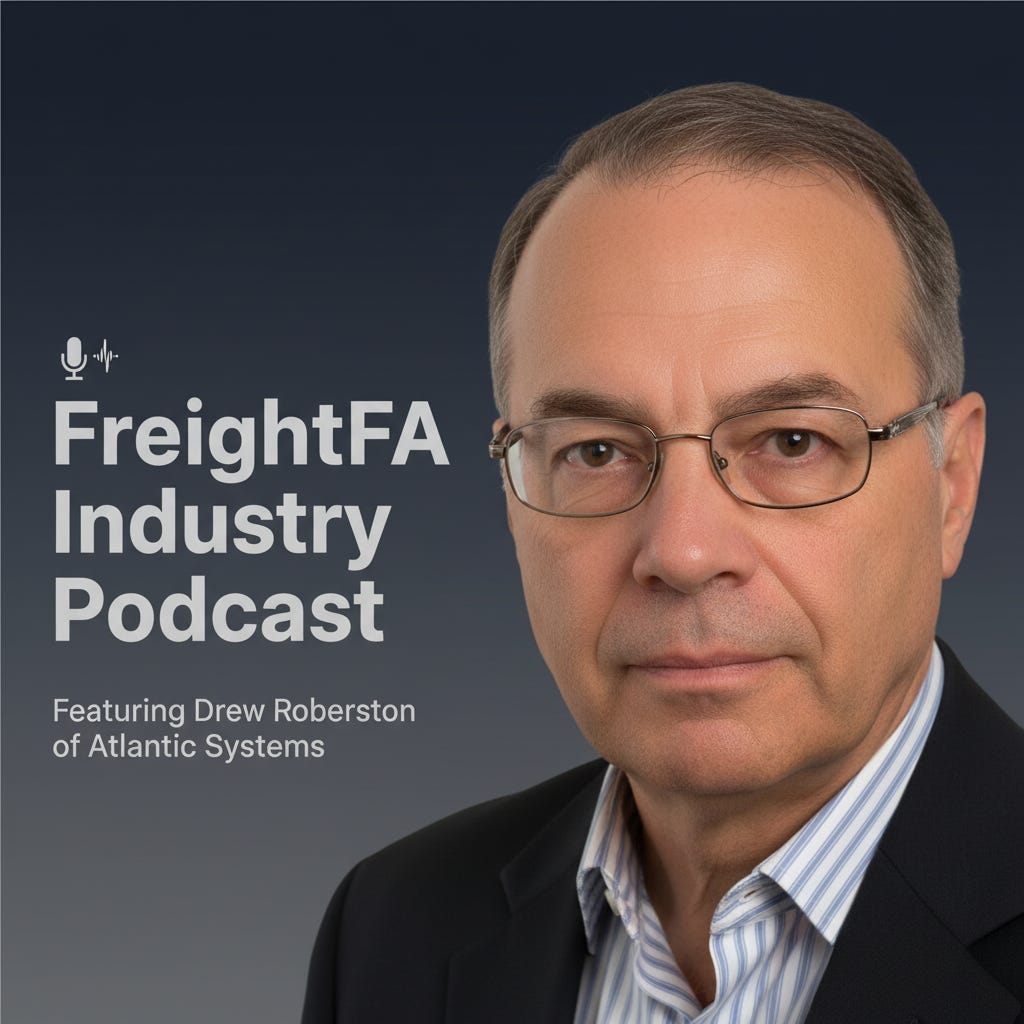
In this episode, Leon Daniels engages Drew Robertson, a seasoned transportation consultant, to discuss the complexities surrounding the potential merger between Union Pacific (UP) and Norfolk Southern (NS). Drew shares his extensive background in transportation consulting, highlighting his involvement in significant mergers and the development of computerized diversion models. The conversation delves into the implications of the merger, particularly the ambitious claim by UP to divert two million trucks from highways to rail, and the feasibility of such a transition given the current state of the trucking industry and intermodal capacity.
Keywords
Union Pacific, Norfolk Southern, transportation consulting, rail merger, intermodal logistics, trucking industry, freight transportation, supply chain, logistics challenges, Drew Robertson
Takeaways
UP's claim to divert 2 million trucks lacks supporting infrastructure.
The trucking industry is currently facing a significant recession.
Merger processes can take 18 months to 2 years, affecting economic conditions.
The Pareto Principle suggests that most profits come from a small percentage of customers.
Shippers should prepare for potential operational chaos and rate increases post-merger.
Titles
Navigating the Union Pacific and Norfolk Southern Merger: Insights from Drew Robertson
The Future of Freight: Analyzing the UP-NS Merger
Sound bites
"UP made the claim that they're going to divert 2 million trucks."
"Two futures: a fiasco or a de facto duopoly."
"Budget for higher rates in 2930."
Chapters
00:00 Introduction to the Merger Discussion
00:57 Drew's Background and Experience
02:47 Analyzing the UP-NS Merger Application
04:09 Challenges in Diverting Truck Traffic
07:16 Potential Economic Impacts of the Merger
10:20 Concerns Over Competition and Public Interest
12:41 Advice for Shippers and Drayage Operators
16:08 Closing Thoughts and Resources