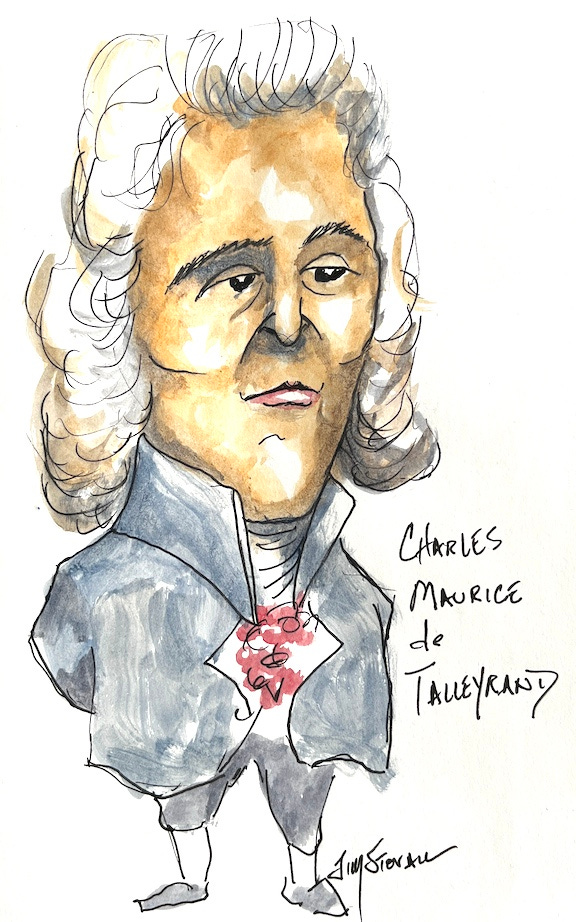
Charles Maurice de Talleyrand-Périgord approached intelligence work from an entirely different angle than Joseph Fouché. Where Fouché built systematic networks of spies and informers, Talleyrand operated at the highest levels of European diplomacy, using his position as Foreign Minister to gather and trade secrets. Born into one of the most distinguished noble families in France, crippled by a childhood accident, and forced into a church career he never wanted, Talleyrand discovered that intelligence and diplomacy were inseparable in the dangerous world of revolutionary and Napoleonic politics.
The intelligence operation of Talleyrand was characterized by high-level sources, sophisticated analysis, and elegant tradecraft. He cultivated relationships with foreign diplomats and officials, maintained secret communications with multiple governments, and used his diplomatic position as perfect cover for intelligence activities. Unlike Fouché, who preferred comprehensive surveillance of entire populations, Talleyrand focused on quality over quantity - a few well-placed sources at the highest levels of European politics.
What makes Talleyrand particularly fascinating is how he combined intelligence work with diplomatic brilliance. He did not simply collect information and pass it to decision-makers. Rather, he used intelligence to shape policy, identify opportunities, and execute diplomatic strategies. His years as Foreign Minister under Napoleon provided him with access to diplomatic intelligence from across Europe while allowing him to maintain secret contacts with the allied powers opposing France.
This episode traces the evolution of Talleyrand from reluctant bishop to Foreign Minister, examining how he survived the Revolution by betraying the church, prospered under the Directory through corruption and intelligence gathering, and served Napoleon while secretly preparing for the fall of the empire through clandestine communications with the allied powers.