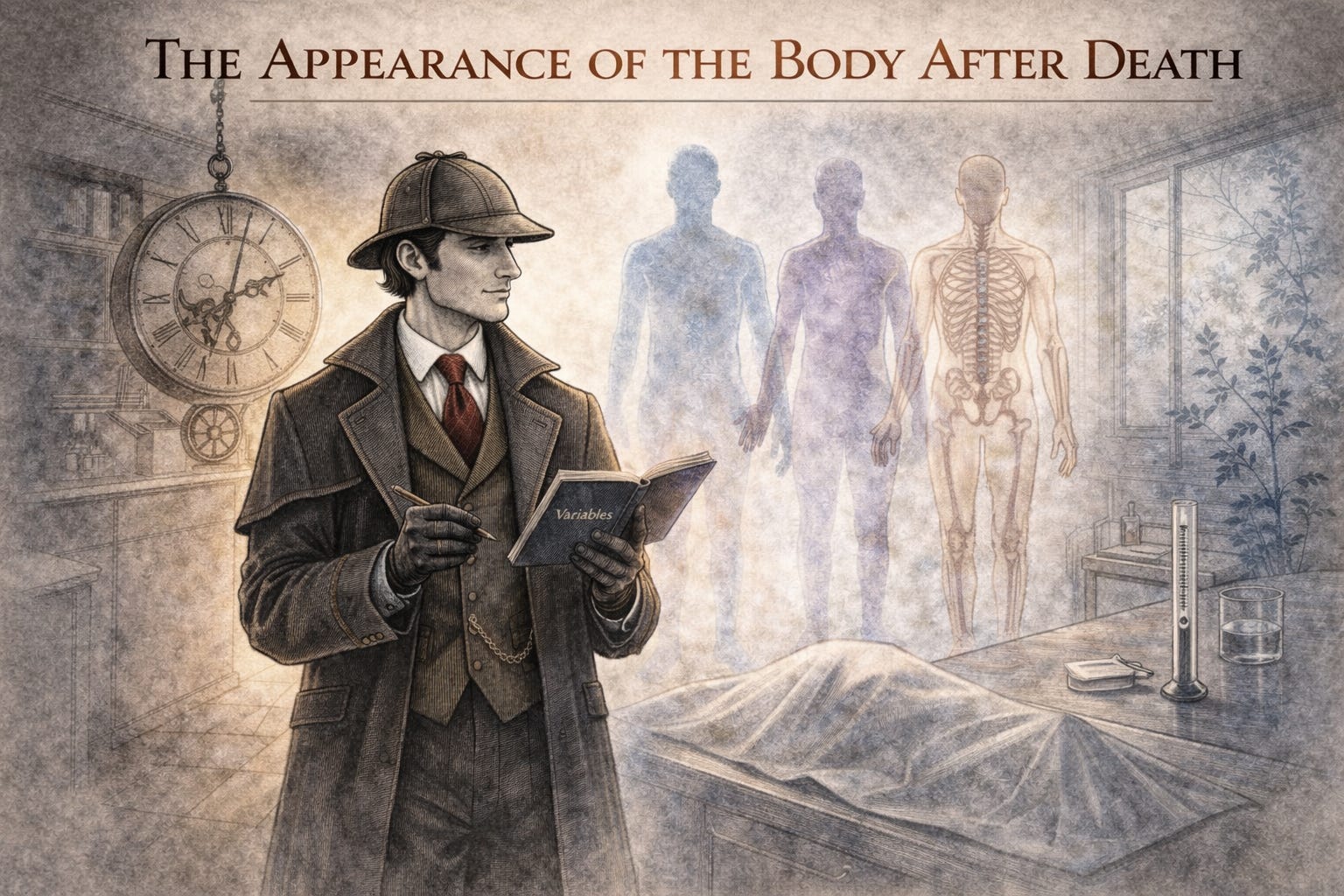
Once life has ceased, the body begins a predictable - yet complex - transformation.
In this episode, we explore the physiological and environmental processes that alter the human body after death. Understanding these changes is central to forensic interpretation. Post-mortem findings can inform estimations of time since death, movement of the body, environmental exposure, and even concealment.
We examine the classical early post-mortem changes:
* Algor mortis - the cooling of the body and the variables that influence it.
* Livor mortis - post-mortem hypostasis, its distribution, fixation, and forensic implications.
* Rigor mortis - the biochemical basis of muscular stiffening and its temporal progression.
We then move to later changes:
* Decomposition - autolysis and putrefaction.
* The influence of temperature, humidity, burial, immersion, and clothing.
* Insect activity and its relevance in certain contexts.
* Mummification, adipocere formation, and skeletonisation.
A crucial message emerges: post-mortem changes are influenced by environment, body habitus, and circumstance. They are guides - not clocks. Overinterpretation can mislead investigations.
The episode reinforces that:
* No single sign provides precise timing.
* Patterns must be integrated with scene findings.
* Artefacts can mimic injury.
* Documentation must be detailed and cautious.
The body after death becomes a silent record - but it must be read with scientific restraint.
Key Takeaways
* Post-mortem changes follow general patterns but vary widely.
* Temperature, environment, and body characteristics alter progression.
* Livor and rigor can inform but not definitively determine timing.
* Decomposition stages provide contextual clues.
* Careful differentiation between artefact and injury is essential.
* Estimation of time since death requires integrated assessment.
This episode reminds us: biology continues after death - and interpretation demands humility.