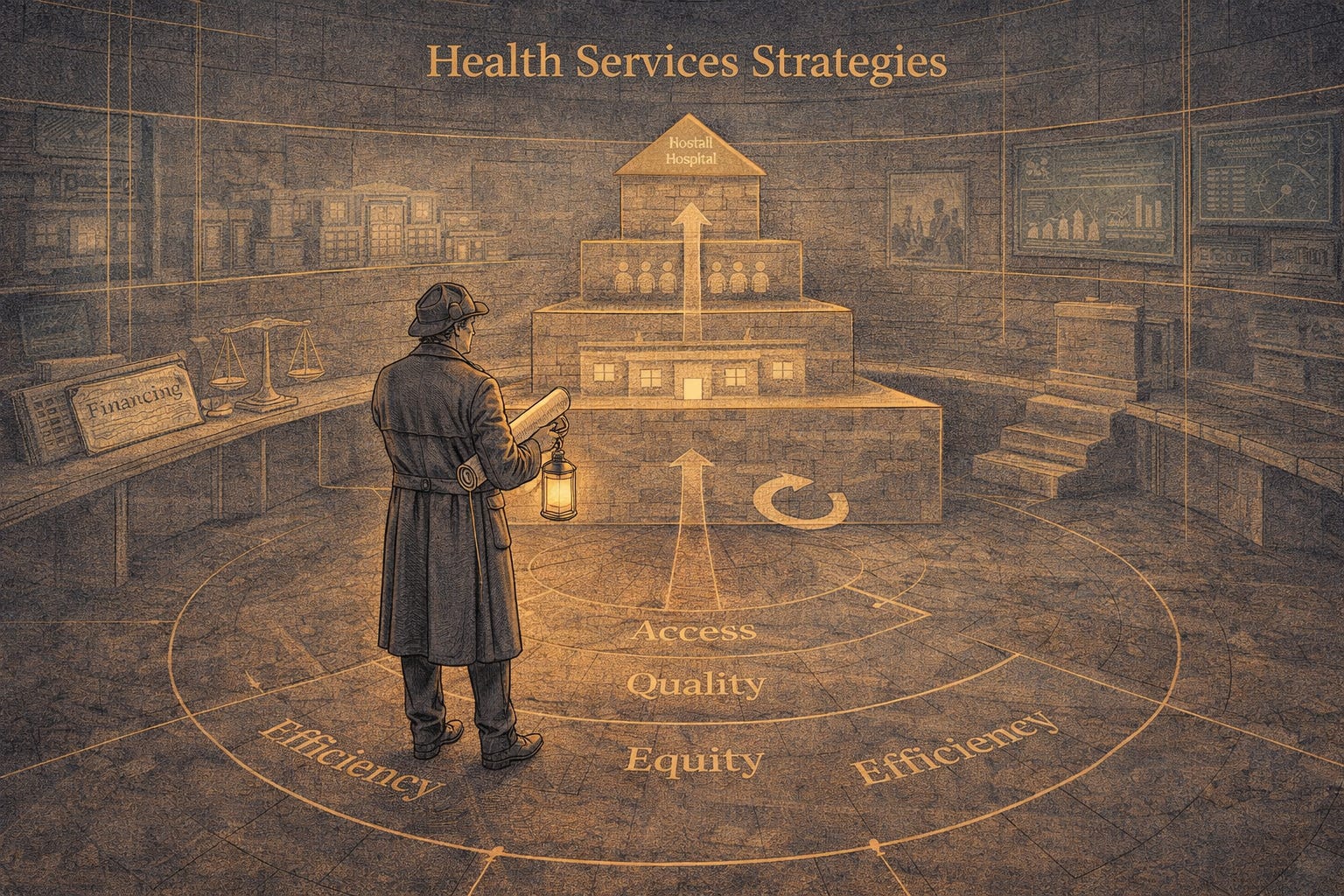
Health services strategies determine how care is delivered, funded, prioritised, and evaluated. This chapter explores models of healthcare organisation, including universal coverage systems, insurance-based systems, and mixed models. It considers primary care strengthening, referral systems, integration of services, and performance management.
Attention is given to strategic purchasing, cost-effectiveness, allocative efficiency, quality improvement, and governance. The chapter also examines how health services respond to demographic change, chronic disease burden, and equity imperatives.
Strategy is framed as deliberate design - aligning resources, workforce, infrastructure, and policy to meet population needs sustainably.
Health systems succeed not by accident, but by architecture.
Key Takeaways
* Health service organisation influences access and outcomes.
* Universal coverage requires financing and governance alignment.
* Primary care strengthening improves system efficiency.
* Cost-effectiveness and allocative efficiency guide resource use.
* Quality improvement and performance measurement are essential.
* Demographic and epidemiological transitions shape strategy.
* Equity must remain central to service planning.