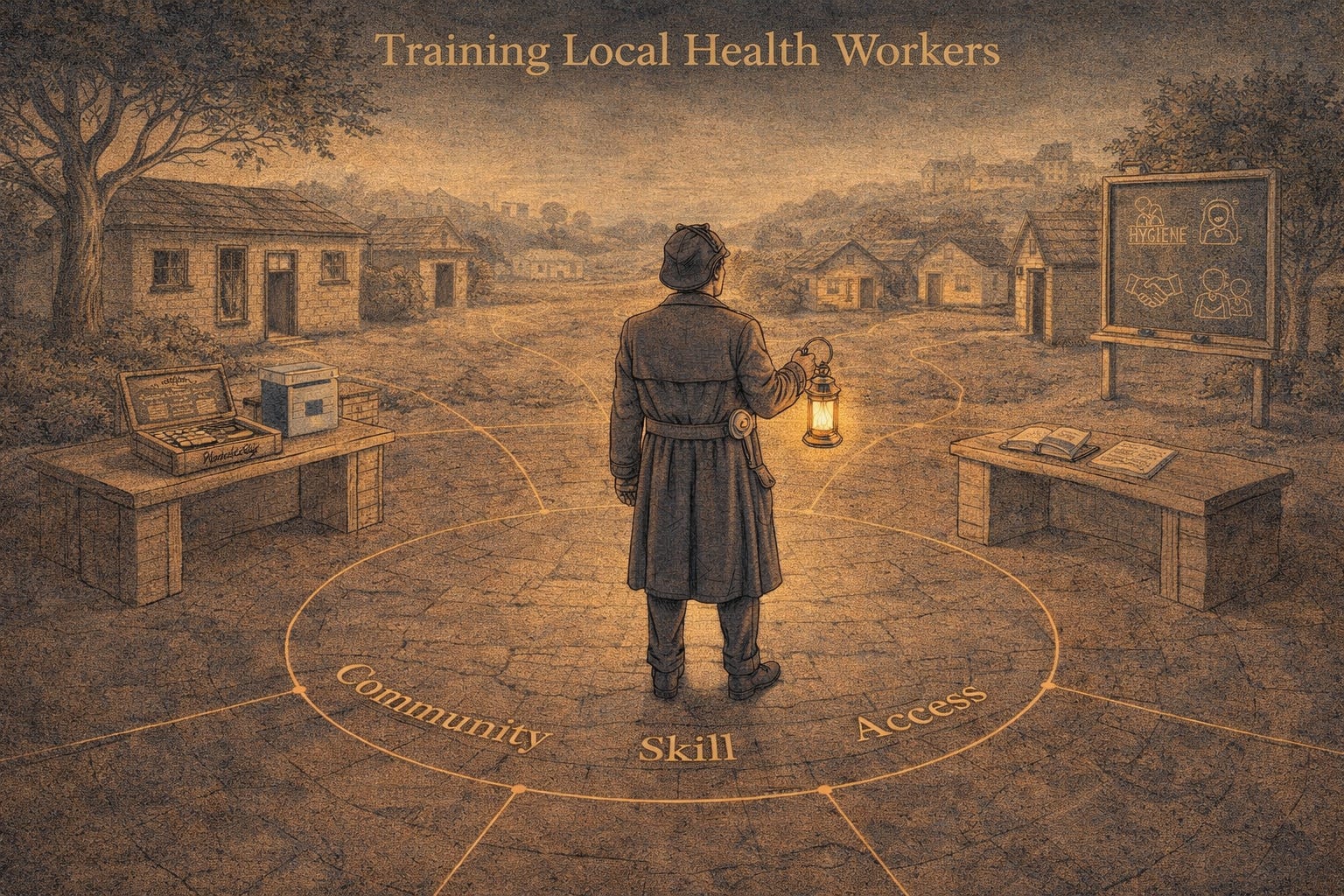
Local health workers - including community health workers, village health volunteers, and lay health providers - are essential to delivering primary care, health promotion, vaccination, maternal support, and disease surveillance in many settings.
This chapter explores the training, supervision, integration, and sustainability of local health worker programmes. It examines task-shifting, decentralised service delivery, cultural alignment, and the importance of supportive systems.
Local health workers extend the reach of formal healthcare structures into communities often underserved by hospitals and specialist services. Training must balance clinical competence, community trust, and ongoing supervision.
Public health succeeds when knowledge travels locally.
Key Takeaways
* Local health workers increase access to care in underserved communities.
* Training must be context-specific and practically oriented.
* Supervision and integration into formal systems are essential.
* Task-shifting can improve efficiency and coverage.
* Community trust strengthens programme effectiveness.
* Sustainable financing and career pathways improve retention.
* Local capacity supports resilience and continuity of care.