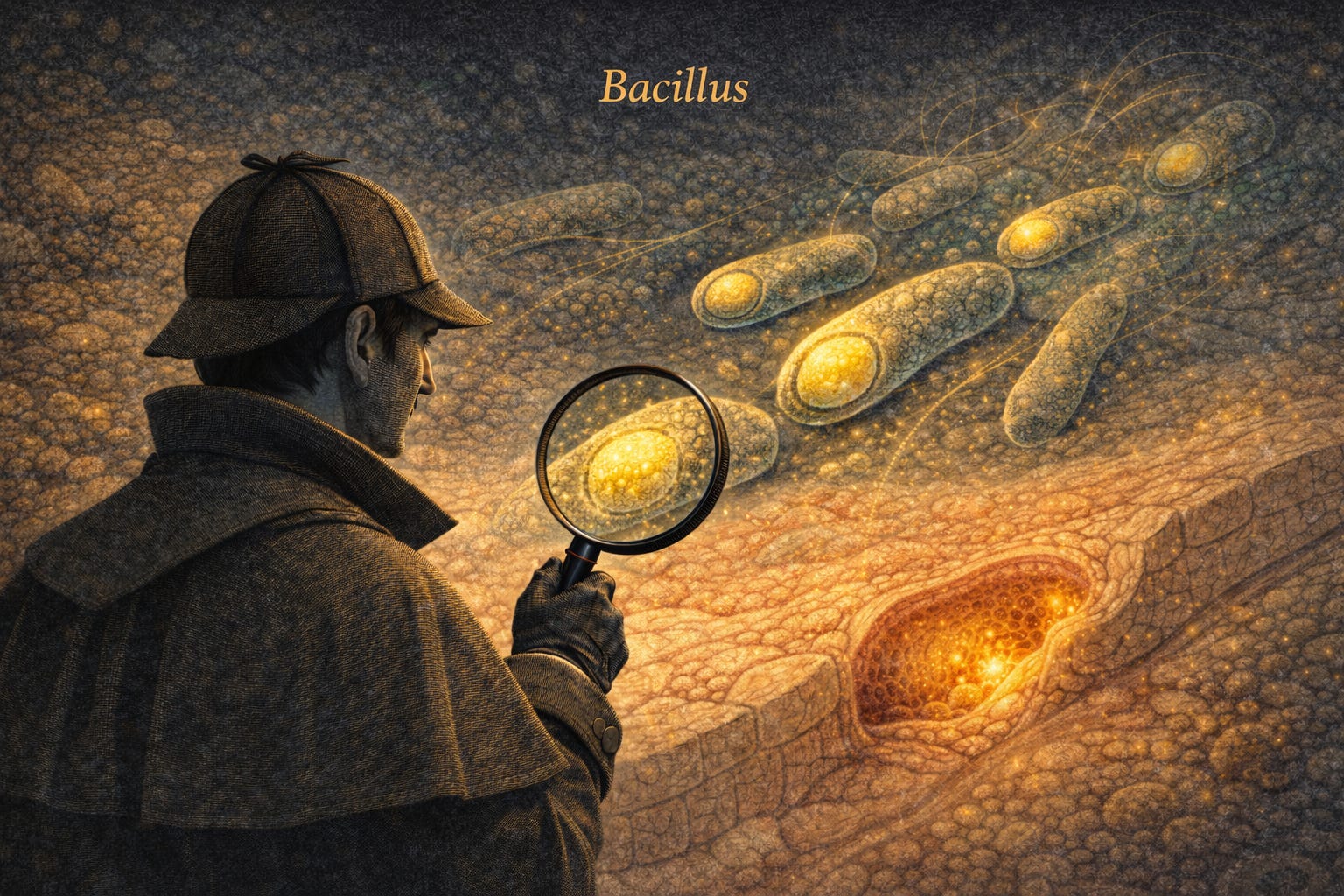
This episode introduces the Gram-positive, spore-forming rods of the genus Bacillus. Drawing from Murray’s chapter, it explores their defining biological trait: the ability to form endospores that withstand heat, desiccation, radiation, and chemical insult.
The episode centres primarily on Bacillus anthracis, the agent of anthrax, examining its capsule, tripartite toxin system (protective antigen, oedema factor, lethal factor), and the pathophysiology of cutaneous, inhalational, and gastrointestinal disease. The clinical patterns - painless black eschar, mediastinal widening, fulminant sepsis - are tied directly to virulence mechanisms.
Other species such as Bacillus cereus are framed in the context of foodborne illness, where toxin production rather than invasion drives disease.
Conceptually, this chapter highlights environmental persistence as a virulence advantage. Clinically, it reinforces that not all Gram-positive rods are contaminants - context determines significance.
Key Takeaways
* Bacillus species are Gram-positive, spore-forming rods
* Endospore formation enables extreme environmental survival
* B. anthracis causes toxin-mediated disease with distinct clinical forms
* B. cereus commonly causes foodborne illness
* Spore biology has implications for infection control and bioterrorism