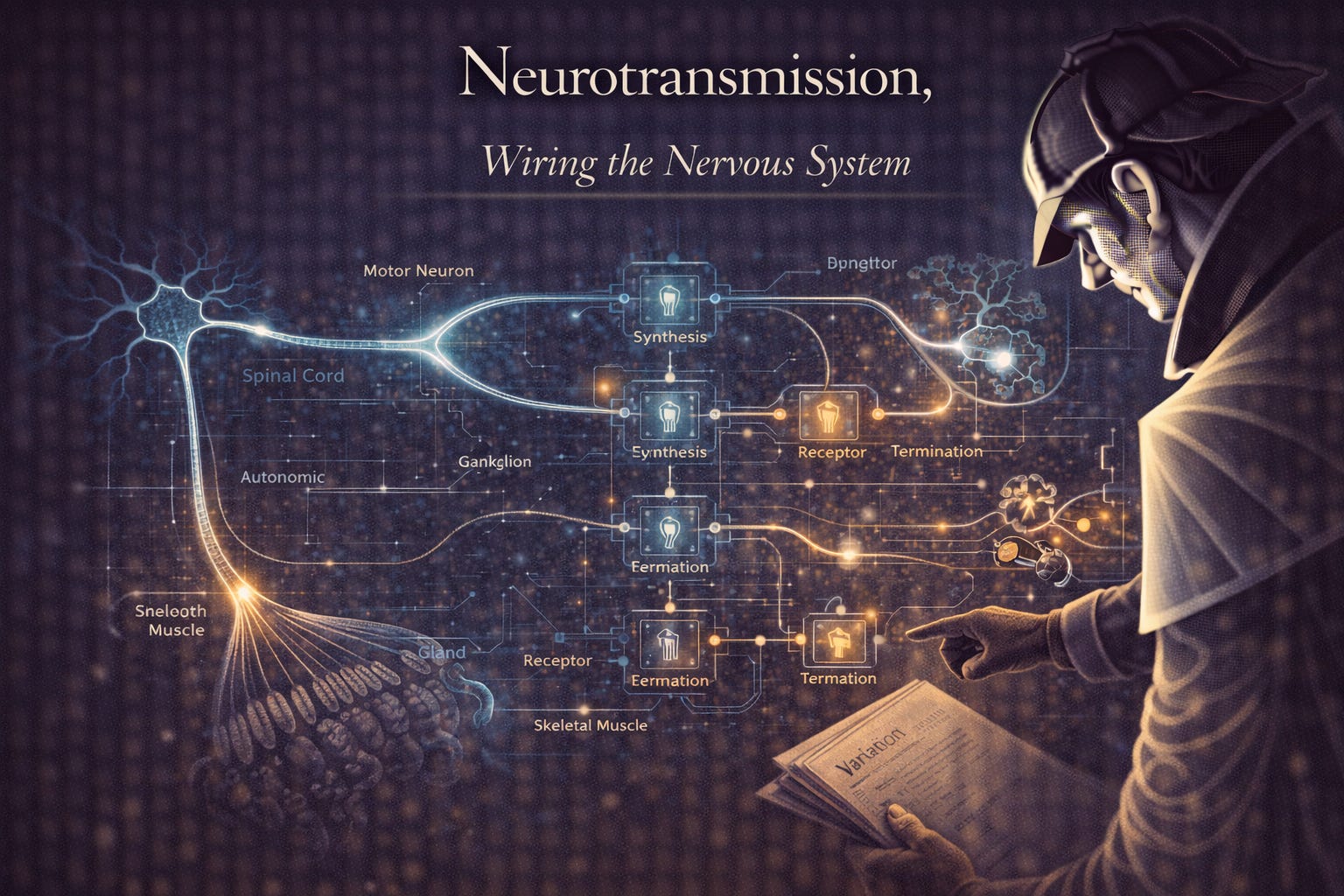
This episode lays the physiological foundation for all of neuropharmacology by exploring how neurons communicate with each other and with effector organs. Rather than starting with drug classes, we begin with the architecture of signalling itself: synapses, neurotransmitters, receptors, and termination mechanisms. Autonomic and somatic systems are contrasted to show how pharmacology exploits normal physiology, amplifies it, or deliberately interrupts it to achieve therapeutic goals.
Key takeaways you’ll build and reuse throughout the series:
* The synapse as the core unit of action: synthesis, storage, release, receptor binding, and signal termination.
* Autonomic versus somatic organisation: one neuron versus two, voluntary versus involuntary, precision versus modulation.
* Neurotransmitters as messages, not drugs: why understanding endogenous signalling clarifies drug effects later.
* Sites of pharmacological intervention: where drugs can act before, during, or after neurotransmission.
* Balance and tone: how the nervous system maintains stability through opposing systems rather than on/off switches.