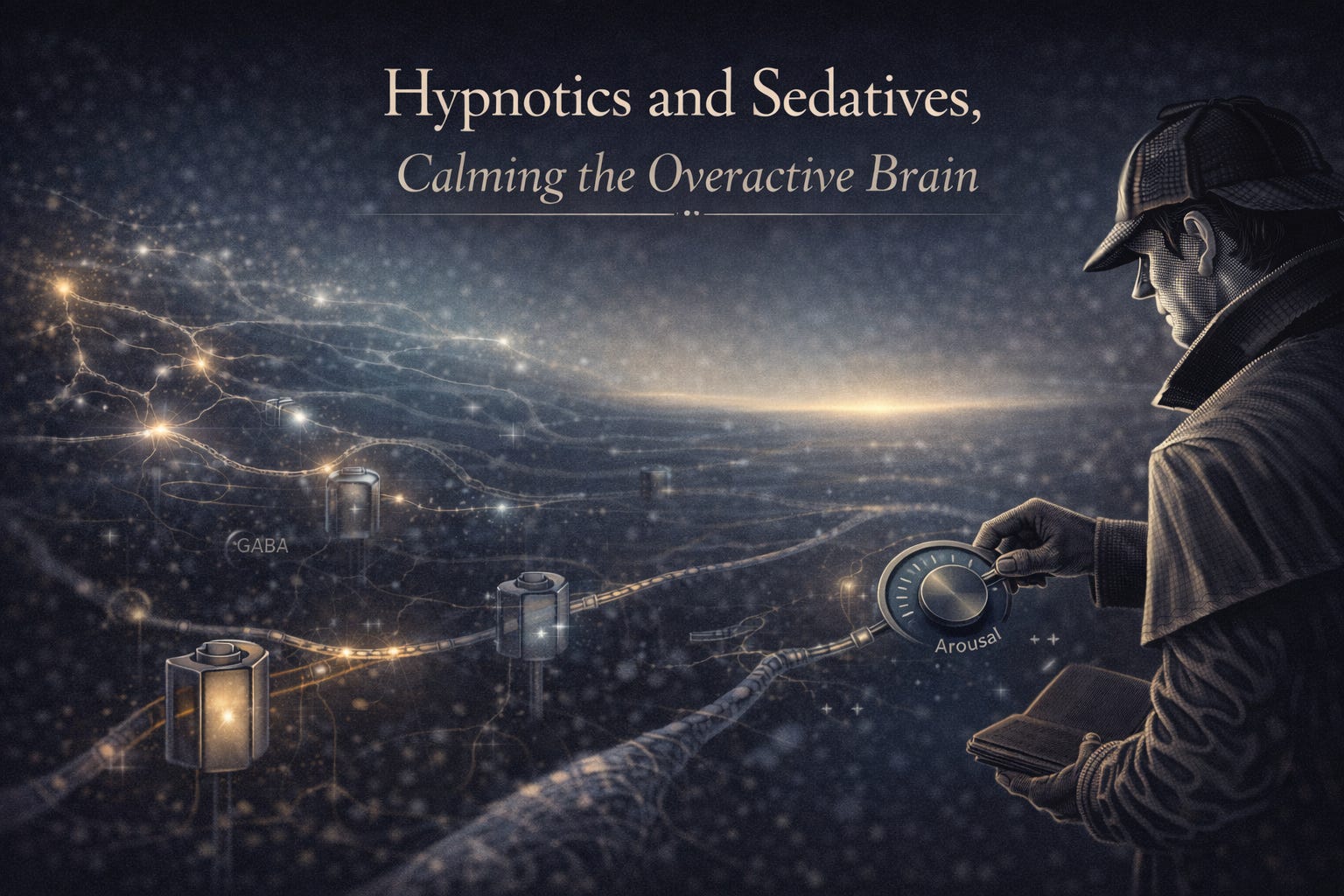
This episode explores hypnotics and sedatives as agents that lower arousal thresholds rather than induce unconsciousness. We examine how these drugs interact with inhibitory systems—particularly GABAergic signalling—to quiet hyperactive networks, facilitate sleep, and reduce anxiety. Framed this way, their benefits and risks become predictable: sedation, amnesia, tolerance, and dependence all follow logically from mechanism and timing.
Key takeaways you’ll build and reuse throughout the series:
* Arousal as a network state: why sleep and wakefulness reflect balance across systems, not a single switch.
* GABAergic modulation: how benzodiazepines, Z-drugs, and related agents enhance inhibition with different selectivity and consequences.
* Sleep architecture matters: effects on REM, slow-wave sleep, and next-day cognition.
* Dose and context: why the same drug can soothe anxiety, induce sleep, or cause delirium depending on timing and vulnerability.
* Clinical judgement: choosing agents, limiting duration, and recognising when non-pharmacological strategies should lead.