Welcome to Sex and the State, a newsletter about power. I use evidence and stories to interrogate existing power structures to propose better ways of relating. To support my work, buy a guide, buy a subscription, or just share this post!
~~~~~
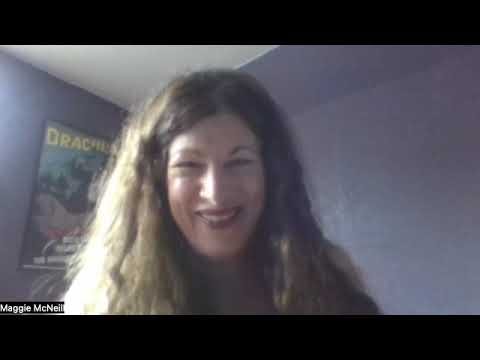
I interviewed the amazing Maggie McNeill — dissident feminist, sex worker, writer, and speaker — about the ongoing Satanic Panic, human trafficking, sex work, White Feminism, Carceral Feminism, the infantilization of women, and what we should really be afraid of.
It’s hard to choose my favorite parts of this interview. But here are some choice quotes:
“To a large degree, the mainstream feminism has a very low opinion of women.”
“When QAnon appeared, we were back to the full-blown Satanic elements. I wasn't surprised at all. I'm like, oh, there it is. It's been under the surface. It just took a while to resurface again.”
“You can say no to a hug. But at the same time, we're also telling children that it is okay for an adult to stick their fingers in your genitals and take your clothes off as long as they have a title and they call it a search. We teach them unquestioning obedience to authority figures. And then we wonder why cops, teachers, pastors are the ones committing sexual abuse. It's like, because you've taught them they're not allowed to question these authorities.”
“It's what women of color are calling ‘White Feminism.’ It's a kind of feminism that comes out of a sheltered place, a place where daddy, wealth, expensive school, they're all taking care of you and never let anything bad happen to you. You wanna believe that this kind of world is the norm and that bad things happening is not the norm. But of course that's not the case. When you live with danger, when you have a difficult life, when you're in the street, you have to develop a realistic sense of danger so that you're not constantly just marinating in cortisol. If you've been a sex worker, like I have, for as long as I have, if I was afraid of every single man I saw how could I have ever survived? You have to develop a realistic sense of what's scary and what's not scary. People who have never been in danger don't know what danger looks like. They think danger looks like a white van. Danger looks like internet porn. Danger looks like other women living in a different way than you do. That's what danger looks like to them. Danger looks like not keeping your kid, and by kid I mean anybody under 25, imprisoned essentially in your house. That's what danger looks like when you don't know what danger looks like.”
“Even the real honest-to-goodness cases of real trafficking do not look like the myth. There's no vans. There's no kidnapping. You'll see things like, ‘Oh, they think that the pimp is their boyfriend.’ Very often, usually even, the pimp is their boyfriend. He's just an abusive boyfriend. How can you expect to have a conversation with a woman when you're gaslighting her? You're telling her that her boyfriend is not her boyfriend when she knows he's her boyfriend. When I was a teenager, I didn't listen to people who infantilized me.”
Full transcript below
Cathy: Hello, and welcome to Sex and the State, a newsletter about power. Today I'm interviewing the amazing Maggie McNeil. Maggie and I have been friends for quite a long time now. She is a sex worker. She's been a sex worker for decades now. She is also a writer and thinker and speaker. Her blog is the Honest Courtesan and I couldn't recommend it more highly. And she's also on Twitter I believe at @Maggie_McNeill.
I just wanted to have you on to kind of talk about sex work, feminism, masculinity, all the things that I've been writing about recently. But I wanted to start out and just kind of ask you about some of the kind of frustrations that you have with quote unquote, mainstream feminism.
Maggie: Oh, goodness. How many hours do you have?
Honestly, if you boil it down to the most important parts, the most important details, I think my main problem with mainstream feminism, with mainstream anything ism in that it's a religion. It's got a set of principles that you're not allowed to question to be in the club and it's got a certain catechism.
It has a certain canon of writers that you're expected to quote from. And even if thoughts are in similar veins to some of these folks, if you don't use the same language and the same shibboleths as everybody else then you're out. Then you're not a feminist.
You just can't question certain things. Any movement in which you are not allowed to question is not a movement for me. So that's the main problem I have with mainstream feminism. Obviously there are dissident feminisms. And I have no problem with those.
And to a lesser extent, the problem I have with it of course, is that to a large degree, the mainstream feminism has a very low opinion of women. I remember saying that practically since high school. For something called feminism, it has a really low opinion of women, women's agency, women's resilience, women's power, and women's everything.
Cathy: I think these are definitely reasonable critiques. I'm wondering if you see a relevant difference, especially as far as the not being open to critique, between feminism and libertarianism, for example.
Maggie: Libertarianism, it's an ism, right? If I have to sit through one more lecture of the difference between deontology… and you're smiling.
You know what I mean. Really, I don't care I don't care. The whole thing of libertarians being so obsessed with the economic dimensions when at this juncture the social dimensions are so much more important in my opinion. I'm more concerned about all the crunching on civil rights that the establishment is doing right now much more than the amount of money they're stealing from me. I don't like being robbed, but I'm not being robbed to any greater degree than I have been most of my life. I'm used to that. It's the civil liberties, infringements growing civil liberties infringements. I think my main critique of mainstream libertarianism and I don't mean the Libertarian Party, which is a totally different subject.
Cathy: Which we will not address.
Maggie: Which we will not address. But I mean, just the movement. It's just, like I said, that obsession with economics.
Cathy: And I think to a large degree, the dichotomy between social issues and economic issues is a false dichotomy.
Maggie: Yes, absolutely. I think it is. But I think we agree on this, that so many of the economic problems are caused by the social issues in the first place.
Cathy: I'll never forget the Mercatus Institute, which I'm not trying to pick fights with any particular institution. But, they put out a ranking of freedom for the states in America. You know, one to 50, which is the most and least free. I don't think that they specified economically. And they didn't include access to abortion as one of the criteria. There's no reality in which access to abortion isn't an economic issue.
Maggie: Absolutely.
Cathy: The number-one reason people seek abortion is because they cannot afford to have usually another child. And the economic implications of not being able to obtain an abortion are obviously like, probably more important than your marginal tax rate.
So yeah, it's a huge problem. But I wanna dig into more the way that feminism often condescends to women. The way I often put it is that I find a lot of mainstream feminists really infantilize women.
Maggie: Yes.
Cathy: I think obviously when it comes to sexual autonomy, whether it's our ability to consent to do sex work or our ability to navigate a consent conversation like an adult, it just seems like a lot of feminism is just very, like you said, it has a very low opinion of women.
Maggie: Yeah. Well, I mean I think getting my first degree before the end of the eighties, before a lot of that stuff became mainstreamed, a lot of what's considered mainstream feminism now was considered radical feminism in the eighties.
I know that myself and my other peers would've b…