This Sunday, September 7, 2025, happens to be my mother’s death day. Forty-four years ago, she gave birth to her death on Labor day. The night before, I’d dreamed of a city dropping down to the headlands, where I used to sing hymns while cantering my horse. I had released her. It’s also the day after Omalola’s third birthday.
Every Sunday, I listen to Martin Shaw’s stories while I do chores. Often they act as a prompt when I am trying to find a way into what I want to say here. This past week he told the story of The Singing Bone about two brothers who set out to rid the countryside of a wild boar.
Shaw says: The boar has a long and jagged history with men, especially in the area of Celtic myth. It was a boar that tusked the Irish hero Dermot from groin to throat, it was a boar that had at Tristan’s thigh, King Arthur chased one till he was half-mad the length of Britain, you’d be hard not to see it as emblematic of the Grail King’s wound.
I’ve even heard stories of domesticated pigs killing a person and eating them on the spot. You don't want to live near a pig farm.
Here’s an expanded version of my comment. I have also added some things sparked by Shaw's telling of the second part of The Singing Bone in his essay Liturgies of the Wild.
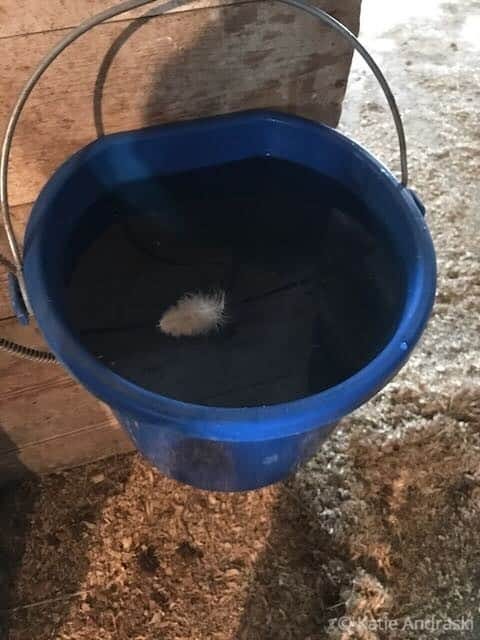
While I was thinking what to say, I walked out of the barn without filling Mrs. Horse's buckets, thinking I was through with chores. But I saw the wagon with the water I’d hauled from the house, the buckets full. Forgetting her water is not trivial. A horse will colic, a potentially deadly malady, if they don’t get water. I’d already locked up the gates, so I had to slip through them to open them up. I carry the weight in my right hand, and lift the bucket to slosh it in.
Shaw tells how the wild boar was so fearsome and dark no one dared pursue it. Until two brothers thought they’d try for it. As it turns out a little man gives the younger brother a black spear and he kills the boar, winning the gold and the King’s daughter. But his brother, having been drinking at the tavern, sees his brother's success, gets him drunk and knocks him upside the head while they were walking across a bridge. Shaw says this is a Cain and Abel story, where Cain’s envy towards Abel, brings sin into the world. He murders Abel.
Oh this story touched on old aches--envy rose up fierce in my relatives when my family fell asleep, and it would be improper to tell stories that have been ground to dust. Stories that are mulched into soil that grows clover and timothy and milkweed. Envy stung when a former colleague's new book was announced. I just tossed it to God like I toss the ball to Omalola and bought her book. Child of These Tears looks like a good read about a frontier woman who is kidnapped by a Mohawk tribe who seeks counsel from a Jesuit spiritual director. (And yes like Omalola with the ball, envy, old hurts come back. And I toss them again.)
Good reads are hard to come by these days. This week I read a novel that shall remain nameless because I was furious that it left me with no hope. The book ended with the human race going extinct, people sacrificing themselves to the goddess so there could be unity. There was no hope our species survived by the book’s end. As I worked at trying to follow the dramatic situation, I hoped for a Deus ex machina like the one CS Lewis wrote into That Hideous Strength, where heavenly, angelic powers and the earthly powers of Merlin and animals converge to deliver us from technocrats who call themselves NICE. I kept reading for hope, but it never came—just a crucifixion to a pagan god and the survivor, a wounded part human part machine entity. The earth is dead, its rains so acidic it burns people’s flesh. Our species is wiped out for the sake of an entity that has sought our destruction for millennia. I didn’t sleep well that night.
Another book: Not Heaven but Paradise took me inside a terrorist, a migrant and a cynical woman’s viewpoints and drew the thread to clear redemption, and a book I still think about. These characters were so well drawn that I became sympathetic to the migrant and the terrorist. I saw how the CIA by its cruelty drove that character to strapping on a bomb. I saw how how hard the migrant worked to cross the Mediterranean and find a way to survive. (The book is set in Spain.) I saw the emptiness of a female artist disrespecting the power of sexuality and crying “Me too" unjustly. The narrator converted to compassion, by providing a shelter for other migrants at the end. Even though it dealt with real human evil I was left with hope.
I look for hope like what I find in the Psalmist, who sings:
“I will extol you, O Lord, for you have drawn me up and have not let my foes rejoice over me. Oh Lord my God, I cried to you for help, and you have healed me. Oh Lord you have brought my soul from Sheol; you restored me to life from among those who go down to the pit” (Ps 30: 1 – 3.)
The world can be incomparably beautiful and incomparably sad. I can bend down to look at a tiny flower or look across the barn yard at the moon rise. And I can pick up a dying butterfly in the road or try to gather up a mama cat and her kitten from a high traffic area, only to be hissed at by the baby, knowing we might drive them into traffic if we reached for them. Their crouching in a cross connect box broke my sleep.
This week I sat with a friend and her daughter while her husband and father was passing from this life to the next. And didn’t have to do anything but breathe presence and peace and listen and be honored having been welcomed to these most holy, most sacred moments. I thought how Bruce or I will likely be sitting in the hospital one day, in a long, painful vigil while the other falls asleep. And trust that we will both be in the Lord’s hands.
We need more words that speak to the pain,
“To you, O Lord, I cry, and to the Lord I plead for mercy: What profit is there in my death, if I go down to the pit? Will the dust praise you? Will it tell of your faithfulness? Hear, O Lord, and be merciful to me! O Lord, be my helper!” (Ps 30: 8 – 10, ESV)
And in that heart cry our grief-clothes switch to sundresses:
“You have turned for me my mourning into dancing; you have loosed my sackcloth and clothed me with gladness that my glory may sing your praise and not be silent. Oh Lord my God, I will give thanks to you forever.” (Ps 30: 11- 12)
The Singing Bone story touched on old aches. As far as a sibling rivalry story, my brother and I played out a Jacob and Esau story. After Jacob wrestled with the angel, Esau's face looked like the face of God, when they met. All those years Jacob and Esau spent away from each other, which sometimes is what it takes, and they reconciled. (My brother was gone before that could happen but still the story is true for us.)
And so the question of envy returns. As far as my relatives’ envy that I didn't talk about above I think they withheld the secrets that would have released me--the truth that sets you free. I did not have the courage to ask straight up, though my aunt hinted at things. So I spun stories like personal myths to make my own sense.
My brother was Jacob or maybe the dragon hoarding the inheritance. I got a lawyer and we settled up. Neither he, nor my aunts, nor his widow seemed to think I had a right to my parents' stuff. Then I did the long hard work of walking through my anger, writing and rewriting the story to make The River Caught Sunlight. I practiced blessing my enemy. I asked God not to let me grow into a bitter old woman and I am not.
Shaw asked:
“So, my question is this: what is laying waste to your fields?
“Is there something in your life that is rendering your crop useless? It’s not a failure of imagination to enter a story that literally. Let’s imagine we are the land, with dangerous energies prowling it.”
When I walk towards the north, just as I turn back towards home, I hear the neighbor’s pigs flipping their feed bin. Clang. Clang. Sometimes I smell them. They are future ba…