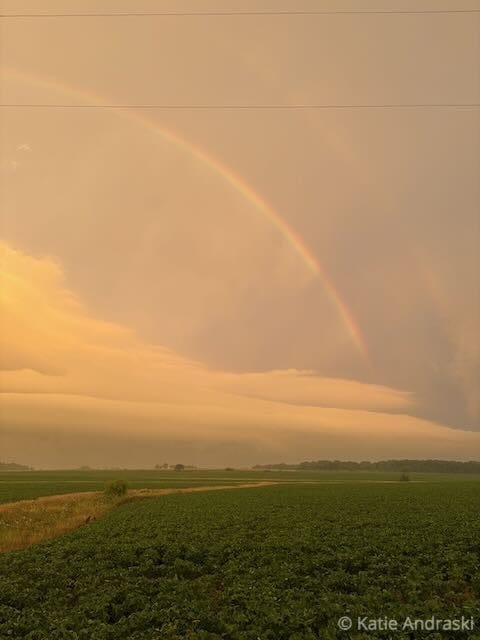
Martin Shaw in Live as Large As Homer challenged us to listen for God’s call. Not just listen but have our eyes wide open to a sight as startling as Moses’ burning bush. He says,
What habitual task – our tending of the sheep – may keep us from the vivid signs God gives us? The holy terror of his arrival? – he was afraid to look upon his face. Do we keep our lives uncluttered enough to avoid distraction from such encounters? I am alarmed at the notion I could be so entranced I walk past the messages that God is giving me. What should we be turning aside from?
My phone. My fascination with what’s going on in our politics. I’d do well to open the Mission St. Clare app on my phone and pray morning prayer, a liturgy with promise and scripture embedded, first thing but instead I browse Substack. But the readings for the Daily Office the last few weeks have been about politics as much as the political commentary I read online. David runs from King Saul. Then he takes another man’s wife and kills her husband. He runs from his own son who declares himself King, who murdered his brother who raped his sister. There's all kinds of intrigue and machinations in these stories. And yet he’s called a man after God’s own heart.
And there’s Paul, who's called the chief of all sinners, who created an uproar in Jerusalem, with the religious leaders and the people wanting to kill him. He appealed to the Roman governor who needed 200 hundred soldiers, seventy horsemen and two hundred spearmen to keep him safe from the mob. They left in the middle of the night. Both show how God’s purpose is worked out and these men are delivered through these political machinations.
This week Psalm 118 spoke:
All the nations surrounded me; in the name of the Lord I cut them off! They surrounded me, surrounded me on every side; in the name of the Lord I cut them off! They surrounded me like bees; they went out like a fire among thorns; in the name of the Lord I cut them off! I was pushed hard so that I was falling, but the Lord helped me” (Ps118: 10 – 13, ESV).
I think about the honeybees living in our milk house and the hornet that flew up from Bruce’s arm to his face. Bruce is so allergic to stings he needs an epi pen. But this hornet flew down without touching him. He smashed it with his foot. The bees are so crowded they hang outside the milkhouse, and I wonder if they will break off into another swarm like they did last year. Every spring I’m surprised they have survived the bitter cold. I am also surprised they survive the spray. Our local beekeeper is not interested in capturing them.
And yet the bees that trouble us will be burned up quickly as fire in a thorns. I’ve seen those kinds of fires and they go quick.
And yet bees make honey. David refers to the Lord’s rules as “sweeter also than honey and drippings of the honeycomb. Moreover by them is your servant warned; in keeping them there is great reward.” (Ps. 19:10- 11) Warned. Keeping them. Reward.
Then there’s Modomnoc whose bees followed him across the Atlantic three times before his Abbott gifted them to him. Paul Kingsnorth tells the story in Telling the Bees if you want to read more.
As I write, I think a little deeper about Shaw’s question: What is the one thing that keeps us from seeing God’s signs? I think perhaps one habitual thing I could turn aside from is being so very hard on myself. St Porphyrios in Wounded by Love identifies this:
Our religion is love, it is eros, it is enthusiasm, it is madness, it is longing for the divine...For many people, however, religion is a struggle, a source of agony and anxiety. That's why many of the 'religiously minded' are regarded as unfortunates because others can see the desperate state they are in...Some such people experience religion as a kind of hell. They make prostrations and cross themselves in church and they say, 'we are unworthy sinners,' then as soon as they come out they start to blaspheme everything holy whenever someone upsets them a little...
In fact the Christian religion transforms people and heals them...
Can you understand the truth? Then you are out in the sun, in the light; you see all the magnificence of creation; otherwise you are in a dark cave (94).
I turn aside when I listen to gravel underfoot. Perhaps there's a burning bush on the road I walk, the faint rainbow, I can barely see, the smoothed out fertile dirt and grass covering the pipeline, Bruce's quiet smile as I toss the ball to Omalola, the back of Mrs. Horse as I brush the dust off and she mugs me for treats.
Shaw says a few sentences down:
As a symbol of suffering, I’d say most of us feel we have tongues burnt on hot coals, and yet God commissions us to speak from them anyway. Most likely from that very duress. We are enough, in the authenticity of our incompleteness. Not ‘enough’ like ‘job done’, enlightened and individuated, but in the eccentric, heart-broken but heart-opened state we may be in.
My tongue has been burned by hot coals, like Isaiah who cried, “I am a man of unclean lips” and God’s angel flew down and touched his mouth with a coal. I’ve fallen to a kind of silence—four drafts of novels that would go with The River Caught Sunlight, but now they sit in notebooks. The icons for their files look black on my computer. Were it not for Libre Word, they’d be lost, except for print copies. Since I’ve been learning that it’s kosher to ask someone in the communion of the saints to pray for us, last fall I asked CS Lewis to help me write. It was through him I received my call to write. And he helped. The words have come easier.
Here's the story how earnest I was about this call. Maybe I should blush:
Rain pelted the roof of the Big Barn, a tin roof high up as a cathedral. The barn reminded me of one with the soaring hand-hewn beams, knot holes of light, and space all the way up to the roof. We stored our hay on the wooden floor in the middle, that I thought of as a threshing floor. It was late winter, snow was melting into ice. I’d taken to having my quiet times there. I could open the doors to the barn and sit on hay that had once been its own furnace we checked by digging our arms down deep, feeling the glow. We’d swung open both doors--these smaller doors that opened onto the barn yard and our horses and the huge back doors, that towered nearly up to the roof, to let the winds blow through, cooling the hay.
I took my Scofield Bible and my border collie and sat on the bales, most like a throne and talked with God. That day it rained, I cried with all the intensity of a sixteen-year-old, my blood up and running, “Oh Lord let me write a vision of glory.” I’d been reading The Chronicles of Narnia for a paper I was writing about C.S. Lewis. God I wanted to write like that.
My call to be a writer began there, in that barn, in that intense desire to create a world for my readers. I know it’s not a popular thing these days to admit to being called to write. Kathleen Norris writes:
Walter Brueggeman, in a book on the prophets entitled Hopeful Imagination, suggests that ‘a sense of call in our time is profoundly countercultural,’ and notes that ‘the ideology of our time is that we can live ‘an uncalled life,’ one not referred to any purpose beyond one’s self.’ I suspect that this idol of the autonomous, uncalled life has a shadow side that demands that we resist the notion that another might be different, might indeed experience a call (41).
When I read these words in A Cloister Walk, they felt like the words of God come to comfort me after a rough year teaching First Year English at Northern Illinois University where I’d caught it on the chin for being different, being other, not suave, cool, or cynical. My stories sprang out of my own life, not wonderfully masked. I clung to autobiography like a rappeller clings to the rock instead of leaning back against the rope and walking down.
But for all this earnestness, I never was published by one of the big five or a reputable indie publisher. Though I came close with persona…