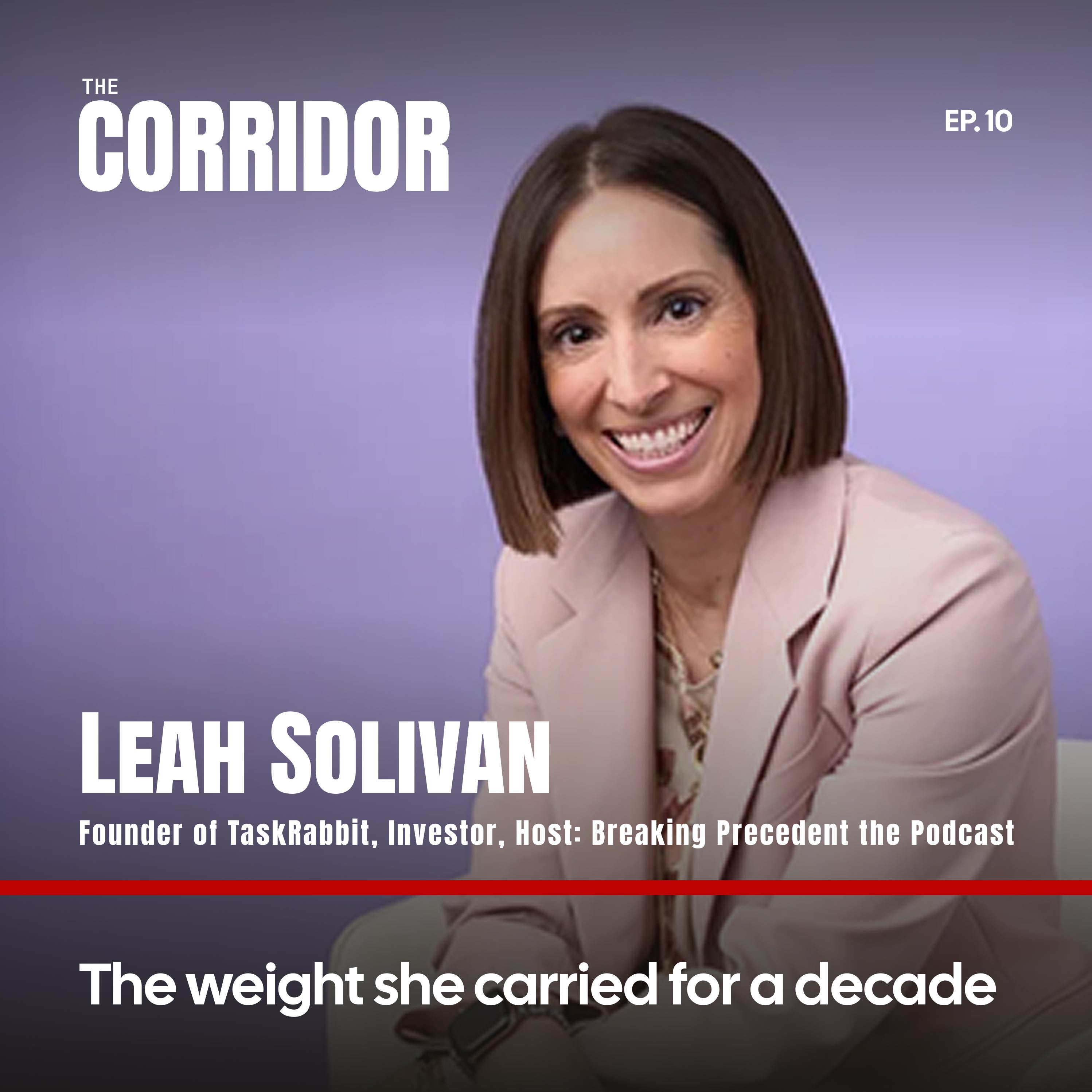
In June of 2008, Leah Solivan walked away from an eight-year software engineering career at IBM. Three months later, the stock market collapsed and the country entered the Great Recession. She had already left.
She is honest about the timing in a way most founders aren’t. She didn’t see the crash coming and position herself for it. She left because she was passionate about something, and then the world fell apart around her decision. What she did next is the part worth paying attention to.
The idea, and then the fear
Leah had the idea for TaskRabbit before the crash: new technologies were emerging, social, location, and mobile, the iPhone was only a few months old, and as an engineer she became obsessed with using them to connect real people in the real world to get real things done. Then everything crashed, and the fear arrived. She had left a high-paying, stable job. She cashed out a $27,000 pension from IBM to fund the first version of the company.
But the recession did something unexpected to her thinking. She watched capable people, former lawyers, teachers, people with good jobs, get laid off and start looking for new, flexible ways to earn. And she realized the thing she was building could help. It was a new way to work, a way to make money, at exactly the moment a lot of people needed one. That realization became the gig economy.
Building trust nobody was ready to give
Here is what people forget now that it’s normal. In 2008, the core premise of TaskRabbit was unthinkable. Invite a stranger into your home to organize your bookshelf? Jump into a stranger’s car and let them drive you somewhere? Leah points out that if you had proposed either one in 2008, people would have thought you were insane.
So before the marketplace could work, trust had to be built, and she saw technology as the way to build it. The early idea was to use the Facebook platform and social networks to create trust between people. If you hired someone to install your bookshelves, rated them well, and you and I were friends, I’d feel comfortable hiring that same person. It started as an experiment. It became the foundation of an entire economy. Now, as she notes, we jump into strangers’ cars without a second thought.
The phone call where the weight lifted
Leah built TaskRabbit for nearly a decade and sold it to IKEA in 2017. Everyone celebrates the exit. Almost nobody talks about the letting go.
She told me about the board call where they voted to sell. The outcome was certain; she expected the whole thing to take two minutes. Then the Series A investor got on and, instead of a quick yes, launched into a speech about how proud he was of what they’d built. The Series B investor did the same. By the time it reached Leah, she was in tears, realizing this was the closing of a major chapter, not just for her, but for the team and the investors who’d been on the journey with her.
When she hung up and the sale was official, she cried. Not from sadness. From release. In her words, it felt like a weight she’d carried for a decade had finally lifted. She had been in survival mode for ten years, and suddenly she had survived, and it was over.
That freedom is what moved her to the other side of the table. And she has come to a clear realization about herself: she is built to be an investor, to back the next generation of founders. TaskRabbit is no longer her identity. It’s her credibility.
The leverage point most people miss
This is the part of the conversation I keep thinking about.
Most people who care about diversity in tech focus on getting more diverse founders funded. Leah went a level up, and then another. She founded Precedent Collective to support investors from underrepresented backgrounds, because she believes the real leverage isn’t who gets funded, it’s who controls the capital.
Her logic is a ladder. GPs decide which founders get funded, through the lens of their own experiences. Go up a level, and limited partners decide which GPs get capital to deploy at all. The whole system revolves around who holds the check-writing power. So the more people you put into check-writing roles, as investors and as LPs, the more you change who builds companies and who gets funded, because every person brings a different lens, a different network, and assesses companies differently.
The lens as an edge, not a talking point
For her fund, Precedent VC, she backs early-stage consumer companies, category-defining, precedent-setting businesses, at what she sees as a massive inflection point, where AI is changing consumer behavior faster than ever and the next iconic companies are about to be founded.
And she’s clear-eyed about how her identity sharpens her investing. She points out that the Spanish-speaking community is the largest population group in the country, over 20 percent, with enormous purchasing power, and that founders building for that market with that lens are going to build massive businesses. She gave a concrete example: MeSalude Health, a B2B telehealth service for native Spanish speakers, paid for by employers who want to keep their workforce healthy. To her, that’s exactly the kind of company that should be funded, and the kind an investor without her lens might not see.
The advice
I asked her what she’d tell a founder building right now from a background investors overlook. Her answer was simple and hard-won, because she had to do it herself: get connected. Get into a network. Find your communities, through places like Endeavor, through your own circles. And the tactical piece that actually compounds: for every person you meet, ask for one more introduction. Great to meet you, who else should I know? That’s how you build the network that gets you in the room.
It’s fitting advice from someone whose entire career has been about connection, first between strangers who needed to trust each other to get work done, and now between capital and the founders who’ve been waiting for someone with the right lens to finally see them.
Listen to the full episode of The Corridor with Leah Solivan.
Follow her newsletter The Precedent Collective
Seguimos. 🇵🇷
Angel León, Coquí Ventures