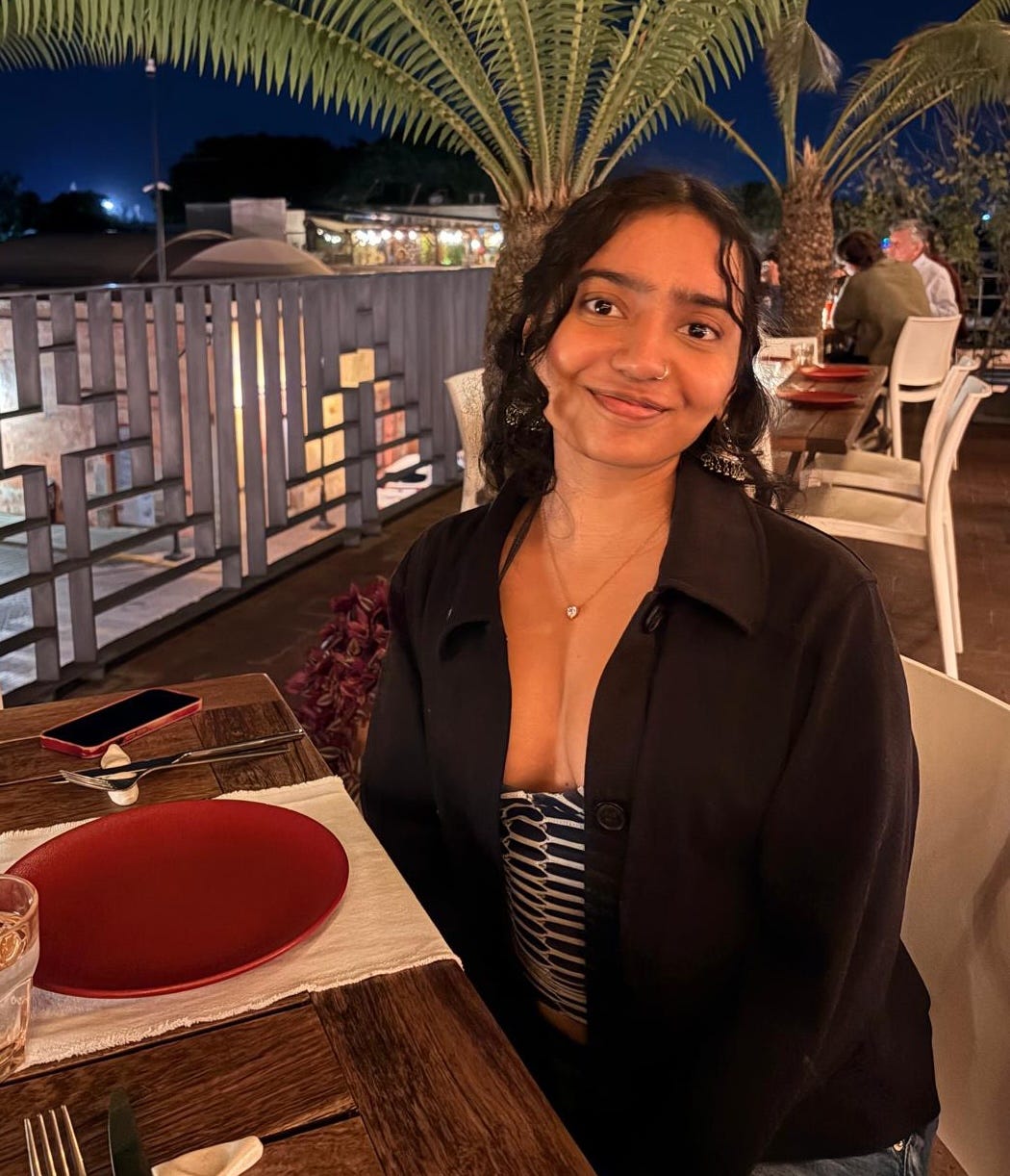
In our inaugural episode of Foodagogy, host Angeline Aow sits down with Divya Ravindranath to explore how the simple act of eating is deeply intertwined with who we are and the power structures we live within. From the sensory memories of South Indian rasam to the complex politics of how food is weaponised as a form of tool of settler colonialism, this conversation digests how food can both build community and serve as a tool for oppression.
About Our Guest: Divya Ravindranath
Divya is a researcher and writer currently pursuing a Master’s in Integrated Food Studies at the University of Copenhagen, Denmark. With a background in Politics, Philosophy, and Economics from Ashoka University in India, Divya brings a multidisciplinary lens to the table. Beyond her academic pursuits, she is a dancer and a cook who is passionate about decolonizing culinary narratives.
Connect with Divya:Instagram: @muchroom4luv
Articles
How Food Is Weaponised as a Tool of Settler Colonialism
Beyond Curry: Decolonising the Way We Talk About Indian Food
Key Discussion Points
The Sensory Roots of Memory: Divya shares her early memories of growing up in India, specifically the sound and smell of the tempering—the sizzle of curry leaves and mustard seeds—that signaled her grandmother was making rasam.
Food as a Carrier of Identity: Why is food such a powerful marker of who we are? Divya explains how the "mundane and banal" nature of food makes it an omnipresent vehicle for stories, care, and social cohesion.
The Politics of the Plate in India: A deep dive into how food is used to stratify social groups in India. Divya challenges the international stereotype of India as a purely vegetarian nation, explaining how "pure vegetarianism" is often a tool of upper-caste power and "othering."
Decolonizing Knowledge: How can we talk about decolonization without getting lost in "jargon-heavy" academic language? Divya discusses using food as a relatable entry point to understand imperial and colonial legacy.
The Weaponization of Food: A sobering look at Settler Colonialism and the importance of humanising narratives. Divya discusses how claiming indigenous dishes (like falafel and hummus) without homage can be used to establish national legitimacy while simultaneously withholding food access from those same indigenous populations.
Cultural Appropriation vs. Appreciation: From the "Matcha obsession" to the commercialization of cultural staples on shows like Shark Tank, we discuss what happens when food is stripped of its history for the sake of "aesthetic" or profit.
Future Research & Interests
Divya is currently deepening her understanding of the "ugly" side of food studies, including:
The Social Phenomenon of Disgust: How our biological reactions are often shaped by social conditioning and community influences.
Food & Capitalism: Analyzing global food trends to reveal deeper truths about our economic systems.
Intersectional Systems: How sustainable food systems, food waste, and policy are all linked to the politics of identity.
"Food is so mundane that I have access to it every day... maybe food can be something via which I do some attempt of decolonization." — Divya Ravindranath
Connect with us: Are you an educator or a foodie interested in how these themes play out in the classroom? Reach out and join the conversation on how we can cultivate belonging, one meal at a time.
________________
Foodagogy is produced by EKG Collective, with editing by Gitane Reveilleau and Kirk McDavitt. Music by Paul Romaine and artwork by Xoài David.