Welcome to the Gnostic Reformation. My name is Dr. Cyd Ropp, and I'm your host.
Today's episode is a continuation of the discussion of my simple model of memes out of my book, A Simple Explanation of Absolutely Everything. Today we are going to speak about a simple model of memes. In our previous episode, we discussed the basic model of memes. Memes are any thought a person can have—any piece of information, I categorize as a meme. Motherhood is a meme. All religions are memes. Everything is memes. Whatever belief you hold, whether it's a cluster of beliefs—and I call these meme chords—or a single belief; that's what I'm referring to as a meme.
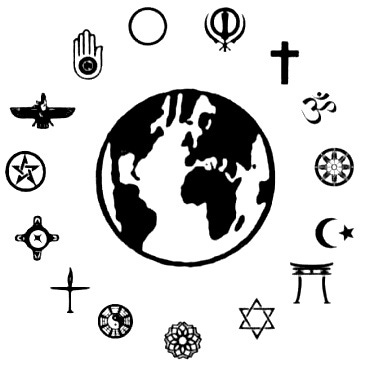
In our previous episode, we discussed political memes, and in this episode we're going to discuss exoteric and esoteric religious memes. As it is with all groups, the public image of a religious institution is defined by the memes held by or rejected by the members of that institution. These specific doctrines, dogmas, dissertations, rules, and customs are the sets of memes commonly held to be true within a given religion, and the specifics of these memes vary from institution to institution. These public memes are known as exoteric memes, and they are easily identified and fairly well understood by most of the institutions members.
A few exoteric religious memes are shared by members of diverse religions. Religions generally share, for example, belief in an overarching God meme chord, and generally agree on many of the lesser included memes that make up the God chord, such as memes concerning God's omniscience and omnipotence and the importance of communing with God.
In Exodus and again in Deuteronomy, the first four of the Ten Commandments lay out a basic God meme of Judaism. The key God meme, Deuteronomy 6:4-5, is known as the Shema. “Hear, O Israel: The Lord is our God, the Lord is One. You shall love the Lord your God with all your heart and with all your soul and with all your might.” Agreement on this basic God chord was so important to the early Hebrews that they were instructed to teach them diligently to their children. To talk of them while sitting in the house when walking, when lying down, and then again first thing upon arising. They were also instructed to bind to the memes to their hands and on their foreheads between the eyes, and to their gate posts and doors. These containers are known as phylacteries, and they hold within them the fundamental Hebrew memes.
In the Christian faith, the Apostles Creed states the basic Christian memes. This meme chord is regularly recited in unison out loud by all believers, beginning with, “I believe in God, the Father Almighty, maker of heaven and earth, and in Jesus Christ his only son, our Lord,” and ending with acknowledgment of a belief in “the resurrection of the body and the life everlasting. Amen.”
Born-again Christians go one step further than the Apostles Creed in their emphasis of public affirmation of the meme that Jesus Christ is their personal Lord and Savior. Enactment of the born-again meme requires a watershed moment of personal surrender, without which one is not considered saved from sin, death, and damnation.
For Islam, the Shahada summarizes the key memes that must be professed to be counted a Muslim. “There is no God but God, and Muhammad is his prophet.” And beyond this basic belief are more key memes. According to the Muslim voices website, someone who becomes a Muslim is also agreeing to accept the six articles of faith in Islam as well as the five pillars of faith. These are the five pillars of Islam: fasting during Ramadan, pilgrimage to the holy city of Mecca, pledging the faith, ritual prayer, and charity to the poor.
Unlike the biblical Judeo-Christian and Islamic religious memes with which most Americans are more or less familiar, Hinduism is an ancient religious tradition with fuzzy memes that are difficult to define and exceedingly diffuse. Hinduism is an inclusive religion that allows each member to pick and choose from any number of religious memes as they see fit. Sarvepalli Radhakrishnan, India's first vice president and a respected theologian, defined Hinduism as a process meme rather than a meme set. He said, “Hinduism is not just a faith, it is the union of reason and intuition that cannot be defined but is only to be experienced.”
Wikipedia says the prominent themes, that is, memes, in Hindu beliefs “include, but are not restricted to: Dharma, which is ethics and duties; Samsara, which is the continuing cycle of birth, life, death; Karma, which is action and subsequent reaction; Moksha which is liberation from Samsara; and the various Yogas, which are paths or practices.”
Hinduism grants absolute and complete freedom of belief and worship. Hinduism conceives the whole world as a single family that deifies the One Truth, and therefore it accepts all forms of beliefs and dismisses labels of distinct religions which would imply a division of identity. Hence Hinduism is devoid of the concepts of apostasy, heresy, and blasphemy. Most Hindus believe in a God meme—Brahma, Lord of Creation. But, because there are no fundamental memes, one can be an atheist and still join this most inclusive religion.
Taoism is both a philosophy and a religious tradition. As a philosophy, Taoism's memes primarily stem from an ancient Chinese book called the Tao te Ching. Tao means way, path, or principle. Hence the Book of the Way presents memes by which one may live in harmony with natural order. Religious Taoism adds ancestor worship and local traditions, and customs such as divination practices, to the basic philosophical meme cord.
Buddhism is an exception to the rule, in that it does not hold an explicit God meme. This is largely because its founder, Siddhartha Gautama, AKA the Buddha, or the Enlightened One, realized his central meme to be avoidance of suffering and not worship of God. All Buddhist practice and philosophy stems from the single avoidance of suffering meme cord, referred to as the Four Noble Truths. 1: everyone suffers; 2: craving causes suffering; 3: suffering ends when craving ends; 4: liberation is possible by doing what the Buddha did—by practicing meditation. This is why the Buddha is usually depicted as sitting and meditating. The Buddha himself is not considered a deity but a human guide, an exemplar of one who tried and failed at various religious practices until finally achieving liberation through meditation.
Another common meme chord shared by all religions is the importance of leading a moral life. Although, as with all memes, the exact details of what it means to be moral may differ. However, the Golden Rule seems to be one universal moral meme common to all religious cord: Treat others as you wish to be treated. Morality is a different meme than the God meme. So despite the usual conflation of the God meme chord with the morality meme, the morality meme may be held and successfully deployed without reference to any particular religion. In that case, morality becomes part of the philosophical meme chord called ethics, and is considered necessary for the smooth operation of civil society. Those who do not espouse any particular religious memes may still embrace a strong morality meme held in a secular ethical chord.
Despite the many memes religions have in common, it is the exoteric memes they do not share—memes of Saints and Saviors, official histories, and other idiosyncratic traditional beliefs, that define them and set them apart. It is the memes they do not share that give rise to the world's diverse religions, denominations, and sects. People generally stick with comfortable, habitual memes and are somewhat disinterested in acquiring others’ unfamiliar memes.
Esoteric memes are less well known than exoteric memes because they are either so difficult to understand that only advanced devotees can manage, or because they are secrets purposely withheld from all but an inner circle of believers. Secret esoteric memes would include temple rites and other priestly rituals, and hidden texts that only a select few are allowed to see. The Simple Explanation differentiates between the intentional withholding of secret memes and memes that are authentically esoteric. Truly esoteric memes are not secrets withheld from the many and only shared with a few. Authentic esoterica is information that can be personally accessed by any individual, and in that sense is hidden only until the individual decides to access it. Yet, despite the free availability of these esoteric memes, relatively few people seek them out.
The good news is that no one can withhold true communion with the soul of God from you. This is because there are no particular memes that must be collected in order to reach God, but rather the opposite. Memes must be lost by letting go of habitual memes. One's governing Self unit of consciousness intuitively aligns itself with the Metaversal principles embodied by the Universal Unit of Consciousness. And by the way, this phrase, the Universal Unit of Consciousness, is used in my Simple Explanation of Absolutely Everything philosophy. But we can think of the Universal Unit of Consciousness as that body of knowledge, or the gigantic universal algorithm that holds every formula and every possibility of this universe in which we live. And, in the Simple Explanation I suggest that this is one of the fractals of the Father.
So, in Gnostic terms, we'd say that the Universal Unit of Consciousness is probably identified as what is called the Son of the Father. In Gnosticism, during these periods of alignment, first hand knowledge of reality may be glimpsed. In Sanskrit, this intuitive glimpse is called samadhi. When one is able to attain the meme-suspended state, this is called nirvikalpa samadhi—beyond duality. If one adopts the Simple Explanation’s definition of meme-based versus intuitive knowledge, then esoteric knowledge of God is truly available to any and every seeker at all times. The only limitation is one's willingness to suspend egoic attachment to one's treasured meme bundle long enough for the governing unit of consciousness of your soul to align with the Universal Unit of Consciousness.
Ancient Gnosticism is an Abrahamic meme bundle that relies on just this sort of introspective enlightenment. In Gnosticism, it is thought that redemption has already been given to all. One only needs to recognize and receive. When all memes are set aside, when thought and language are suspended, the Self unit of consciousness remains. This seminal fractal unit of consciousness that we usually call the soul lies beneath the memes, unencumbered by meme attachments. The person’s governing unit of consciousness aligns with the Universal Unit of Consciousness—a condition called bliss in Buddhist and Yogic teaching. “Be still and know that I am God,” is how the Bible says it in Psalm 46:10. Verse 16 of the Tao te Ching says, “Be still. Stillness reveals the secrets of eternity.”
To be still is to suspend attachment. Intuitive knowledge comes during the still point between the pendulum swings of breath and thought. To be still is how we hear God. During meditation, when the mind is perfectly still, the source from which the body draws energy shifts from chakra 1 at the base of the spine to chakra 4, the heart. In this manner, the Self unit of consciousness goes in phase with the Universal Unit of Consciousness. During Samadhi, the 7th chakra—the crown of the skull—directs unimpeded information directly through the aligned Metaversal funnel, while the Self unit of consciousness presses directly against the coherence boundary, stimulating an unparalleled sense of divine love. At the same time, universal proto-energy pours through the spiritualized heart at the core of the meditator.
Now, in that last paragraph, I was speaking of concepts that are contained in A Simple Explanation of Absolutely Everything and in that model we have a toroidal shaped boundary around everything in the universe. So, as we've been speaking of Aeons and the Fullness in the basic concepts of The Gnostic Gospel Illuminated in prior podcasts here, these toruses are the golden globes—the golden cannonballs—that the stack of the Aeons and the Fullness make up. They are each shaped like a sphere, is how I have previously described them, but in actuality, in my own mind, I think of them as these doughnut-shaped toruses. The only reason I bring that up is because this paragraph has just referred to going in phase with the Universal Unit of Consciousness. And so, in the Simple Explanation, we think of the Universal Unit of Consciousness as the outside edge of our expanding universe, as the wrapper around our physical space. In Gnosticism, it's the boundary that separates the Father, the Son, and the Fullness from this physical reality.
And so what I am suggesting is that during samadhi the meditator's own small little unit of consciousness donut that is around them like a bubble goes into the same phase orientation as the Universal Unit of Consciousness. And since they’re doughnuts with holes in the middle, when you go in phase your doughnut hole lines up with the doughnut hole of the Universal Unit of Consciousness. And that is how you attain samadhi from the center. That's what it means to be centering.
I apologize if this is confusing. It's explained in depth in my book, A Simple Explanation of Absolutely Everything, and also on my original Simple Explanation blog at: https://asimpleexplanation.blogspot.com/2011/01/simple-fractal-model-of-conscious.html and this is where you will find all of these descriptions of the doughnuts if you're confused. By the way, my Simple Explanation blog has been shadow-banned ever since I refuted the pandemic so-called science. You may have a hard time finding it now in an ordinary search, but the link above should take you there.
Now back to the reading-- Paramahansa Yogananda, who lived from 1893 to 1952, taught his followers what he called Scientific Kriya yoga technique, reputed to reverse a meditator's life energy flow away from the body and its distracting sense impressions, redirecting it inward and upward through the third eye, known as the Kutastha Chaitanya or Christ Consciousness location between the eyebrows. When mastered, this meditation technique is said to allow direct, intuitive knowledge of God or reality, or samadhi in Sanskrit. The Simple Explanation calls this a meme-shedding technique.
The following quote from Paramahansa's discussion of John 3:1-8 introduces the Kriya meme of what it truly means to be born again: “All bona fide revealed religions of the world are based on intuitive knowledge. Each has an exoteric or outer particularity, and an esoteric or inner core. The exoteric aspect is the public image and includes moral precepts and a body of doctrines, dogmas, dissertations, rules, and customs to guide the general populace of its followers. The esoteric aspect includes methods that focus on actual communion of the soul with God. The exoteric aspect is for the many, the esoteric is for the ardent few. It is the esoteric aspect of religion that leads to intuition, the firsthand knowledge of reality.” And that was from his book called The Second Coming of Christ, the Resurrection of the Christ Within You. (pg. 240, vol. 1)
This next quote from Paramahansa is from his book, God Talks With Arjuna: The Bhagavadgita: “The life of a scientific Yogi is therefore more balanced. He understands and follows those laws and principles of nature by which he sees God as the All in all and thereby consciously releases himself from the limitations of personal attachments to property and relatives and friends, serving the Lord in all human beings, irrespective of their creed, race, or condition. By various methods of concentrations, he gradually detaches his ego from the senses and attaches his life force, mind, and ego to the Super-conscious soul. Then by primary ecstasy, he experiences the Kutastha Intelligence in all of creation and by nirvikalpa ecstasy, he attains the Spirit beyond phenomenon.” (pg. 842, vol. 2)
That’s all we have time for today. Next week we will take a closer look at Christianity’s meme chord. Until then, onward and upward! And God bless.