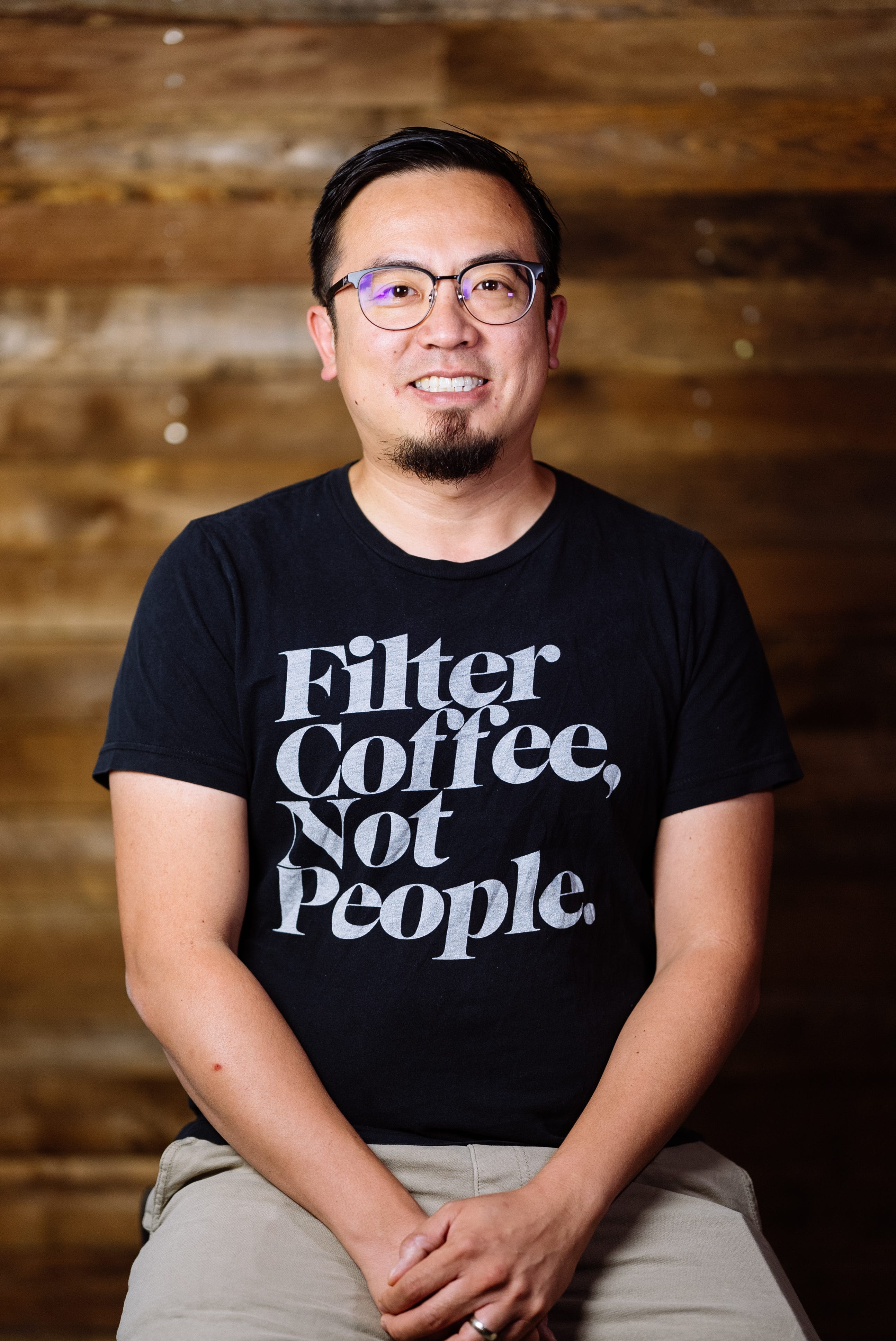
For Context: Bernard Tam
Episode # 02
🎙️ Episode Overview
In this episode of For Context, Bernard Tam joins Luke and Gino to discuss contextual theology. Bernard had just turned in the first draft of his dissertation for the Doctorate in Ministry in Contextual Theology program at Northern Seminary. On this episode, they discuss a bit of the program’s impact on Bernard, life and ministry in Toronto, and Bernard’s dissertation. Listen in!
For Context is sponsored by Northern Seminary. To learn more about the Contextual Theology program (or any of the number MA, M.Div, and D.Min offerings), visit seminary.edu.
📚 Resources
* Bernard Tam: The Living Room Church
* Gino Curcuruto: Following Jesus Into the Ordinary
* Luke Stehr: Faith In Situ
🤝 Join the For Context Community
If you enjoyed this deep dive, consider becoming a paid subscriber to help us keep providing the context behind the news.
* Subscribe to the Newsletter: forcontextpod.substack.com
Leave a Review: Apple Podcasts | Spotify
Episode Transcript
Gino Curcuruto:
I am Gino Curcuruto.
Luke Stehr:
I’m Luke Stehr.
Gino Curcuruto:
And you’re listening to For Context,
Luke Stehr:
A podcast about Northern Seminary’s Doctorate of Ministry in Contextual Theology.
Gino Curcuruto:
Welcome back to For Context. This episode we have as our guest, Bernard Tam. He’s a pastor and he’s finishing up the Contextual Theology program at Northern. He just, I believe he’s submitted his, a draft of his thesis. So he’s going to be, he lives in Toronto. I’m probably saying that wrong. They probably say Toronto, Canada, Ontario, Canada. And he’s a dear friend of mine. I’m excited to have this conversation with him and Luke. So listen in. We are Fitch really critiqued how we don’t have a radio dynamic. So I thought just a flat line silent introduction would be a really cool way to start this episode. Now welcome back to For Context. I’m Gino with Luke and
Luke Stehr:
I’m here.
Gino Curcuruto:
Yeah, good, good, good.
Luke Stehr:
Dave Fitch was right to critique our radio dynamic.
Gino Curcuruto:
He was, we’re more contextual theologians than performers. So that’s a little juke there. Got him,
Luke Stehr:
Got him. But today we’ve got Bernard Tam with us and I’m so glad Bernard could be here. Bernard, I think I’ve met you exactly once in real life.
Bernard Tam:
Yes.
Luke Stehr:
But it’s really great to be with you digitally again, so thanks for joining us.
Bernard Tam:
Yeah, thanks for having me. I’m excited to just chat and hang out.
Luke Stehr:
Yeah, well if you can’t tell from the accent. Bernard, where are you from?
Bernard Tam:
I’m from Toronto, Canada.
Luke Stehr:
Not Toronto.
Gino Curcuruto:
It’s not Toronto.
Bernard Tam:
Some people can call it that,
Luke Stehr:
Who? Who may call it Toronto,
Bernard Tam:
The un-Torontonians.
Gino Curcuruto:
Ah us.
Luke Stehr:
It’s a Shibboleth, so
Gino Curcuruto:
That’s good. That’s good. Well, I want to tell you, I want to say before we jump into the questions, Bernard and I have become friends because of this program. In some ways we were introduced through Fitch for something else. We’re both part of the Christian and Missionary Alliance, but then through our overlap in seminars when I was in the master’s program, we’d hang out and got to spend some time with him and then we’ve become friends. So I’m excited to see you though. I do talk to you regularly. I’m excited to see you. I am also excited for you to share about your experience in the Contextual Theology program. I understand you have just submitted your final thesis.
Bernard Tam:
First draft. Yes
Gino Curcuruto:
First draft. Okay.
Bernard Tam:
Waiting for all the critiques and the red marks.
Luke Stehr:
Well maybe you can talk some of it out now and those critiques and red marks won’t feel so bad when they come. You’ll think, oh, I should have done that maybe.
Bernard Tam:
Yeah, we’ll see how it goes.
Luke Stehr:
But why don’t you tell us just about your ministry context and your church structure?
Bernard Tam:
Yeah, totally. I’m part of a church called the Living Room Church. It’s in what is known as Midtown Toronto. So just imagine the city of Toronto and then you draw a giant circle around kind of the core. We’re kind almost dead set in the middle,
So we’re kind of straddling the urban center and what eventually becomes a suburbs. So we’re kind of like this unique space where interestingly in my research, it’s really hard for people to define. It’s almost like a little bit of a nebulous space that people are constantly trying to figure out the definition, but it’s just never a clear one, but in the midst of it. So I’ve been a part of this community for about 13 years and over the last 10 we’ve been kind of emerging into a network of house churches and part of which is just realizing where our points of connections with our neighborhood is that it’s actually not necessarily a Sunday service that people are looking for, but it’s the deep relationality in our living room that people have an openness and a willingness to kind of embrace and engage with one another. So we’ve been doing that for a little bit. We’re still learning. I feel like it’s never a simple, you don’t just do one thing and that’s it. There’s always learning, there’s always changes.
So we are kind of coming at it with humility as much as we can. What’s kind of unique about our neighborhood is often it used to be known, so the main intersection of our neighborhoods called Yonge and Eglington, and it was once known as the young and the eligible because it was actually where it was a little bit more affordable. The young urban professionals are able to move in and they’re all singles and they’re all trying to figure out life in this big city. But now over the last couple of years, it’s really has changed. The neighborhood is very diversified. It’s not young and eligible anymore. When we first moved in, we were worried I had a 2-year-old. Then we’re like, oh, is he going to have any friends young and eligible? There’s gonna be no kids? And then all of a sudden an explosion happened and there’s so many kids in our neighborhood to the point where some of the new developments in our community have signs that says, even though you are going to be living beside a school, your kids will not guarantee a spot in the school. Wow. That’s kind of how crazy it gets, but it’s been beautiful to see kind of the intermingling, the mixture of culture in our neighborhood.
When I go pick up my kids from school, English is not the common language for you to hear. There’s people from all over, from Europe, from Asia, from Latin America, and there’s this kind of become this eclectic mixture of culture in our community. And so it’s been a gift and a fascinating space to do ministry and learn.
Luke Stehr:
Yeah. What do you feel like as you’ve been in that neighborhood for quite some time now, what are some of the things that as you sit in that space that have emerged for you just as you’ve learned to listen to what’s happening there?
Bernard Tam:
I think one of the things that I’ve observed and learned, and maybe it’s been unearthed through many conversations, is the deep longing for relationships. Just the depth of loneliness living in the city is exposed through many conversations. So I remember when we first moved down into the neighborhood, I was really inspired by Caesar Kalinowski. There was a post that he put about how he was new to the city, I think it was New York, and he just threw himself a welcome to the Neighborhood party. He knows nobody. I’m like, that’s a brilliant idea, let me do that. And so we did. And with Fear and Trembling and my cute 2-year-old in my arm, I made up these little flyers and just passed around the neighborhood like, Hey, hosting this thing, I want to get to know the neighborhood…