This is a free preview of a paid episode. To hear more, visit thoughtlessdel.substack.com
They defend the severance because admitting what was taken would cost them too much.
Every time a child’s separation from their first family is questioned, the same reply arrives: but the adoptive home is loving.
It is a deflection, and it fails on its own terms.
Nobody can guarantee a loving home, biological or adoptive. Biological families fail children every day through neglect, violence, addiction, and indifference. We don’t respond to that by declaring those children unfamiliar with family. A child’s claim to their own family does not depend on how well that family performs. If love were the test, most biological families would fail it, and so would many adoptive ones. A standard that disqualifies both cannot be what makes a family a family.
What makes it a family is origin. A child’s first family is the line of descent they were born into: the relatives, the medical and ancestral inheritance, the face, the illnesses, the names, the stories. That was never a sentimental detail. It is the fact that places a child within a family to begin with. Remove it, and you have not added a family. You have severed one.
That is the act at the centre of this debate, and the loving home obscures it. Adoption is not the addition of a family to a child. It is the removal of one, followed by the substitution of another, usually by legal instrument, sometimes with the original record sealed so the child cannot readily find where they came from. The new home may be warm. The care may be excellent. Everything that follows is built on the severance at the start, and a good life afterward does not reach back and make the severance lawful.
Pointing to the loving adoptive home answers a question nobody asked. The question is whether the separation was justified, and the quality of what came after cannot justify it retroactively. A surgeon who removes a healthy organ is not absolved because the patient recovers well under other care.
The system depends on keeping the conversation on the home, because the home is easy to defend. Everyone agrees children should be loved. It is far harder to ask what was taken from the child to make the placement possible, and to count the costs: the records never opened, the searches that lasted decades, the people who were told they should be grateful and that their grief about their origins was an insult to the families who raised them. The argument from love turns gratitude into the price of admission. It asks the adopted person to accept the warm home as proof that the loss was never real.
The loss was real. Renaming it does not shrink it.
None of this requires villains, though it does require honesty about what happened. Adoptive parents can love their children completely and still be clear that they did not create the family the child was born into. Social workers can act in good faith and still have worked inside a system that treated separation as a routine administrative step. Both can be true, and neither changes the fact that biology gave the child their place, and that taking it away is a separation, however kind the aftermath.
Love is what every child is owed, in every home. It has never been what makes a family, and it can never be the reason a child was cut off from their own.
Identity Is a Right, Not a Reward
The United Nations Convention on the Rights of the Child speaks to this directly. Article 7 gives every child the right to a name from birth, the right to a nationality, and, as far as possible, the right to know their parents and be cared for by them. Article 8 goes further. It requires States Parties to respect the child’s right to preserve their identity, including their nationality, name, and family relations as recognised by law. Where a child is illegally deprived of any of these, the State must provide assistance and protection with a view to re-establishing that identity quickly.
Read those articles against the practices this debate has exposed. Cancelling a child’s original identity, replacing it with a falsified birth certificate that names the adoptive parents as the natural parents, and locking the records that would allow the child to find their way back: each of these is an interference with exactly what Articles 7 and 8 protect. They are not incidental features of care. They are the mechanisms by which a child’s identity is erased.
So the question is not only whether the adoptive home was loving. It is whether the child was allowed to keep their name, their nationality, and their family relations, and whether they were given the means to recover what was taken. A warm bedroom and a full table do not answer that. Identity is not something a loving home can grant in exchange for the one it removed. It is a right the child already held, and it is not love that cancels a falsified birth certificate or unlocks a sealed file.
Cancelling identity, falsifying birth records, and locking away the truth is not love. It is the opposite of what the Convention requires, and no kindness afterwards changes that.
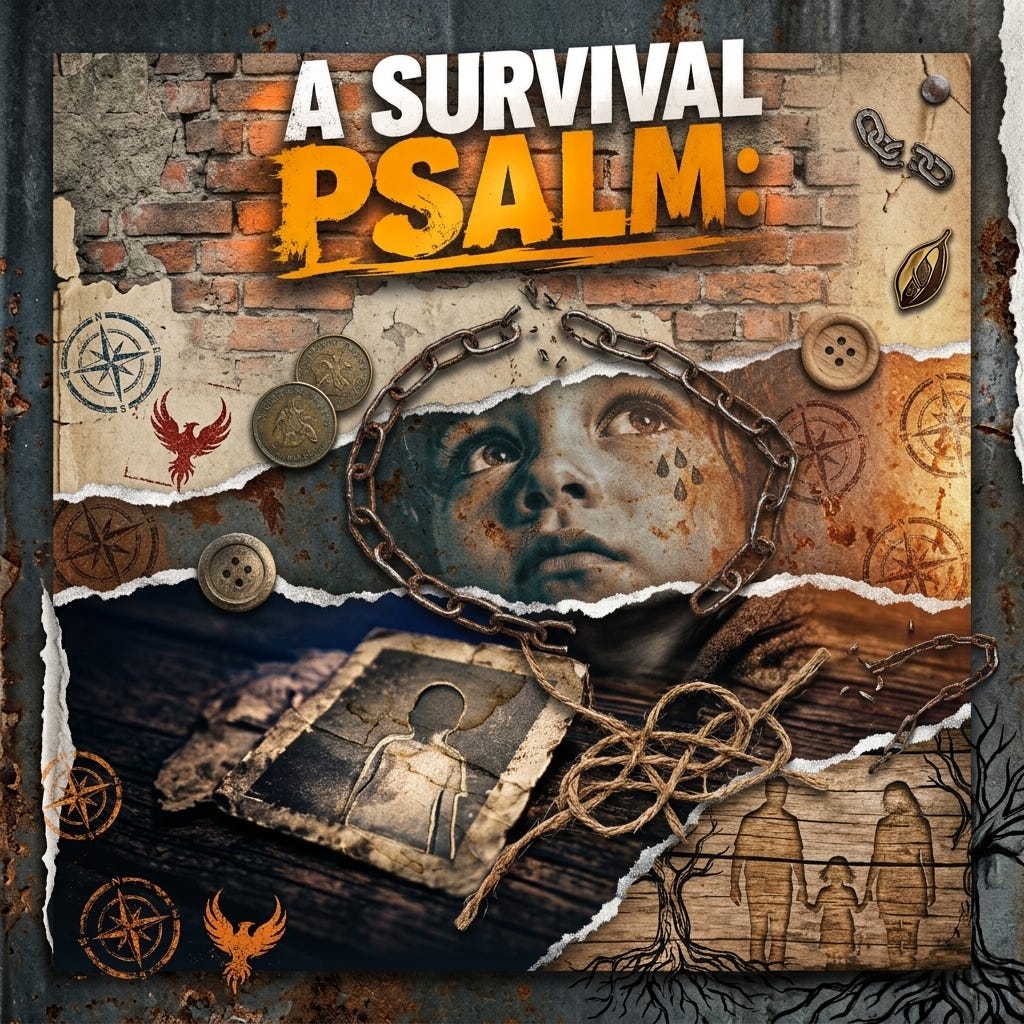
A Survival Psalm:
The rage, the fire, the voice
… a survival psalm, a shelter for the ache.
There is a kind of silence that comes after the storm.
Not the clean cinematic kind…
… but the hollow throb of everything that refused to die.
In that raw aftermath where time collapses
… and the world seems made of ash and memory
… something in you breathes.
Not because it wants to …
but because there is some pulse inside your bones.
Older than the names they gave you.
Older than every lie dressed up as love.
You were not meant to carry it all.
The severed lines,
the invisible contracts,
the rituals of abandonment …
etched into your skin before you could speak your own name.
But you have.
And that makes you a temple of truth,
… not a polished one
… not a holy one
but the kind of temple where real gods come to weep.
So, sit if you need.
Lay down the fire for a moment.
Let the rage cool beside you like a sword in the dirt.
Let the grief unfasten your ribs and whisper its secrets.
You are not unlovable.
You are not unworthy.
You are the one the ancestors wrote warnings about.
The one who would return to speak the unspeakable.
Your experience isn’t entertainment.
It’s testimony.
It is older than opinion.
It pulses through bloodlines, grief lines, lifetimes.
It was never meant to be palatable.
You are not here to soothe.
You are here to speak what must be spoken.
This Substack is reader-supported. To receive new posts and support my work, consider becoming a free or paid subscriber.