A continued thank you to subscribers for the comments and discussion we’re having. It is an amazing part of writing a book this way that we can share in additional memories and reflect on experiences we have all had. This section marks the end of “Chapter I” and so please feel free to drop me a line with feedback or thoughts on how things are going. By all means share this with friends as we’re about to start diving into product development—and I’ll be writing code finally.
Back to 006. Zero Defects
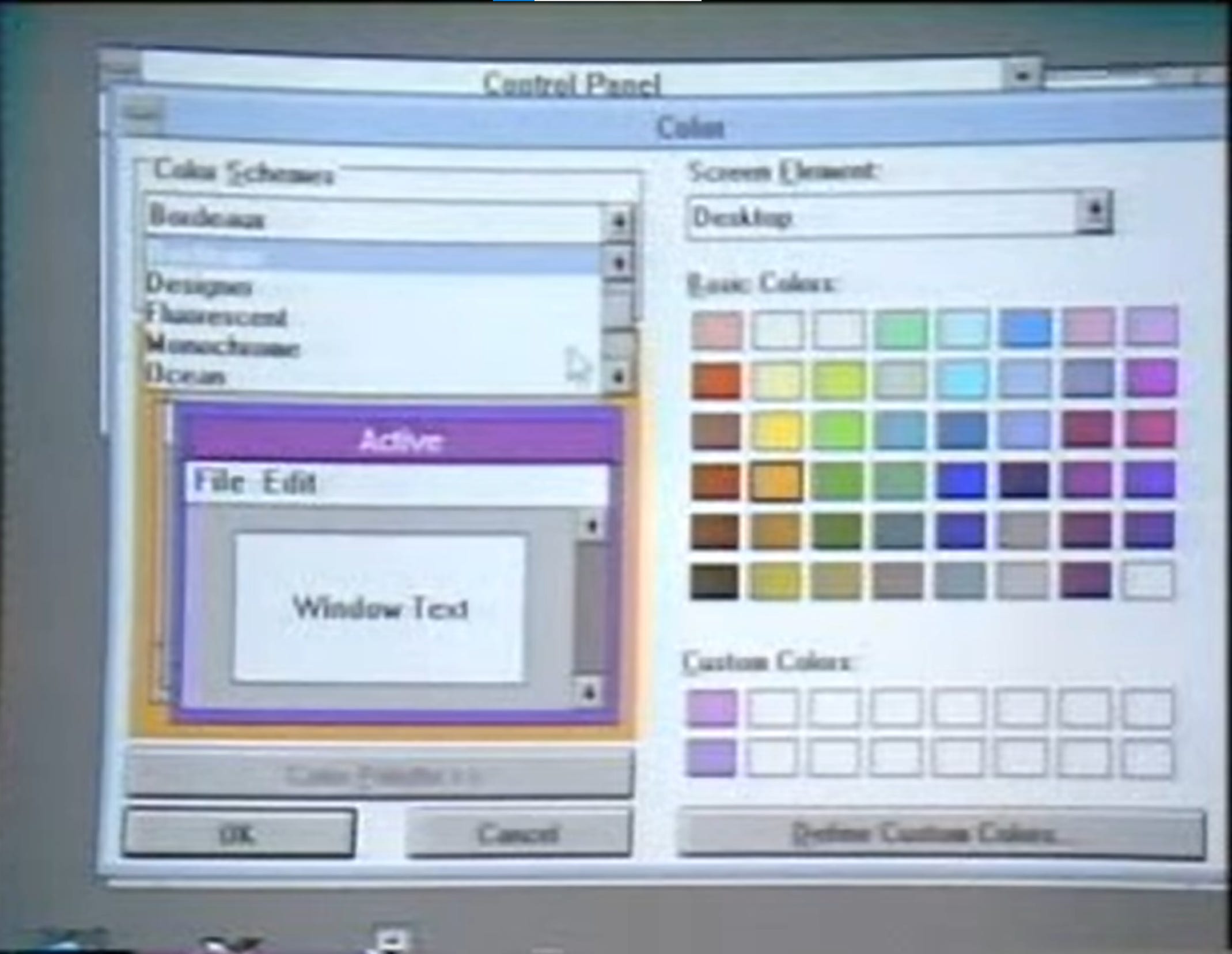
With spring 1990 approaching, the buzz for Windows 3.0 was becoming deafening within the halls of Microsoft. One of the most exciting things was seeing the visual appearance of the product. Windows 1.0 and 2.0 were, to put it kindly, garish, or at best excessively blocky and utilitarian. Much of this was out of necessity as computer monitors only displayed about the equivalent number of pixels of one app icon on today’s iPhone and only had access to 16 colors (or no colors at all). Windows 3.0 also added overlapping windows like on Macintosh which made a huge difference in how the product felt.
Windows 3.0 was the first integrated release of Windows, meaning sold along with MS-DOS on a new PC. The notion that Windows was an “operating environment” added on to MS-DOS was giving way to Windows the operating system. While seemingly arcane technical jargon, the change in vocabulary was also a change in how the product was sold to computer makers and how software developers should think about Windows. Windows coming with a new PC meant it was no longer a question developers would need to ponder when deciding how to write software. The landscape was changing from IBM-compatible PCs to Windows-compatible PCs. This was huge.
To emphasize this point, the company scheduled a major (for Microsoft) press event in New York in May 1990. What was months earlier a side project was now front and center for the whole industry. While Microsoft had previously held launch events at trade shows, this was one of the earliest examples (and certainly the most expensive) of a major event for a single Microsoft product.
This event was going to be monumental for the entire company, except perhaps for the people working on OS/2. We were all using OS/2 every day as a main development machine, and many people were working hard but struggling to get Word and Excel working on it. But it was also viewed with a good deal of skepticism internally. Much of this was because of the stories that made their way over to Apps from Systems about working with IBM and the disconnect between engineering cultures, but also our own experience in the poor quality and difficulty in using the product.
There were many stories of IBM’s dysfunction that were common knowledge. IBM used to measure their programmers on lines of code produced; more lines meant higher productivity. Except Microsoft believed fewer lines of code to create the same feature was better. IBM thought Microsoft engineers were less productive while Microsoft thought IBM engineers produced bloated code. Microsoft was young and confident. IBM was…experienced.
While IBM was a few decades into writing software, their experience was rooted in making highly custom and highly reliable mainframe software, over very long periods of time. The reality was Microsoft was at peak productivity for new lines of code being written for PCs, but we were still very early in figuring out a reproducible process for releasing products and of course we continued to have quality problems and scheduling missteps. BillG even noted our challenges in releasing software on time as he walked on stage at the event, saying that today Microsoft is announcing the completion of Windows 3.0 and had the product not been done hosting such a big event would have been a bit of an “extravagant way to announce a delay in the schedule.”
The deep tension between Microsoft and IBM was hardly visible to us and, frankly, the industry was geared toward a world with many competing computing platforms. Nearly every article about Windows viewed the product as a stepping stone to the more modern OS/2 that would shed its connection to 8-bit MS-DOS. No one was anticipating Windows 3.0 becoming a de facto standard, certainly no one at our daily lunch table. We increasingly knew Windows 3.0 was an exciting product, but we also knew that Microsoft had committed to a joint development project with IBM, a company perhaps 100 times the size of Microsoft. None of us really had a clue just how tense the relationship between Microsoft and IBM was becoming while we continued to find ways to absorb the complexities of OS/2, Macintosh, and now Windows 3.0.
Along with Windows 3.0, Microsoft demonstrated a new release of Excel for Windows, Excel 3.0, an updated Word version 1.1, and the first version of PowerPoint for Windows version 2.0. The PC software industry was a version number machine—literally everything was a 1.0 or a 5.0, or debating whether a product was a .1 or a .5. It was the source of marketing games such as “big upgrade in version 2.1” and notorious for cynicism such as “avoid a 1.0” or “wait for the ‘a’ release.” Microsoft was a varsity player in this world of confusing version numbers (and product names), and we were just getting started.
Those updates were just the software from Microsoft. The platform marketing team, which in the software industry had become known as evangelism, a term pioneered by Apple, had successfully wooed hundreds of independent software vendors to show off their latest products on Windows. The Windows 3.0 event included mentions of many of the biggest names of the day including Corel, Aldus, Iris (makers of what would eventually become Lotus Notes), and Crosstalk. Noticeably absent with Windows products were WordPerfect, Ashton-Tate, and Lotus, the leading applications for MS-DOS.
Also at the ready were hundreds of hardware companies ready to deliver a range of fully compatible computer systems, components, and peripherals. While often overlooked, the ability to have hardware and the required software to make printers, displays, and a host of accessories work with Windows was an achievement equal in magnitude to applications.
Windows 3.0 seemed to have everything that OS/2 did not. There were compatible PCs. There were new applications. There were supporting peripherals. It had the pricing and distribution too. The fact that it ran on as little as one megabyte of memory (though really two was better) and also ran all existing MS-DOS applications even better than they ran before made for an incredibly compelling launch.
Windows 3.0 represented a step-function change in the PC. The clunky world of obscure commands and text-based screens would give way to colorful overlapping windows and a mouse, something that Macintosh had for the past five years. While the PC was catching up in capabilities it was still outselling Macintosh by more than fifteen to one. What the PC lacked in ease of use and elegance, it more than made up for in lower cost hardware, a much broader base of support from software makers, and a wide array of peripherals.
The launch event was satellite broadcast to conference rooms around campus. For most of us, the idea of seeing Microsoft o…