Microsoft went through so much in the first year of the millennium. It began with SteveB taking on the role of CEO and BillG taking on a new role as Chief Software Architect. Over the first months of the year a new set of technical leaders convened under the direction of Paul Maritz leading all of the product groups to define essentially the next Windows. The group was producing the plans for NGWS, next generation Windows services as outlined in memos from BillG and SteveB. The DOJ trial was complete, and we awaited the verdict, but everything we did was looked at through the lens of the implications of the trial. At every step we were asked if what was going on was a result of the trial, anticipating an outcome, or designed to work around what comes next. Personally, I was just getting my footing as an executive and the leader of Office and just figuring out what it means to be leading such a big part of Microsoft. I still had so much to figure out and was definitely worried about leading the train off the tracks.
NOTE: I really want to offer a big “Thank You” to all the paid subscribers. It takes a lot to take the time to support the work materially and while the proceeds of this work go to registered non-profits in the US, it still means a great deal that you’re paying for the work. Many subscribers are about to hit their one-year renewal and I wish to thank you in advance (and welcome new subscribers). As planned, there is almost exactly another year of posts planned—and for many this is the extra-exciting stuff including what’s coming with SharePoint, Outlook, the Ribbon, Windows 7, Windows 8, Surface, and many controversial (at the time) topics like Courier, including today’s section on NetDocs. THANK YOU!
To celebrate the anniversary, please consider sharing this link for a discount on the yearly subscription. https://hardcoresoftware.learningbyshipping.com/anniversary
Back to 062. Antitrust: Split up Microsoft and 063. Managing a Verdict
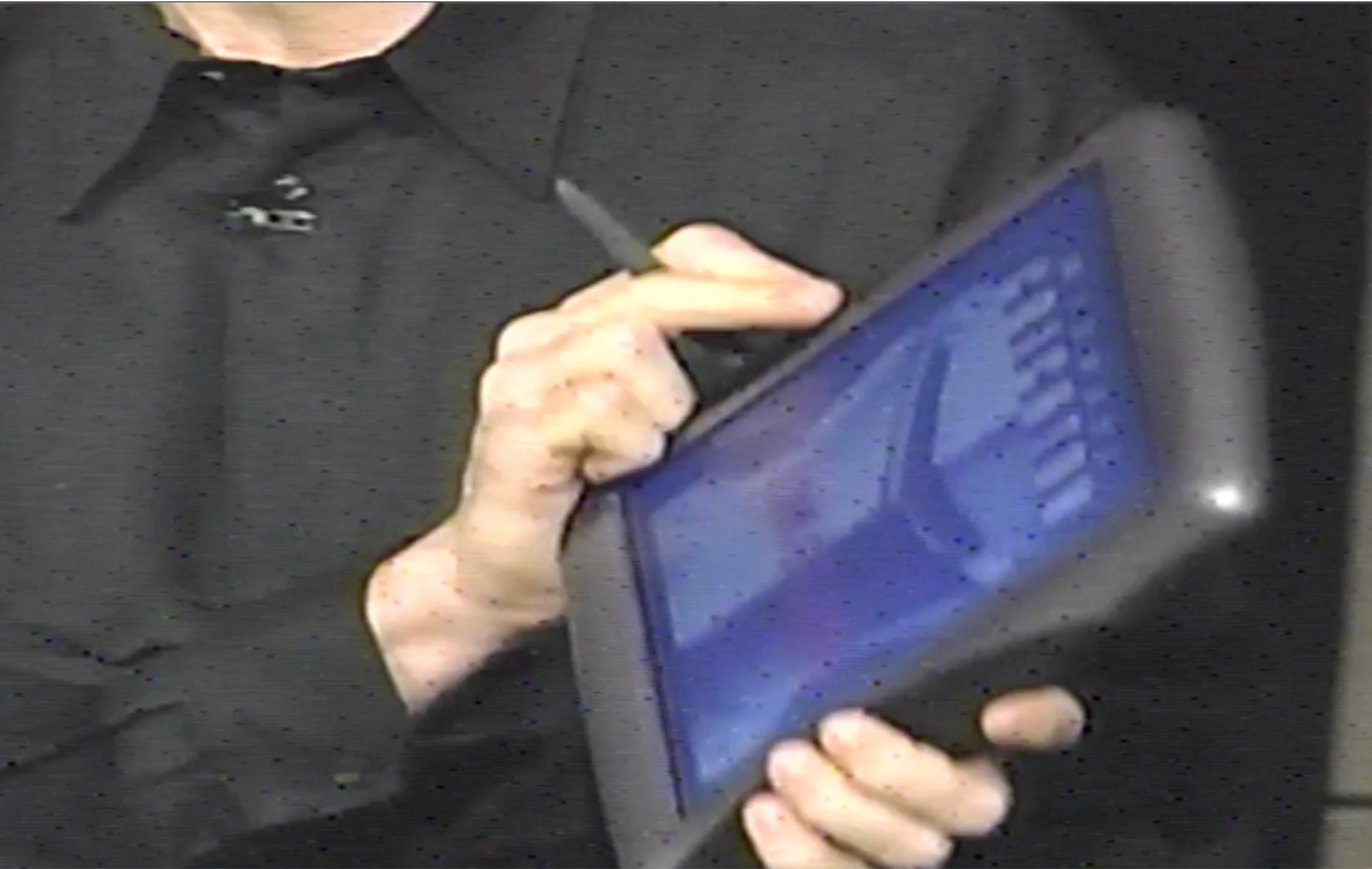
The demonstration within the multi-hour series of keynotes was billed as a “sneak preview of something that hadn’t been demoed before. . .technology that embodied the dot net user experience. . .this is real code. . .this technology will apply very broadly in the future across Microsoft products such as Windows.NET [pronounced Windows dot net], Office.NET as well as the consumer subscription service.” What followed was a 15-minute demonstration of word processing, spreadsheet, email, calendaring that looked like Office. The demonstration was easier to use, sleeker, and more connected. It featured enthralling technologies like “universal canvas” and “XML”. What’s not to like?
Within a news cycle the technology demonstration had ballooned to Office.NET and was the future of Office. Within Microsoft, especially in Systems, nothing was higher praise than being the future project and conversely nothing was worse than being the past. The world of dueling code names had been brought to Office, except now it was Office.NET and whatever I was working on, aka Office10. What had been shown was being built by a separate team, an organizational peer of the newly christened old Office.
What was this and where did it come from? Was anyone building a product called Office.NET? Was this planned? I certainly knew the code being demonstrated, but the idea that it was presumed to be the future of Office was newsworthy, even though we did not say that directly and had not intended to leave that impression as far as I knew. Nobody wants to Osborne the most profitable part of Microsoft (a reference to a well-known microcomputer company that went bankrupt preannouncing a next generation product). Weird.
Starting in early January of 2000 coinciding with SteveB’s promotion to CEO and BillG assuming his new role of Chief Software Architect, BillG and PaulMa began working on a series of strategy offsites, meetings, brainstorms, memos, and more called Next Generation Windows Services, or NGWS. There was even a new leadership team formed called the TLT, Technology Leadership Team. Everything was kicked off with memos from both BillG and SteveB highlighting NGWS. BillG explained in a memo Opportunities in the “Software Decade” that NGWS was a bet on par with the graphical interface in both the transformation and opportunity. By now, I was seeing this as a familiar playbook. If you want to say something is big, then compare it to the graphical interface. SteveB also had a memo, Changes and Opportunities.
These memos, Bill’s detailing the technology at a very high level and Steve’s articulating a customer and business focus put forward an innovation agenda for the company. The goal was to let Microsofties know the company was committed to innovation, especially with the rise of “dot com” companies and the huge valuation of anything internet in the public markets. It would be a few months until the market corrected itself, but Microsoft at this juncture was generally in a defensive posture. A broad re-branding was intended to create a new narrative for the company, supported by a next generation of technologies designed for the internet from the ground up, at least starting from Windows.
Just days after Bill’s memo, there was a call for participation in the NGWS planning sessions. A detailed series of offsites and meetings were scheduled. Literally, the invitation stated the work was to figure out the details of NGWS as introduced in the memos.
Please consider subscribing. New subscribers can use this link for an anniversary promotion discount.
In other words, we had a brand before we knew its meaning. That is not entirely fair because there were at least two key strategies under development. A series of projects defining consumer internet services such as email, calendaring, and identity were being developed by a group of the most senior leaders previously of Windows NT and others from around the company, an effort that would later become known as Hailstorm—consumer-focused experiences that also provide a platform for developers. A second effort encompassed the creation of a new programming platform for building internet applications on the server, which was just becoming known as .NET (dot net). This initiative included a variety of tools and platform work that built on the lessons from the first generation of internet applications.
To confuse matters, the .NET branding was starting to be picked up by a range of groups and products, including the next release of Windows NT Server which was sometimes referred to as Windows.NET (originally codenamed Whistler, then later Windows Server 2002, then finally Windows Server 2003). The .NET name was also used for the APIs and programming tools which would collectively be called the .NET Framework, for programming both servers and desktops. If you’re confused reading this, then you were not alone. NGWS was an umbrella term for everything, and .NET was intended to be a technology term, but we sort of ended up with two umbrella terms. The .NET branding was one of the more chaotic and self-inflicted product naming efforts (Was it .net, .NET, or .Net? Before or after the product name? With a space or without?).
Like BillG’s previous memo on software as a service, this memo also lacked any mention of Office. I was beginning to see a pattern. Only now that I was managing Office I started to wonder if I was somehow contributing to this. Whenever I reviewed drafts of these memos, I did not seek to include Office out of a reflex to fly under the radar and to avoid making promises for work that was not even underway, a strategy reinforced by my time working as BillG’s technical assistant. The team always noticed, and I found myself doing my be…