The Official Substack Of Brandon Richey is a reader-supported publication. To receive new posts and support my work, consider becoming a free or paid subscriber.
“Power does not corrupt. Fear corrupts... perhaps the fear of a loss of power.”
― John Steinbeck
If you are a member of Generation X (GenX) then perhaps what I’m about to say won’t sound too crazy to you, but then again maybe it will.
As a member of GenX, the biggest reason I frequently reference my generation is because of the shared culture that we all understand based on the way society was during our childhood. Granted, much of the part of society I’m alluding to has more to do with the state of the culture and the world as I remember it as a kid in the 1980s.
Now I understand that not all GenX folks are going to share my views and that’s fine, but for the sake of discussion I’m primarily addressing those that do and for those that don’t maybe they will learn. I’m going to come back to this in a bit so just hold on to that thought for the moment.
I want to shift gears and briefly address a concept known as Consequentialism. Consequentialism is a philosophical stance that hinges on the belief that the basic intuition of what is best or right for society is whatever makes the world best in the future. Essentially this philosophical view embraces this position because we cannot change the past, therefore worrying about the past is no more of a useful act than crying over spilled milk.
Now when initially looking at that viewpoint you might think that such a position sounds pretty reasonable. However, when examining this line of thinking there is a big red flag that jumps out if you take a moment to consider the consequences of consequentialism.
For example, if the position of this philosophical belief system centers on the basic intuition of what is best or right is what makes the world the best in the future, then who exactly is the arbiter that determines what exactly is best or right to make the world a better place in the future?
In short, this philosophical practice leaves itself open to overlapping with what is recognized as moral relativism. So what is moral relativism?
Moral relativism is essentially the view that moral judgments are true or false based on a particular standpoint that may be determined by the dominant culture of a given society or a particular historical period in time.
In my view, the key thing to take note of here regarding these philosophical positions is that the consequences of one’s actions may be determined to be the best based on what society deems to be morally relevant, or the time period that one happens to live in if the consequences are anchored to what that particular social dynamic deems to be good or bad.
In other words, in some countries it may be acceptable for the social dynamics to call for the covering of the face and head of a woman, and to restrict where she travels by law by forcing her to dress in a certain way that strips her of her individual identity. However, here in the West that is not an acceptable practice that is seen to result in what is believed to be what is best for society, at least not for the time being.
Now I say this even though our entire society was actually forced to go through the face covering time period back during the pandemic under the guise of safety, but that fortunately didn’t last. Having said that, I don’t have the confidence that any such behavior that could be repeated like that under the guise of safety would successfully manage to subside if it ever were to be enacted again.
In traditional terms, Western civilization (more specifically the United States) has a society that is based on individual liberty where rights are endowed to us by God, not by some government or ruling theocracy. However, the principles of which the nation was founded are indeed based on Christian values.
This is indisputable and if you don’t believe me simply read the opening of the Declaration of Independence.
“We hold these truths to be self-evident, that all men are created equal, that they are endowed by their Creator with certain unalienable Rights, that among these are Life, Liberty and the pursuit of Happiness.”
You see the opening of the Declaration of Independence just anchored what was best for society by declaring that all men are created equal and that they are endowed by their Creator with certain unalienable Rights.
It’s with this statement and this statement alone that the Declaration of Independence disintegrates the idea of moral relativism because what God has endowed with every individual with unalienable rights lays the foundation for what is absolutely best for society.
Now you may look at that and think then Brandon, why is our society experiencing so many problems and why is our civilization literally hanging on by a thread to not completely collapse?
That’s a very good question and the reason is because our society has more and more tried to embrace this weird secular worldview involving a form of woke consequentialism and moral relativism by distancing ourselves from God.
In short, for a long time now the position of the basic intuition of what has been seen to be what is best or right for society has involved a culture that embraces equity over performance, identity over merit, and a society that has confused coercion with liberty (just like that face covering). All three of those characteristics that I just listed are blatant examples associated with violating individual liberty and serving to be some of the greatest injustices to lead society away from liberty and back into the arms of a totalitarian state.
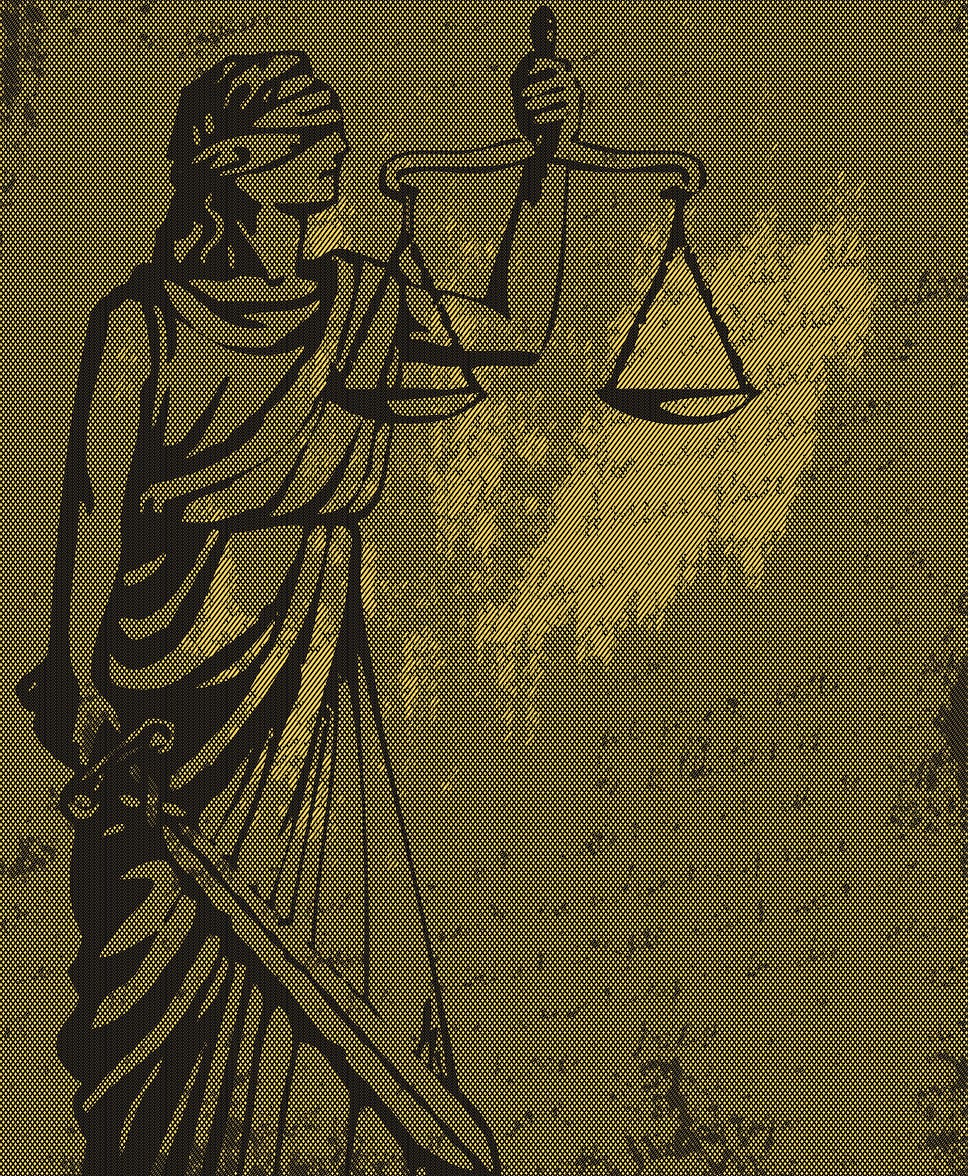
In the Preamble of the Constitution is the introduction to the highest law of the land which is the establishment of justice.
“We the People of the United States, in Order to form a more perfect Union, establish Justice, insure domestic Tranquility, provide for the common defense, promote the general Welfare, and secure the Blessings of Liberty to ourselves and our Posterity, do ordain and establish this Constitution for the United States of America.”
To establish justice is the most necessary step involved in a liberty-based society because with the establishment of justice it means that society will achieve everything else that’s listed in the Preamble regarding the domestic Tranquility (Tranquilitas Ordinis), providing of the common defense, the promotion of the general welfare, and the security of the Blessings of Liberty to ourselves and our Posterity.
You see, the establishment of justice means that you have a system that allows society the ability to seek out and ensure there are consequences for those who commit injustices. If it’s not obvious enough, the problem that our nation is facing now is the result of there being no consequences for those who have been responsible for major injustices throughout our society since the pandemic.
The Financialization of The Constitution
There’s a powerful quote that is often attributed to Fyodor Dostoevsky where he is credited with saying “Tolerance will reach such a level that intelligent people will be banned from thinking so as not to offend the imbeciles.” Now I say that he is often credited with having said this, but there are others who say that the quote is misattributed to him.
Whether or not Dostoevsky made this statement is irrelevant to this discussion, but what is relevant is that the quote is 100% true.
Over the past several years we’ve noticed a steady erosion of consequences against those who have committed injustices. I’ll elaborate on this to give you a clearer picture of where we are right now in our society if we don’t fix this problem.
You see, to me this started all the way back in 1989 after the Tiananmen Square massacre when George H.W. Bush sent his envoys to Beijing to maintain open channels of communication with the murderous regime who had just literally gunned down their own people. This meeting was directed to eventually start the ball rolling in order…