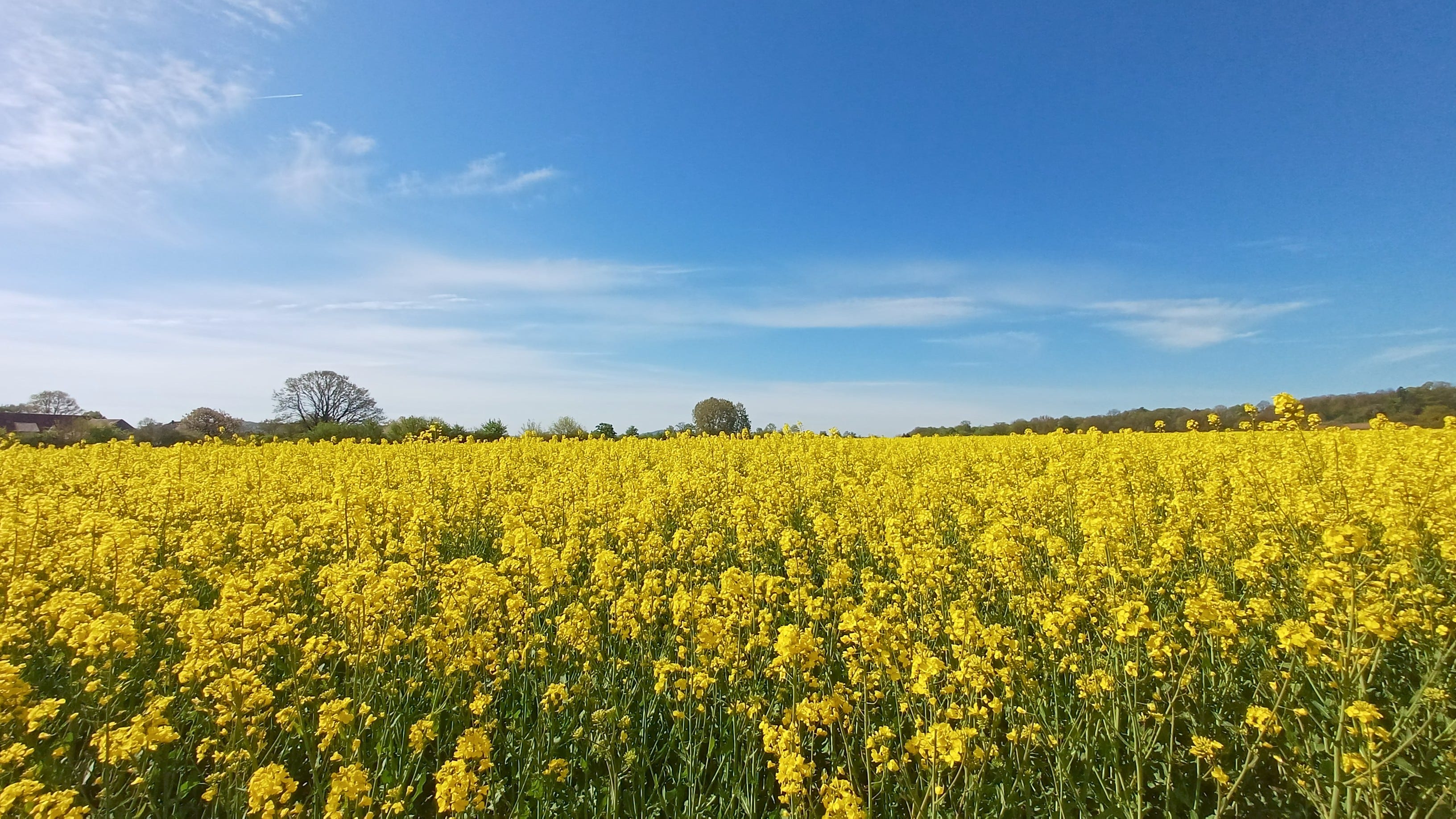
In this episode, I offer a short, off-the-cuff summary of the central theme of the ontology that I have developing to support my project of reviving intellectual intuition. Intellectual intuition is the main concern of my latest book, Reviving Intellectual Intuition: Contemplative Philosophies and Being (Bloomsbury, 2025). The fullest flowering of intellectual intuition happens when it’s directed upon Being itself. In this supreme contemplative act, what Heidegger mournfully named “the forgetfulness of Being” (Seinsvergessenheit) is overcome in a vision of Being as unlimited and infinitely endowed with potentials incessantly actualizing themselves. Being imposes virtually no limitations on or obstructions to whatever may arise from its infinite capacity. This is what I call “the generosity of Being,” which is also the title of a book that I am writing and plan on publishing after my current book project. The only limitation on what may arise is due to the character of Being itself as nondual and singular (advaita). Because Being is unbreakable, nothing negative and destructive can ultimately thrive. This impulse toward ontological oneness expresses itself on the human level as caring, concern, compassion, justice, and love. Although apparently weaker than their opposites, these attributes of Being cannot be vanquished because the indivisible oneness of Being is inviolable.
Here is an edited transcript of the podcast
The podcast is casual in tone, given that I hopped off my bike near a flowering field to record it. For a deeper dive, see my book on this topic—mentioned above and available through the Amazon link below.
It’s a lovely spring morning here in northern Germany where I’m spending a few months at the Yoga Vidya ashram. It’s the kind of morning when you can’t stay inside, especially after so many weeks of gray and rainy weather. The beauty of a morning like this—the quietness, the coolness of the air, and the sound of chirping birds knowing that spring is here—makes up for all of those other days. It’s really a great morning to be outside, and it’s a shame to spend even a moment inside. I’m on my bike riding around in the hills around the ashram and admiring the beautiful farmland, the blooming flowers, and the golden fields of early spring plantings coming to maturity.
Over the years, my most inspired moments often come when I’m outside. When I’m inside, I feel an enclosure wrapping around me like being in a city, a subway, or inside a car or plane for too many hours. Once I get outside and see the blossoms on the trees and the flowers that are poking up in the spring morning, I start to feel inspired. Many of the poems I’ve written in the last years came to me as inspirations while I was out walking.
As I set out this morning on my bike, I thought about the affairs of the world right now and wondered why the values that many of us as spiritual people live by are only weakly reflected in the external world. Then I stopped to contemplate a vast field filled with the golden blossoms of Brassica napus, a common sight in Germany this time of year. I have watched this spring’s crop grow from small seedlings to plants as high as my chest over the last few weeks. Then a crow cawed and winged happily over the field. This reminded me of the central theme of my last book, Reviving Intellectual Intuition: Contemplative Philosophies and Being (Bloomsbury, 2025). In that book, I try to revive the conscious use of intellectual intuition for contemporary philosophy. It’s mostly unsung or denied, although it’s a cognitive faculty that we use constantly without realizing that we’re doing so. In contemporary Western philosophy, intellectual intuition can sound mysterious, even weird, but that speaks to the poverty and the impoverishment of such philosophies. Nourished for too long on desiccated physicalist ontologies, such philosophizing is unable to reflect on the cognitive instrument—intellectual intuition—without which we cannot know anything.
When I speak about intuition in this context, I’m not merely referring to its everyday meanings of gut feelings and hunches. They’re part of intuition, of course, but, at a higher level, intuition is the cognitive tool through which we recognize a claim as true, valid, or correct. If I see that an argument is valid, it’s because intellectual intuition verifies that the conclusion logically follows from its premises. This is a common instance of intellectual intuition. When I sense the beauty of a field of golden blossoms and become illumined by its magnificence, my mind becomes still in admiration and awe. This is a higher exercise of intellectual intuition. In this inner stillness, I sense that the field and the sky spring from an ontological ground that eludes every attempt of the mind and language to capture it in a neat definition. This is the ultimate expression of intellectual intuition.
In contemporary usage the word intellectual is often negatively contrasted as mere conceptualizing with words like spiritual or feeling. But the way I’m using intellectual goes back to the Latin intellectus, which is a translation of the Greek noēsis. These terms capture more fully what’s meant by intellectual intuition as an immediate apprehension of truth and Being, attended by a sense of sureness, certainty, and a sense of rightness.
Alluded to but untreated at length in my last book is the claim that Being is generous, which is the theme of a book that I am now writing called The Generosity of Being. Naming Being as generous is a poetic metaphor warranted by the intellectual intuition that Being places no limits on the arising of phenomena. The generosity of Being is its non-obstructiveness, which places no roadblocks in the path of the actualization of the infinite array of potentials that is contained in Being’s fullness. As a verbal doctrine, the generosity of Being may appear dry and abstract, but the mystical contemplation of Being as Being overcomes what Heidegger eloquently but melancholically named the “forgetfulness of being” (Seinsvergessenheit).
This forgetfulness pervades most of our everyday activity when people go about their business thinking about their cars, their relationships, their bank accounts, their pensions, their vacations, or, on a more existential level, how they’re going to make ends meet. This everyday thinking, so far removed from the intellectual intuition of being, is an innocent instance of the forgetfulness of being. Almost as innocent and also indicative of the forgetfulness of being is the acceptance without critical scrutiny of the constructed realms of artificial intelligence and technology that we’re all now completely encaged in. We get entangled in them when we fail to reflect on the character of Being as Being on which they are projected as if on a cinema screen. (I am, necessarily, using my phone to record this talk, using AI to generate a transcript, and using Substack to post it.)
Less innocent and more banal is the forgetfulness of Being of people who believe that AI agents are conscious and now suggest that we may have to accord them legal rights as persons. It’s ironic that in a philosophical worldview that often denies consciousness to animals and deflates or denies our consciousness as human beings, there’s a sudden yearning to accord consciousness to AI agents. It’s like freezing your body for a thousand years in the hopes of attaining physical immortality. This banal outlook is a pure expression of Heidegger’s forgetfulness of being.
The forgetfulness of being begins when the word being becomes a word without conceptual depth, lacking poetic energy and failing to grant us ontological zest. Metaphysical zest can only come when we begin consciously to evoke intellectual intuition, which, we all possess but rarely consciously use, as remarked long ago by Plotinus. The intellectual intuition of being is generally developed through meditation, the appreciation of nature, philosophical reflection on Being as Being, the practice of mystical theology in the Christian tradition, yogic meditation, Buddhist meditation, and other meditative practices. These exercises stimulate and awaken our awareness of the mystical capacity of intellectual intuition.
Reflection on the ontological ground that allows a field of blossoming plants to explode in exuberant enthusiasm from Being suggests an answer to why there there’s so much negativity in the world. Because Being contains within itself infinite possibilities, it doesn’t exert forceful refusal over what can emerge from itself. That is the essence of freedom, which is the ontological ground of our own freedom. Whatever is potential in Being can become actual. Because Being doesn’t place ontological roadblocks on what may arise, it’s non-obstructive. This non-obstructiveness is the generosity of Being.
Beautiful realities such as this spring morning emerge from Being, as do other less beautiful events, which raises the question of why Being doesn’t put the brakes on the emergence of negative events and things. To answer, I hold that there is one limit, or brake, on ontological generosity, which is a function of the unbreakable oneness (advaita) of Being. There aren’t two Beings. The oneness of Being explains why we often sense a drive towards harmony and unity. Expressions of the ontological principle of oneness on the human level include compassion, concern, care, and love. When we take care over our relationships and over the world, the nonduality of Being manifests itself directly through our actions. This expression of the oneness of Being in our actions is called dharma in Sanskrit. This ontologically grounded impulse toward nonduality evokes integrity in how we behave in our work and in our care for our families, our friends, and the wider communities of which we’re a part. Because, like Being, we’re free, we can also act against this integrative oneness, against dharma, But there’s a limit on how far we can go. While we can destroy the small worlds of which we’re a part, we can’t destroy the larger universe or Being itself, which always tends, despite all of the diversity it spawns, towards harmony, unification, and oneness.
That’s why Krishna says in the Bhagavad Gita that whenever adharma, or disorder, becomes too intense, he incarnates himself (4.7–8). Stated in general terms, this suggests that when disruption and disharmony become overwhelming, countervailing forces arise to balance them. When it seems that the quest for harmony and goodness is lost, Being’s countervailing attributes of goodness and unity emerge unbowed to rectify the situation, and the oneness of Being reasserts the unbreakable character of Being.
If you liked this post, consider sharing it.
If you haven’t already subscribed, you can here:
More of my writing in written and spoken form is available on Amazon