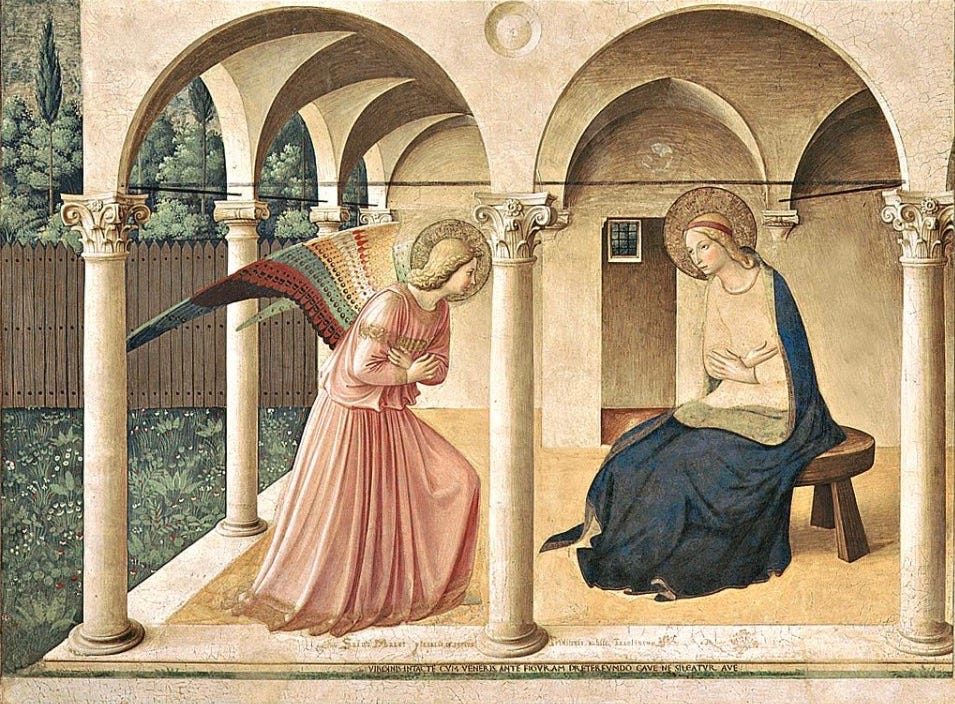
Did you know that for centuries, March 25 was celebrated as New Year’s Day? Until 1752, England and its colonies, including Colonial America, used the Julian Calendar, which marked March 25 as the start of the new calendar year. It was called “Lady Day” because of the angel’s announcement to Mary. So if you were looking at historical records from just 300 years ago, you may see March 24, 1724, followed by March 25, 1725. Strange, right?
Well, in the Old Style calendar, March 25 was the spring equinox, when daylight and darkness are perfectly balanced. Equinox comes from Latin words meaning “equal” and “night.” And then because it’s spring, light progressively grows to diminish or conquer the darkness.
For ancient Jews and Christians, this moment each year had theological significance for how spring symbolized renewal, a new creation. By the third century AD, the early church recognized March 25 as the date of the Annunciation of our Lord Jesus, seeing as how it is 9 months before December 25. So… conception on March 25 and Jesus’s birth on December 25. The early church also observed the crucifixion of Good Friday on March 25. And that was added on top of the Jewish significance of March 25 for marking the creation of the world, the fall of Adam and Eve, and Abraham’s near sacrifice of Isaac.
Now… there is no astronomical evidence to suggest that all of these events literally occurred on March 25. But that’s not the point. Rather, it’s about connecting the moments of God’s unfolding plan of redemption. At the center of all of that is the Annunciation, when the angel Gabriel announces to Mary that she will conceive a son. This is the day that changed everything. At the Annunciation, God’s promise from the beginning, since the creation of the world, is fulfilled in the provision of the promised Savior, God’s very own Son.