I spent the bulk of the 2010s working as a “content creator” online for a travel publication. It was meant to be my dream job — I’d fantasized about being a jetsetting journalist since I was a teenager — but after the 500th time I told someone what I did and they said, “That must be so cool!” I finally realized that 90% of what I was doing was writing horseshit listicles in a desperate bid for the only metric that mattered in that world: internet traffic.
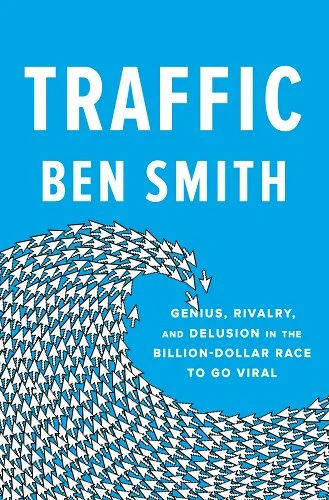
Ben Smith was the editor-in-chief for BuzzFeed’s news division in those heady years, and his recent book, Traffic: Genius, Rivalry, and Delusion in the Billion Dollar Race to Go Viralis an insider’s look in how just a few rich white men managed to totally fuck up the internet, journalism, and global democracy in little more than a decade.
Smith’s account doesn’t present the story this cynically: he clearly has at least some admiration for the two main characters, Gawker Media founder Nick Denton, and HuffPo and BuzzFeed founder Jonah Peretti. But from the perspective of someone who has lived in this world (and who has to deal with the consequences of that atrocious decade), the story he tells is horrifying.
The Two Founders
Denton’s empire was a cynical and combative one: it was the early success of the two businesses, sprawling out from the original sites’ success into a media network that included websites like Jezebel, Lifehacker, Gizmodo, and Deadspin. Denton had a tabloid journalist’s belief that nothing in the lives of the rich and powerful was off limits, including publishing their private nude photos and videos, as well as their revenge porn.
This ethos made the Gawker empire extremely popular, but it also made it powerful enemies: when it outed billionaire venture capitalist (and openly fascist ghoul) Peter Thiel as gay, Thiel vowed revenge. He gave an extravagant bankroll and a high-powered legal team to Hulk Hogan, who managed to sue Gawker Media out of existence for invasion of privacy when it published a sex tape of him cheating on his wife.
Where Denton was a classic H.L. Mencken-style journalist and cynic, Jonah Peretti was more of a Silicon Valley beast. Peretti got his first taste of virality in the early 2000s, when he attempted to personalize his Nike sneakers by having them print “sweatshop” where his name should go. Nike refused, and Peretti forwarded their email exchange to his friends, and it blew up from there.
Peretti continued pulling viral “stunts” for the next several years, but remained an outsider in the New York blog world (at Gawker’s lavish parties, reporters noted the presence of his comedian sister, Chelsea Peretti, but failed to mention him) until he was brought on by Arianna Huffington to help found her website, the Huffington Post, which was designed to be a liberal alternative to the Drudge Report.
Huffington was hopeless at the viral business — she had a lot of famous friends, and she gave column space to people like Larry David, John Cusack, and George Clooney, but shockingly, the Hollywood Elite did not produce enthralling political writing, and the project stagnated until Peretti and his team realized they could drive traffic by manipulating Google’s search engines (figuring out, for example, that at least some people who wanted to know about Heath Ledger would mistakenly search for “Keith Ledger,” and tagging articles about the celebrity as such) and by producing sleazy tabloid articles featuring celebrity sideboob, which would stay off the front page of HuffPo but would drive most of the traffic.
As time went on, Peretti’s focus shifted to his new company, BuzzFeed, which was designed purely to drive traffic, and which would define the early 2010s internet.
The demise of democracy
The most enlightening part of this book is just how clueless the people on the inside were about what they were doing to American democracy, and to journalism in general. I had a somewhat backseat to all of this: in 2010, I worked at an SEO farm where my job was literally just to write bullshit articles based on popular Google Search Terms. You have every right to hate me for polluting the internet with this shit: It was an early form of SEO spam that was driven out of existence when they tweaked their algorithm. It also happened to be the only job I could get writing during the recession.
Later, I worked for a slightly more legitimate website that tried to copy the model of sites like BuzzFeed and Upworthy to drive traffic. We were told that we could write more substantive, meaningful work with the rest of our time, but clickbait ended up cannibalizing the majority of what we did, and our traffic was largely dependent on what Facebook’s algorithm was up to that specific morning. It was clear to us, at the time, that our work was full-blown garbage and that what we were creating was not particularly useful or meaningful to anyone.
Jonah Peretti never seems to have quite understood this. There was something valuable, he figured, in capturing that much attention, but he seems to have had no real driving ethos outside the metric of traffic, which is what he measured BuzzFeed’s success by. It was this ethos that led Smith, in the days after Trump’s election, to publish the spurious Steele Dossier, which claimed the existence of a “golden shower” video that Putin’s government was using to blackmail Trump. This claim, while never proven, was gobbled up by liberals who were grieving their loss, and became a red herring for the next several years. In searching for the tape of hookers peeing on the President, these same liberals utterly ignored Trump’s other, totally provable, conflicts of interest which he refused to divest himself of when he became president.
Smith defends this act under a sort of half-baked “open information” argument, but also acknowledges that the driving reason for publishing the memo that other outlets had passed on (because they failed to verify it) was because it would, for once, give his BuzzFeed News page the type of clicks the site usually only got by publishing kitten photos, quizzes, or confusing pictures of a dress, which some saw as white and gold, and others saw as blue and black.
At the edges of Smith’s story about the chase for clicks is something more sinister: when Peretti was hired to Huffington Post, he was hired with another early internet guru, Andrew Breitbart, who didn’t last long, and instead went on to create a far-right Drudge Report rip-off that would spread misinformation about Barack Obama. When Breitbart died, his job was taken over by Steve Bannon (apparently that particular outlet only hires editors that resemble a waterlogged corpse), who closely studied the work of BuzzFeed, and understood the potential of such an attention capture machine.
Smith and Peretti were clueless about this right-wing resurgence while it’s happening under their nose. Peretti, who was chummy with Mark Zuckerberg and Facebook’s developers, was liberal in his politics, but effectively viewed conservatism as just another identity, like being Italian, or from New Jersey — something that could easily be mined for clicks and shares. Smith seems incredulous when one of his former hires — who he’d had to fire for plagiarism — was invited to Trump’s White House, crowing “the internet is ours,” and is flabbergasted to watch one of his former BuzzFeed colleagues enthusiastically livestreaming the January 6th Capitol Hill attack.
It should not have been a surprise — at some point in the early 2010s, Facebook realized that there was a problem with the way their algorithm treated virality. If something received a lot of likes, it meant that people were likely clicking on the link a lot. If you click on the link, it is taking you away from Facebook’s website. That is bad for their core business, so instead, the began favoring “engagement” over like…