WeatherSaver Pro is the next Professional Standard for Texas Real Estate Agents — the Weather & Intelligence Tools that separate serious agents from part-timers only looking to make pocket change! Are you one of them?
THE GIANT WHO STOOD ALONE
Yesterday you met the villain. Today, meet the one man who ever made him blink.
Peter Aylen ruled the Ottawa River by fear — his Shiners owned the docks, the taverns, and the bridges of 1830s Bytown, and the French-Canadian raftsmen learned to cross the water with their heads down. But there was one name the Shiners said quietly. One man they did not want to meet alone on a dark bridge.
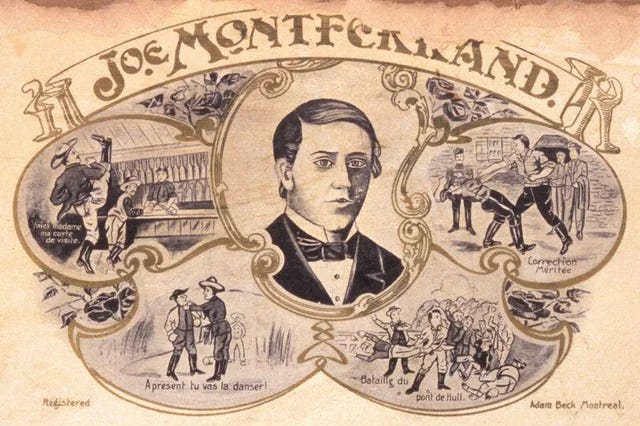
His name was Joseph Montferrand — and the legend of what he did has been told in French, wherever the language is spoken in North America, for nearly two hundred years.
He was built for it from birth. Born Joseph Favre, dit Montferrand, in the St. Lawrence district of Montreal in 1802, he came from a line of men known for their strength — and he grew to 6 foot 4, with blue eyes and fair hair, a true giant in an age when most men were a head shorter. His grandfather had been a soldier in the troops of the Chevalier de Lévis who settled in Montreal after the fall of New France and opened a fencing salon — fighting was, quite literally, in the blood. StatusGatorDictionary of Canadian Biography
He took to the river young. He worked briefly in the fur trade but spent most of his life in the lumber industry along the St. Lawrence and Ottawa River valleys — a voyageur, a raftsman, and a foreman who could out-work and out-fight any man on the water. And he could fight. In 1828, before a huge crowd at Quebec, he defeated a champion of the British military — the strongest the Crown could put in front of him, beaten by a French-Canadian logger. WordpressGoogle
Then came the night that made him immortal.
The Union Bridge — today’s Chaudière Bridge — was the only land link between Hull and Bytown, and it had become the front line of the war between the Irish Shiners and the French Canadians for control of the timber jobs of the Ottawa Valley. In 1829, a group of Shiners estimated at as many as 150 men ambushed Montferrand on that bridge. One man, surrounded, with the Chaudière Falls thundering below. GoogleWikipedia
What the oral tradition says he did next is the stuff of folk legend. He grabbed one Shiner by the feet and, swinging him like a flail, cleared all 150 of them off the bridge — flinging many into the foaming waters below the Chaudière Falls. Whether it happened exactly that way, no one can prove — these feats remain unverified folklore — but it didn’t matter. The story became truth in the hearts of his people. The Shiners had finally met a man their numbers couldn’t break. Canada EHXBytown
And the legends only grew. He was said to have lifted a plough at arm’s length with one hand. And he left a calling card that became his hallmark: leaping so high in a tavern that he stamped the print of his hobnail boot heel on the ceiling. He did it in taverns up and down the Ottawa River — a footprint on the rafters, just to let everyone know Montferrand had been there. No villain ever left a mark like that. HistoricalsocietyottawaGoogle
He used his strength to protect, not to terrorize. In 1832, during a violent Montreal by-election, he routed a gang of ruffians who were attacking his friend, the strongman and city councillor Antoine Voyer. Where Aylen’s men hunted the weak, Montferrand stood in front of them. Google
That’s why he became something more than a fighter. Wilfrid Laurier — a future Prime Minister of Canada — wrote that no name, after that of the great Papineau, had become more popular wherever French was spoken in America, and called him “the most truly Canadien of all Canadiens ever known.” He worked the log drives as a foreman until he retired in 1857, his great body finally worn down by years of pain in his back and joints, and he died in Montreal in 1864. In 2023, Canada formally designated him a National Historic Person. Dictionary of Canadian Biography + 4
Two men, one river. Aylen ruled it by fear and faded into exile. Montferrand fought for his people and became a legend that outlived him by two centuries.
One was the King of the Shiners. The other was the giant who stood alone on the bridge — and won.
📖 Catch up on ALL our gripping stories at weathersaverpro.substack.com — new stories added regularly!
Thanks for listening. If the story of the giant who cleared the bridge gripped you, there's a new one every week — the legends, mysteries, and forgotten characters history left behind. Subscribe free at weathersaverpro dot substack dot com, and the next story lands right in your inbox.
EL GIGANTE QUE RESISTIÓ SOLO
Lo llamaban Peter Aylen, el Rey de los Shiners — hasta que un leñador franco-canadiense llamado Jos Montferrand se enfrentó a 150 de sus hombres en un puente sobre el río Ottawa… y se marchó siendo el único que quedó en pie.
WeatherSaver Pro es el nuevo Estándar Profesional para los Agentes Inmobiliarios de Texas — las Herramientas de Clima e Inteligencia que separan a los agentes serios de los aficionados que solo buscan ganar unas cuantas monedas. ¿Eres uno de ellos?
EL GIGANTE QUE RESISTIÓ SOLO
Ayer conociste al villano. Hoy, conoce al único hombre que alguna vez lo hizo titubear.
Peter Aylen gobernaba el río Ottawa por el miedo — sus Shiners eran dueños de los muelles, las tabernas y los puentes del Bytown de la década de 1830, y los balseros franco-canadienses aprendieron a cruzar el agua con la cabeza gacha. Pero había un nombre que los Shiners pronunciaban en voz baja. Un hombre al que no querían encontrar solos en un puente oscuro.
Su nombre era Joseph Montferrand — y la leyenda de lo que hizo se ha contado en francés, dondequiera que se hable el idioma en Norteamérica, durante casi doscientos años.
Estaba hecho para ello desde el nacimiento. Nacido Joseph Favre, dit Montferrand, en el distrito de San Lorenzo de Montreal en 1802, venía de un linaje de hombres reconocidos por su fuerza — y creció hasta medir 6 pies 4 pulgadas, con ojos azules y cabello rubio, un verdadero gigante en una época en que la mayoría de los hombres eran una cabeza más bajos. Su abuelo había sido un soldado de las tropas del Caballero de Lévis que se estableció en Montreal tras la caída de Nueva Francia y abrió un salón de esgrima — la lucha estaba, literalmente, en la sangre.
Se entregó al río joven. Trabajó brevemente en el comercio de pieles, pero pasó la mayor parte de su vida en la industria maderera a lo largo de los valles del San Lorenzo y el río Ottawa — un voyageur, un balsero y un capataz que podía trabajar y pelear mejor que cualquier hombre en el agua. Y sabía pelear. En 1828, ante una enorme multitud en Quebec, derrotó a un campeón del ejército británico — el más fuerte que la Corona pudo ponerle enfrente, vencido por un leñador franco-canadiense.
Entonces llegó la noche que lo volvió inmortal.
El Puente Union — hoy el Puente Chaudière — era el único enlace terrestre entre Hull y Bytown, y se había convertido en la primera línea de la guerra entre los Shiners irlandeses y los franco-canadienses por el control de los empleos madereros del Valle del Ottawa. En 1829, un grupo de Shiners estimado en hasta 150 hombres emboscó a Montferrand en ese puente. Un solo hombre, rodeado, con las Cataratas Chaudière rugiendo abajo.
Lo que la tradición oral dice que hizo a continuación es material de leyenda popular. Agarró a un Shiner por los pies y, balanceándolo como un mayal, barrió a los 150 del puente — arrojando a muchos a las aguas espumosas bajo las Cataratas Chaudière. Si ocurrió exactamente así, nadie puede probarlo — estas hazañas siguen siendo folclore no verificado — pero no importaba. La historia se volvió verdad en el corazón de su gente. Los Shiners por fin habían encontrado a un hombre al que sus números no podían quebrar.
Y las leyendas solo crecieron. Se decía que levantaba un arado con un solo brazo extendido. Y dejaba una tarjeta de presentación que se convirtió en su sello: saltaba tan alto en una taberna que estampaba la huella del tacón de su bota claveteada en el techo. Lo hacía en tabernas a lo largo de todo el río Ottawa — una huella en las vigas, solo para que todos supieran que Montferrand había estado allí. Ningún villano dejó jamás una marca así.
Usaba su fuerza para proteger, no para aterrorizar. En 1832, durante una violenta elección parcial en Montreal, ahuyentó a una pandilla de rufianes que atacaban a su amigo, el forzudo y concejal Antoine Voyer. Donde los hombres de Aylen cazaban a los débiles, Montferrand se plantaba frente a ellos.
Por eso se convirtió en algo más que un peleador. Wilfrid Laurier — un futuro Primer Ministro de Canadá — escribió que ningún nombre, después del gran Papineau, se había vuelto más popular dondequiera que se hablara francés en América, y lo llamó “el más auténticamente Canadiense de todos los Canadienses que se hayan conocido jamás.” Trabajó en los arreos de troncos como capataz hasta retirarse en 1857, con su gran cuerpo finalmente desgastado por años de dolor en la espalda y las articulaciones, y murió en Montreal en 1864. En 2023, Canadá lo designó oficialmente como Persona Histórica Nacional.
Dos hombres, un río. Aylen lo gobernó por el miedo y se desvaneció en el exilio. Montferrand peleó por su gente y se convirtió en una leyenda que lo sobrevivió por dos siglos.
Uno fue el Rey de los Shiners. El otro fue el gigante que resistió solo en el puente — y venció.
📖 ¡Ponte al día con TODAS nuestras historias fascinantes en weathersaverpro.substack.com — se agregan nuevas historias con regularidad!
Gracias por escuchar. Si la historia del gigante que despejó el puente te atrapó, hay una nueva cada semana — las leyendas, los misterios y los personajes olvidados que la historia dejó atrás. Suscríbete gratis en weathersaverpro punto substack punto com, y la próxima historia llegará directo a tu correo.