Reading this on Library and Archives Canada’s website:
Amid the threats to Canada’s nationhood in recent months and in the global context of social division and eroding democracy, Library and Archives Canada (LAC) has a unique and critical role to play in asserting Canada’s identity, promoting national unity and championing democratic principles.
then seeing this further down the page:
LAC is planning the following spending reductions:
2026-27: $11.1 million
2027-28: $14.7 million
2028-29: $22.1 million
It is anticipated that these spending reductions will involve a decrease of approximately 161 full-time equivalents by 2028-29. (my italics)
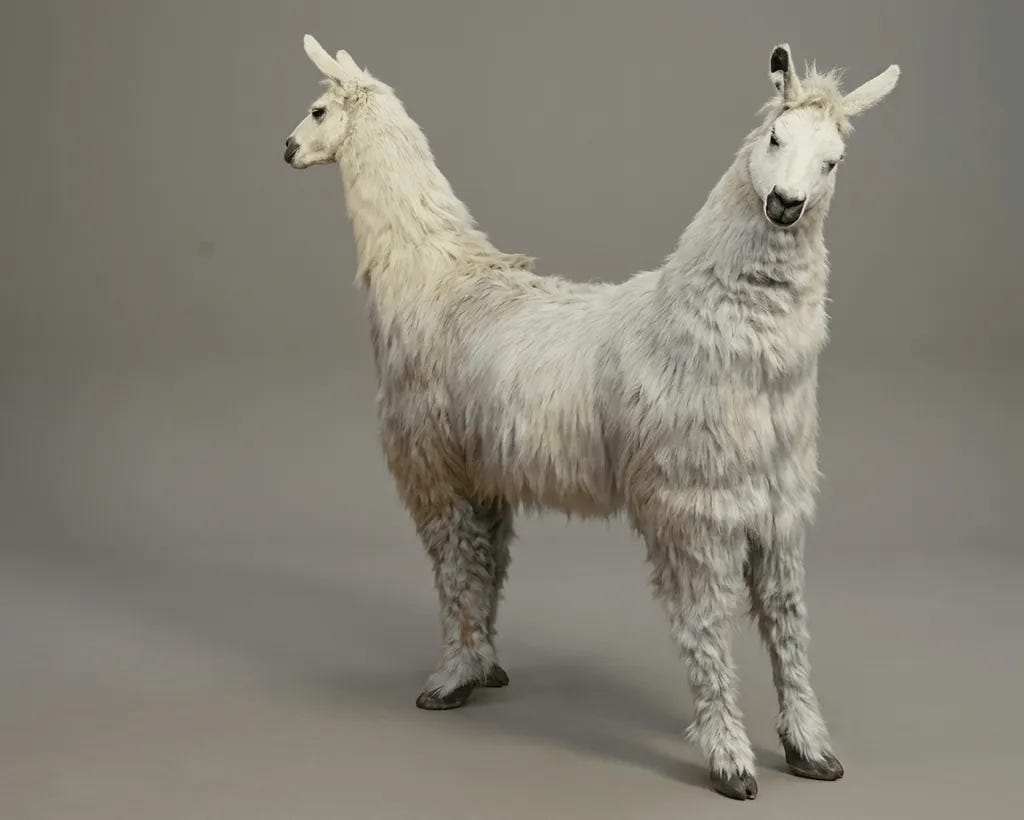
put me in mind of this
How can you assert, promote, or champion anything when your budget is being slashed? How can Canadians - historians, bibliophiles, citizens - understand, learn and write about their own country when they can’t access the historial record in a timely fashion?
If these cuts are for real, then the Carney government is talking out of both sides of its mouth, happier when Canadians don’t look at their own history. This, in fact, is exactly what some of Canada’s top historians are saying.
To get to some kind of truth, I figured the time was right to go back in and talk with Leslie Weir, Canada’s national Librarian and Archivist, in hopes she could set me in the right direction.
Leslie was appointed head of LAC in 2019 (we first talked shortly after her appointment. Listen to that conversation here). Prior to this she was Librarian at the University of Ottawa, from 2003 to 2018.
Thanks for reading Nigel Beale's Biblio File Podcast and Backstory! This post is public so feel free to share and/or re-stack it.
A past president of the Canadian Association of Research Libraries, Leslie is, in addition to her currently duties in Canada, President of the International Federation of Library Associations and Institutions (IFLA), until 2027.
We met at her offices in Ottawa at 395 Wellington Street.
I reference Voltaire briefly during our conversation. Voltaire revelled in pointing out gaps between rhetoric and reality. How, for example, could a church that preached love and forgiveness, at the same time condemn innocent people to be torn limb from limb in the public squares?
I end off the interview with three quotes from him:
“It’s dangerous to be right in matters on which the established authorities are wrong”
“ To the living we owe respect, but to the dead we owe only the truth.”
“Doubt is not a pleasant condition, but certainty is absurd.”
Here’s another to end off this introduction:
“Those who can make you believe absurdities can make you commit atrocities.”
Nigel Beale's Biblio File Podcast and Backstory is a reader-supported publication. To receive new posts and support my work, consider becoming a free or paid subscriber.