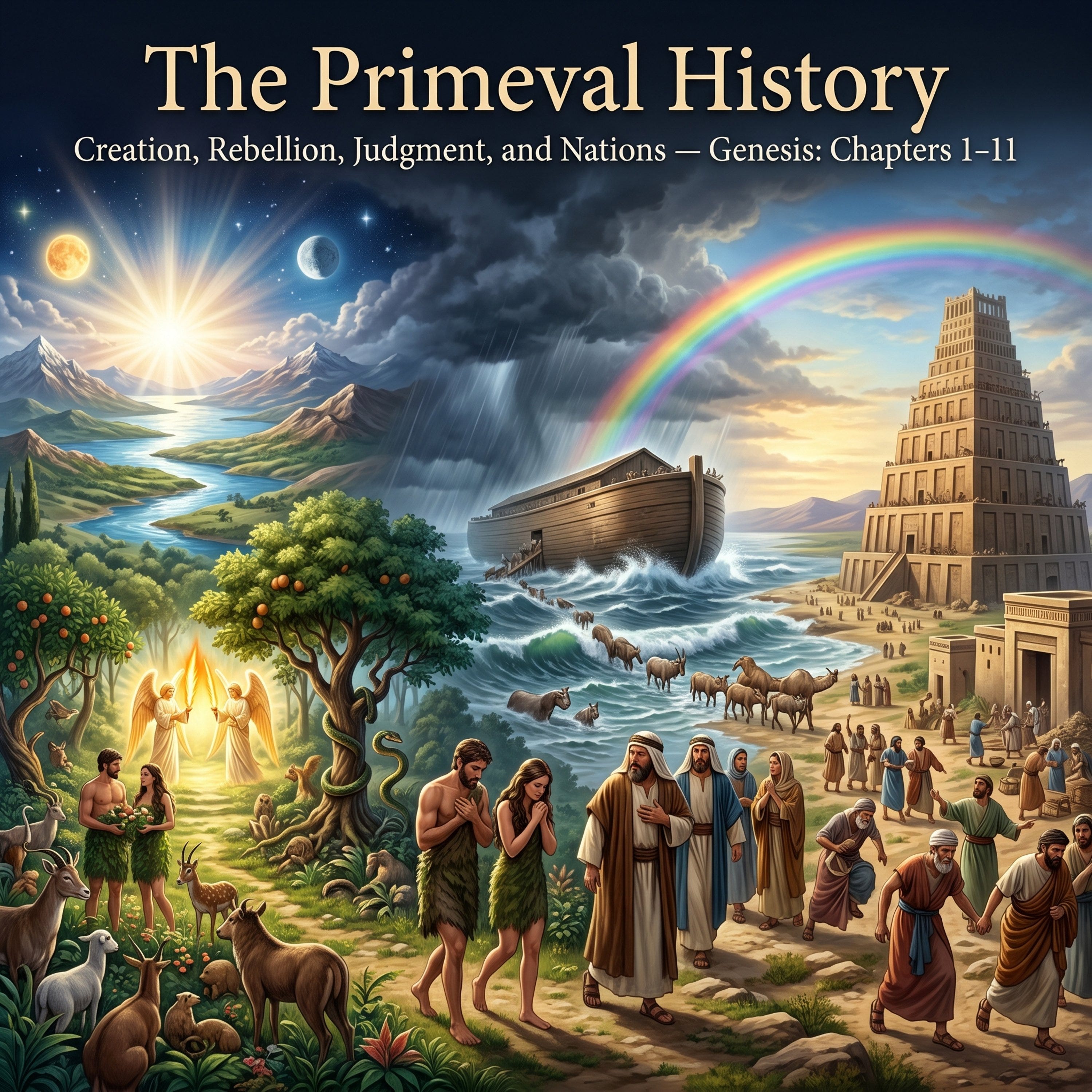
In the ancient world, humanity lived under the weight of a terrifying pantheon of gods, each demanding appeasement and offering little in return. Into this chaos, the first 11 chapters of Genesis introduced a radical new vision of reality—one of order, purpose, and human dignity. This episode of "Wisdom for the Present" invites you to step into that ancient world and discover how these foundational texts continue to challenge and inspire us today.
The hosts begin by painting a vivid picture of the ancient Near Eastern mindset, where humans were seen as mere pawns in a cosmic war. Against this backdrop, Genesis offers a revolutionary narrative: a single, intentional Creator who speaks the universe into existence. This Creator demotes the feared sun and moon gods to mere celestial clocks, liberating humanity from the tyranny of fear.
The episode delves into the poetic structure of Genesis 1, revealing a masterpiece of logical progression that transforms chaos into a habitable world. The text's use of "phenomenal language" is explored, showing how it communicates profound truths within the limitations of ancient understanding. The hosts draw parallels to modern life, urging listeners to discern enduring wisdom from ancient cosmology.
As the narrative unfolds, the focus shifts to the human condition. The anatomy of temptation in Genesis 3 is dissected, revealing timeless psychological insights into our own self-sabotage. The blame-shifting of Adam and Eve becomes a mirror for our own tendencies to evade responsibility.
The story of Cain and Abel introduces the concept of sin as a predatory beast, crouching at the door, waiting to pounce. This vivid imagery underscores the human capacity for choice and the responsibility to master our impulses.
The genealogy and the enigmatic Nephilim of Genesis 6 are reinterpreted as critiques of ancient tyrants and the relentless drumbeat of mortality. The episode challenges listeners to see these passages not as historical puzzles but as profound theological statements about the human trajectory.
The flood narrative is reimagined as a cosmic decreation, a divine reset driven by heartbreak, not annoyance. The covenant of the rainbow emerges as a promise of restraint and a commitment to humanity's flawed reality.
Finally, the Tower of Babel is unveiled as a cautionary tale against monoculture and totalitarianism. The scattering of languages is reframed as a merciful act that preserves diversity and prevents tyranny.
In This Episode
* How Genesis subverts ancient Near Eastern cosmology with a vision of order and purpose
* The poetic structure of Genesis 1 as a response to chaos
* The enduring wisdom of "phenomenal language" in ancient texts
* The anatomy of temptation and the psychology of blame in Genesis 3
* Sin as a predatory beast and the human capacity for choice in Genesis 4
* The genealogy and Nephilim as critiques of ancient power structures
* The flood as a cosmic decreation and the covenant of the rainbow
* The Tower of Babel as a warning against monoculture and totalitarianism
* The scattering of languages as a merciful act preserving diversity
Practical Reflection
1. Where in your life are you shifting blame instead of taking responsibility?2. How do you handle your anger and the temptation to seek disproportionate revenge?3. Are you building a "tower" in your life out of fear of the unknown, and how can you embrace diverse perspectives instead?
Suggested Substack Excerpt
Genesis offers a radical alternative to the chaos of the ancient world, proposing an ordered universe governed by a benevolent Creator. This episode explores how these ancient texts challenge modern assumptions about power, control, and human dignity, urging us to embrace diversity and accountability.
AI Disclosure
This episode was created using Google NotebookLM Audio Overview, based on human-curated source material, structured guidance, and editorial review. AI is used as a tool for clarity and delivery, not as a replacement for thoughtful study or engagement with the original texts.
Copyright
© 2026 Wisdom for the Present / Kamashcu Production Studios. All rights reserved.