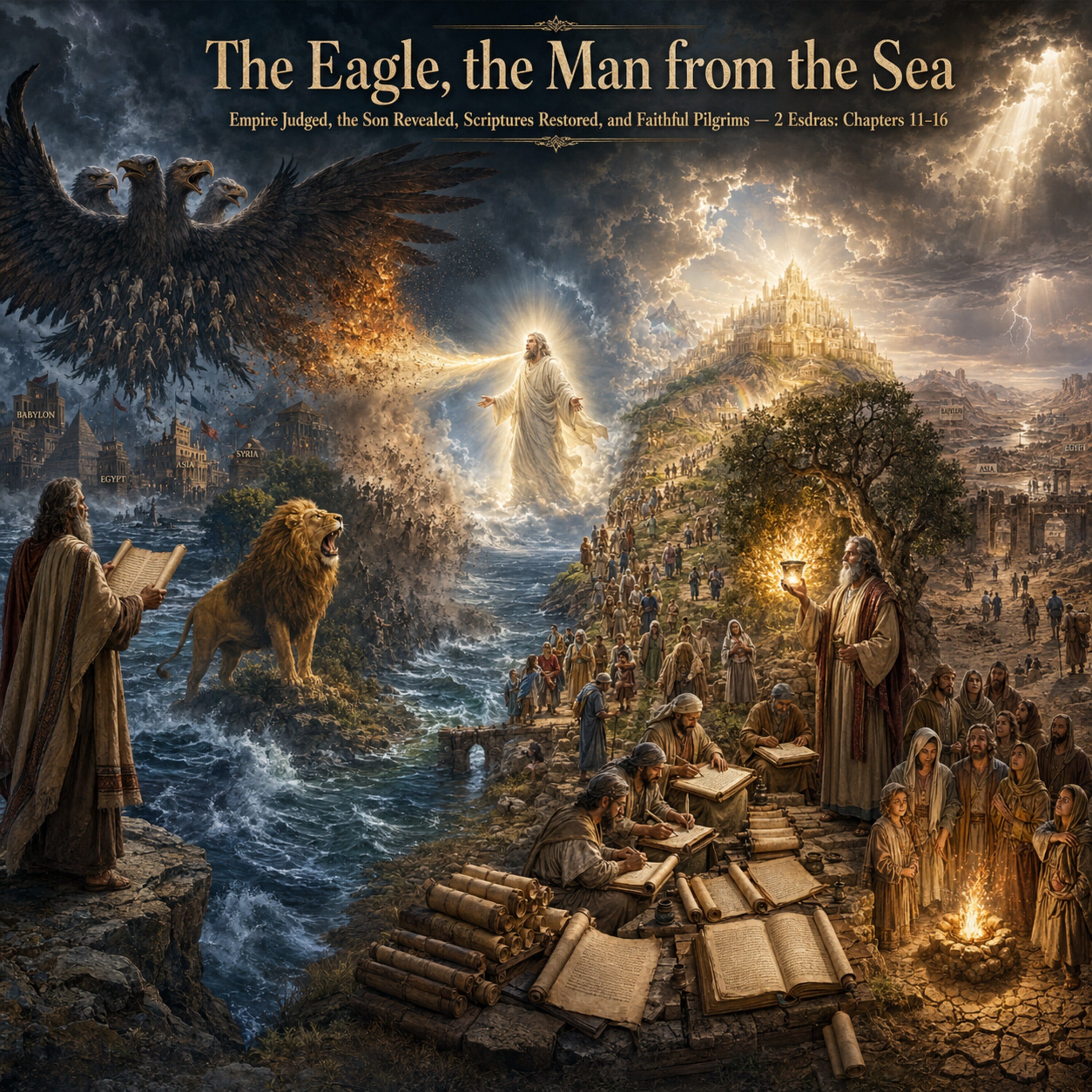
In the aftermath of devastation, how does one find hope? This episode of “Wisdom for the Present” takes you through the haunting and vivid imagery of Two Esdras, chapters eleven through sixteen, a text born from the ashes of Jerusalem’s destruction in 70 AD. Imagine standing amidst ruins, your cultural and spiritual center obliterated, and facing the might of the Roman Empire. This ancient text serves as a survival guide for such a world-shattering trauma, offering profound insights into power, truth, and resilience.
The episode opens with the vision of a monstrous eagle, a symbol of Rome’s oppressive might, and a lion that speaks truth to power, illustrating the finite nature of earthly empires. As we delve deeper, the narrative shifts to a man from the sea, who conquers chaos not with weapons, but with the breath of truth. This is a radical redefinition of power, challenging us to trust in the enduring strength of truth over brute force.
In a world drowning in information yet starving for wisdom, the episode explores the necessity of stepping away from the noise to access deeper understanding. Through the story of Ezra and the hidden books, we learn the importance of readiness and preparation in handling profound truths.
Finally, amidst the chaos of collapsing systems, the text calls us to adopt a pilgrim mindset—engaging with the world without letting it own us. This detachment is not apathy, but a liberating recognition of our transient journey through life.
In This Episode
* The terrifying vision of the eagle and the lion, and what it reveals about the nature of power and justice
* How the imagery of the man from the sea challenges our understanding of conflict and truth
* The historical context of Two Esdras and its relevance to modern systemic oppression
* The significance of the seventy hidden books and the wisdom of readiness
* The pilgrim mindset as a response to economic and political instability
* The psychological survival mechanisms embedded in apocalyptic literature
* The synthesis of cultural myths in ancient Jewish texts
* How to cultivate a quiet space for wisdom in an age of information overload
* The power of radical detachment and its application in today’s world
* The ultimate question of our journey’s destination as modern pilgrims
Practical Reflection
* Where in your life are you allowing systemic forces to dictate your morality or sense of worth?
* In what conflicts are you tempted to match aggression with aggression, rather than trusting in the power of truth?
* What specific practice can you adopt to create a quiet space for deeper understanding and wisdom?
Suggested Substack Excerpt
In the aftermath of Jerusalem’s destruction, Two Esdras offers a survival guide for enduring trauma and oppressive power. This episode explores the text’s vivid imagery and profound insights, challenging us to trust in truth over force and adopt a pilgrim mindset amidst modern chaos.
AI Disclosure
This episode was created using Google NotebookLM Audio Overview, based on human-curated source material, structured guidance, and editorial review. AI is used as a tool for clarity and delivery, not as a replacement for thoughtful study or engagement with the original texts.
Copyright
© 2026 Wisdom for the Present / Kamashcu Production Studios. All rights reserved.