This is a free preview of a paid episode. To hear more, visit uncompressedintel.substack.com
While Wall Street pumps unsustainable multiples, the physical infrastructure underneath the cloud is cracking under regulatory, liquidity, and resource constraints.
This is the tracking data for Friday, July 3, 2026.
We are closing out the operational week with the single most critical structural reality check of the year. If you are still running your enterprise based on the comfortable consensus that Wall Street’s current tech valuations are justified by permanent, supernormal profit margins, you are flying directly into a massive visibility trap. The math propping up the software meta has just hit an absolute physical wall.
I. The Macro Reality: The Artificial Multiple & The Local Top
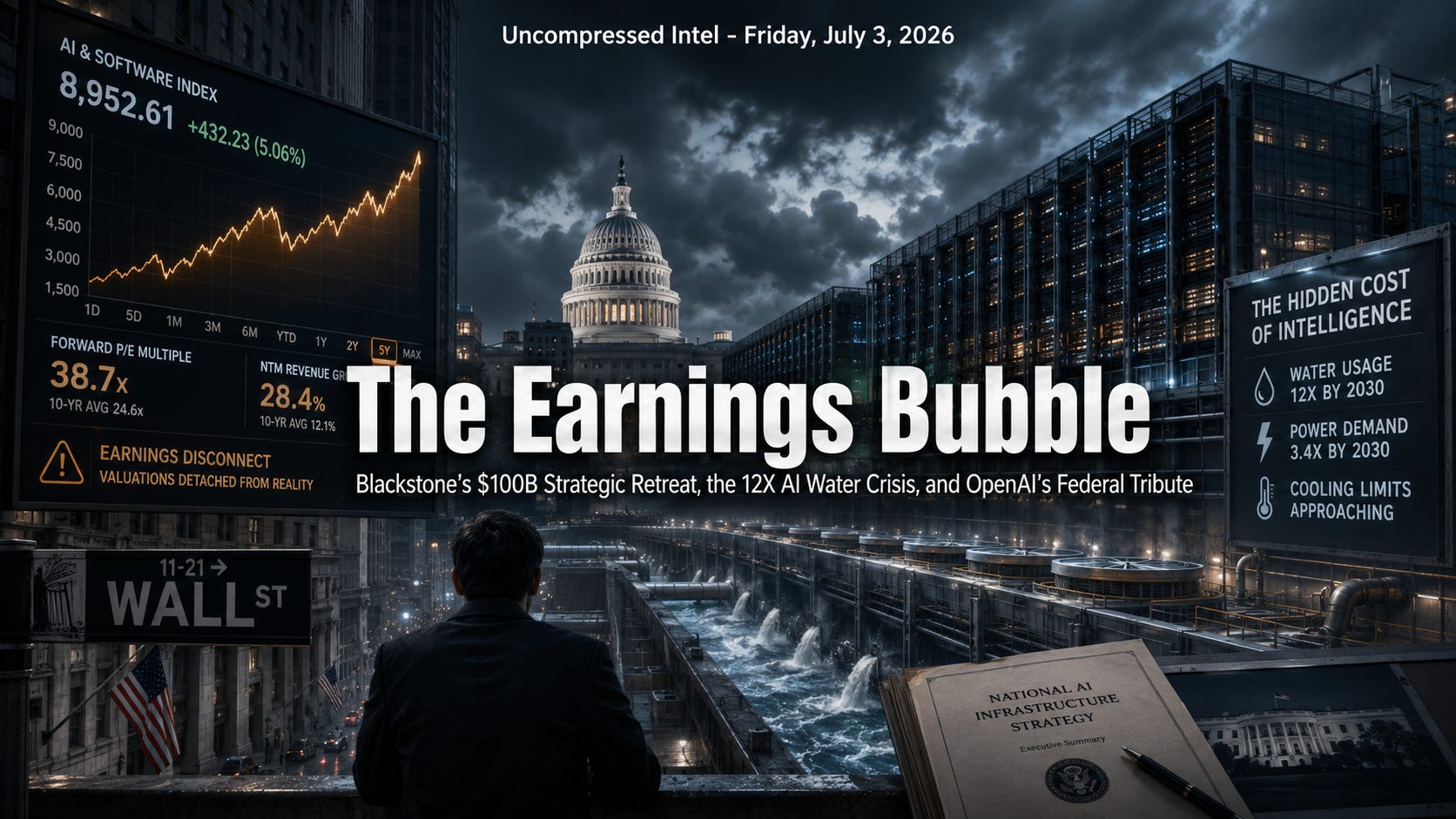
Look at the tracking data crossing the global desk. Wall Street analysts have been aggressively pumping corporate profit forecasts at the fastest rate since the post-pandemic recovery, projecting a massive 25% surge in S&P 500 earnings over the coming year. This hyper-optimism is the only mechanism keeping forward price-to-earnings multiples looking artificially controlled.
But just as the second-quarter earnings season opens, elite global asset allocators at GMO and UBS are sounding an immediate red alert. They are explicitly calling this an “earnings bubble,” warning that the market has zero margin of safety for the looming realization that these supernormal margins are completely unsustainable due to skyrocketing infrastructure costs.
At the exact same time, the world’s top central bankers and economists gathered at the European Central Bank’s annual symposium in Sintra, Portugal, are panicking over dual-sided leverage. The IMF is warning that leverage on both the borrower side and the investor side is actively threatening global financial stability. The Bank for International Settlements has directly stated that this AI spending surge risks going into reverse, tipping over-allocated economies straight into recession.
Look at how the smartest macro money is positioning for the hangover. Michael Burry—the man who called the 2008 financial crisis—just massively expanded his short bets, taking aim straight at Nvidia, Tesla, Caterpillar, and the semiconductor SOXX ETF. Burry explicitly cited South Korea’s newly announced $500 billion chip hub as the definitive market meme of “buying the local top,” declaring it the beginning of the end.
He is being proven right in real time. A massive liquidity collapse is ripping through Korean markets, with foreign investors dumping a staggering $30 billion in equities in June alone, driven by indexing concentration limits and massive short-term commercial paper issuances by local securities houses to fund leveraged single-stock products.