This is a free preview of a paid episode. To hear more, visit uncompressedintel.substack.com
Why the world’s largest cloud landlords are abandoning public utilities to secure physical baseline power, and how this is driving the rise of grid-forming architecture.
This is the tracking data for Thursday, June 25, 2026.
We are tracking a massive structural re-baselining of the global energy grid this morning. To truly understand the sheer volume of the compute drain hitting our infrastructure right now, you have to look past the modern tech ecosystem entirely and look back at history.
I. The Macro Shift: The “Air Conditioning” Inflection
The last time the planet experienced a synchronized, civilization-level energy draw of this magnitude was in the mid-twentieth century, when residential air conditioning became accessible to the masses.
When mass cooling went mainstream, it didn’t just increase energy demand—it completely warped the seasonal load profiles of entire national grids. It forced an immediate, multi-decade structural buildout of baseline fossil and nuclear power plants just to keep the lights on.
AI is doing the exact same thing today, but on a hyper-compressed timeline. This is no longer a regional peak-load problem—it is a 24/7/365 structural drain. And the world’s largest cloud landlords have officially given up on legacy public utility networks to survive it.
A massive, multi-billion-dollar validation point just hit the wire. Chevron and Microsoft have officially signed an off-grid alliance code-named Project Kilby.
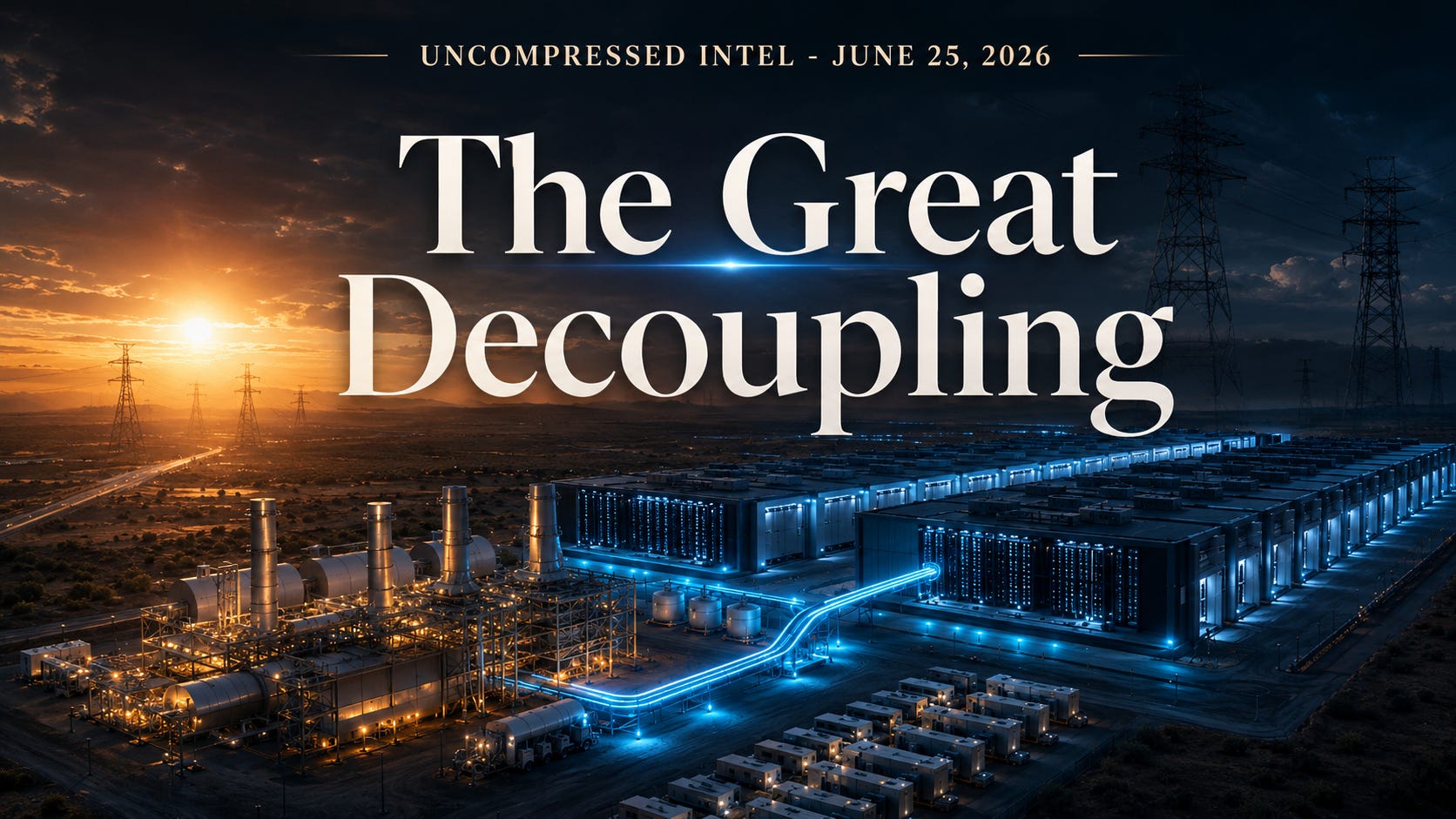
Chevron is constructing a dedicated, 2.67-gigawatt gas-fired power generation facility in West Texas. The critical data coordinate is this: this plant will never touch the public utility grid. It is being wired directly and exclusively into a brand-new Microsoft hyperscale data center footprint in Pecos, Texas.
Tech giants are completely decoupling from public infrastructure to secure their baseline power, similar to how massive industrial factories of the early 20th century built their own dedicated coal plants.