Why your officer feels distant, irritable, or shut down — and what's really going on.
Secondary traumatic stress can quietly reshape a law enforcement relationship, but you don't have to navigate it without a roadmap.
Short Episode Summary
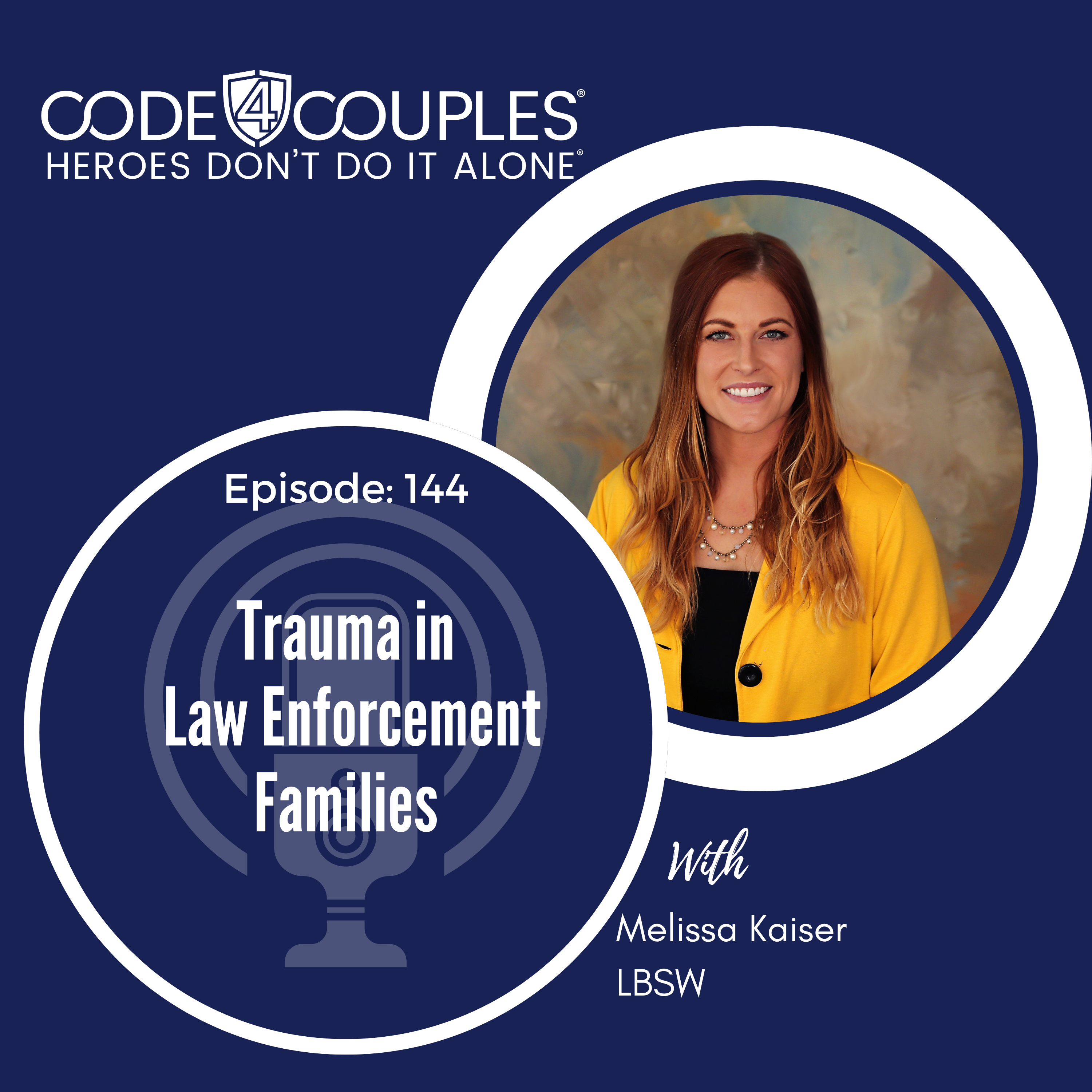
In this episode, Cyndi talks with secondary traumatic stress expert Melissa Kaiser, LCSW to unpack how repeated exposure to trauma affects officers, spouses, and families.
You'll learn:
• The difference between secondary trauma, compassion fatigue, burnout, and moral injury
• How trauma exposure creates emotional distance in relationships
• Signs your nervous system is hitting overload or shutting down
• Why hyperarousal and hypoarousal affect your connection at home
• Practical daily strategies to reset, reconnect, and stay grounded as a couple
Hosted by Cyndi Doyle, licensed professional counselor supervisor, law enforcement spouse, author of Hold the Line, and founder of Code4Couples®, this channel gives first responder families the tools to stay connected, resilient, and Code 4.
📘 Protect your law enforcement relationship with Cyndi's book, Hold the Line →
https://www.amazon.com/Hold-Line-Protecting-Enforcement-Relationship-ebook/dp/B08TPRTY9G#customerReviews
🎤 Bring Cyndi to your agency or event → https://code4couples.com/training/
00:00 Intro
01:00 What is secondary traumatic stress?
04:00 How trauma exposure changes worldview
07:00 The subtle signs spouses miss
10:30 Burnout vs compassion fatigue vs secondary trauma
14:00 Vicarious trauma and emotional withdrawal
18:00 When symptoms show up in the body
22:00 Numbing, avoidance, and negative coping
26:00 Discipline as a wellness strategy
32:00 Sleep, nervous system resets, and lifestyle anchors
37:00 Checking in: What am I like on a good day? On a hard day?
40:00 Mutual empathy inside a police relationship
45:00 How to start recovery and create routines
49:00 Where to find Melissa and additional resources