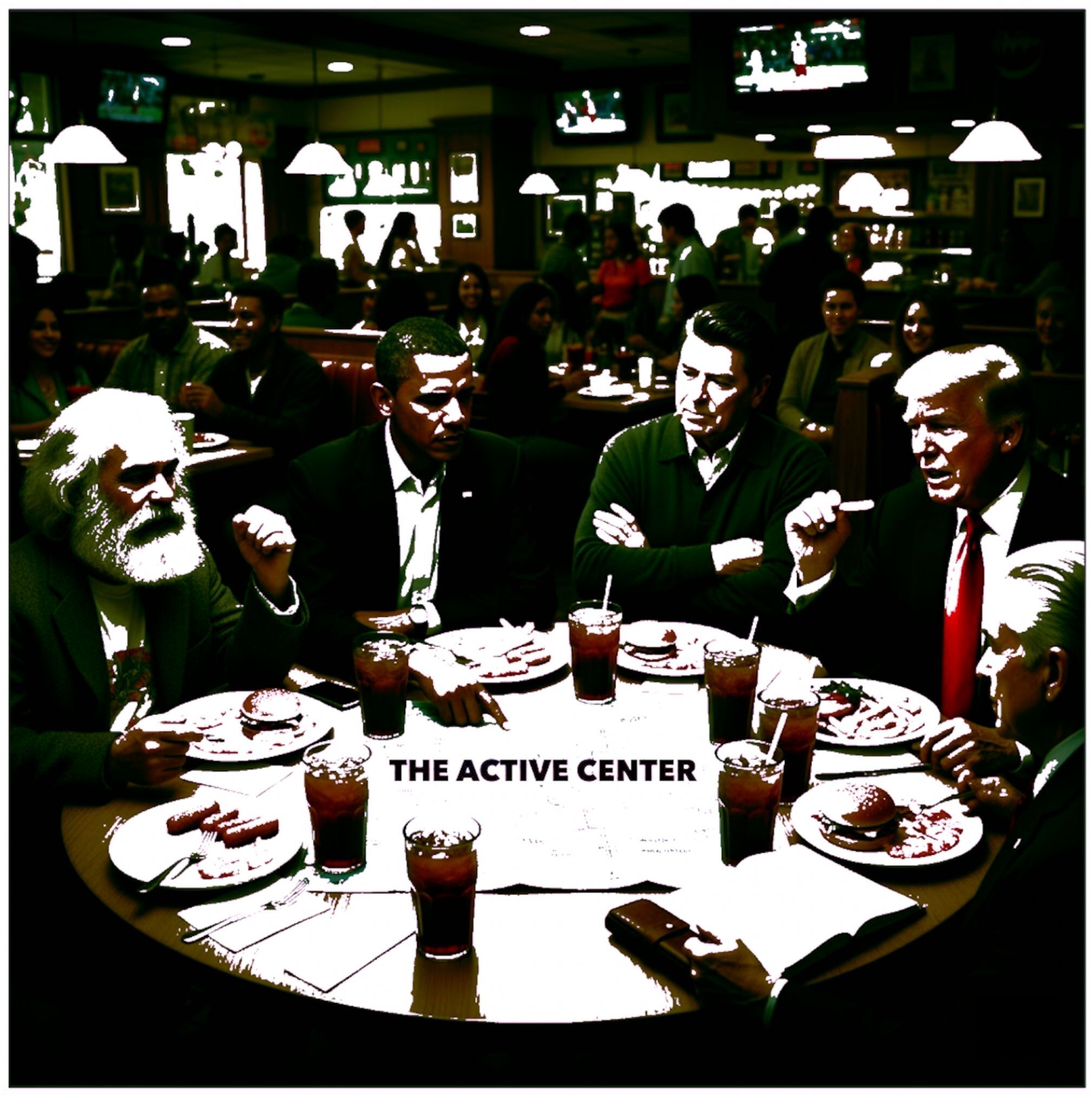
President Donald Trump is a political phenomenon. I can truly say from my own personal experiences from my early days of simply understanding that there was a President of the United States, from Jimmy Carter to Donald Trump, President Donald Trump without any doubt has been the most dynamic subject to observe and study from an academic political science point of view.
The 2026 fiscal year and recent diplomatic breakthroughs offer a real-time laboratory for seeing Donald Trump’s syncretic political identity in action. By examining his 2026 Budget Proposal, the November 2025 Trade Arrangement with China, and his direct equity investments in the tech sector, we can see how his conservative, liberal, populist, opportunist, and even socialist traits are currently shaping the American landscape.
The administration’s 2026 budget request, titled with "America First" branding, is a study in ideological contrast.
The budget reflects deep-seated conservative desires to dismantle the "Administrative State." It proposes an 83.7% cut to the State Department and USAID, shifting foreign policy from "handouts to investments." Additionally, the proposed 15.3% reduction in Department of Education funding serves the long-held conservative goal of "shutting down" the department and returning control to the states.
A central pillar of this conservative agenda is the "Restoring Biological Truth" initiative. Under Executive Order 14168, the administration established a government-wide policy defining "sex" as an immutable biological classification determined at birth based on reproductive biology and genetics. This was further solidified by Executive Order 14201 ("Keeping Men Out of Women's Sports"), which mandates that any educational institution receiving federal funding must reserve female athletic categories and private spaces, such as locker rooms, exclusively for biological females. The Department of Education has been directed to aggressively enforce these standards under Title IX, framing the policy as a defense of "fairness, safety, and the rights of women" against "gender ideology extremism."
While cutting traditional agencies, the budget carves out $500 million for the "Make America Healthy Again" (MAHA) initiative. This program, influenced by Robert F. Kennedy Jr., targets the "corrupt" food and pharmaceutical industries—a populist pivot away from traditional corporate-friendly GOP stances. Meanwhile, a massive $175 billion for Homeland Security frames the border as an "invasion," a core populist rhetorical pillar.
The recent trade deal struck with President Xi Jinping in late 2025 illustrates the "transactional" nature of the Trump presidency.
In early 2025, the administration imposed staggering tariffs that pushed effective rates to their highest levels since the 1940s. This level of government intervention in the free market is a radical departure from traditional "small government" conservatism, utilizing state power to force manufacturing back to the U.S. In a classical sense, this protectionism aligns more with 20th-century pro-labor liberalism than free-market Reaganism.
Furthermore, Trump’s social platform contains "liberal" elements that distinguish him from the religious right. He was the first Republican nominee to wave the Pride Flag on a campaign stage (Greeley, 2016) and has consistently stated that he is "fine" with same-sex marriage, viewing it as settled law. Most significantly, his 2025-2026 stance on reproductive rights has been a major point of contention with his conservative base; he has repeatedly rejected a national abortion ban, instead promoting a policy where the "will of the people" in each state determines the legality of abortion through local voting and legislation—a stance that allows for more liberal reproductive access in "blue" and "purple" states.
By November 2025, however, Trump pivoted. After using "triple-digit" tariff threats to rattle global markets, he signed an agreement in the Republic of Korea to suspend heightened reciprocal tariffs until late 2026. In exchange, he secured immediate, high-visibility wins: China agreed to purchase 25 million metric tons of soybeans annually through 2028 and halt fentanyl precursor exports. This shift from "total trade war" to a "stabilizing deal" demonstrates an opportunist's willingness to prioritize a "win" for his electoral base (farmers) over a rigid, permanent decoupling.
Perhaps the most startling evolution in the Trump administration is its embrace of "Republican Socialism"—the direct ownership of private industry by the federal government.
In August 2025, the administration converted roughly $8.9 billion in previously authorized CHIPS Act grants into a 9.9% equity stake in Intel Corporation. Under this arrangement, the U.S. government became the company's largest shareholder. The deal also included a "golden share" provision, granting the government a non-equity stake with specific veto powers over major corporate decisions, such as leadership changes or the relocation of manufacturing facilities.
Critics, including some within the GOP like Senator Rand Paul, have described this as a step toward a socialist command economy. In such systems, the state—rather than the market—directs the "means of production" toward national goals.
Trait
Application in 2025-2026 Policy
Conservative
Defining sex as an immutable biological binary; Banning biological males from female athletics; Cutting the Dept. of Education.
Liberal
Wielding tariffs; Supporting same-sex marriage; Deferring abortion rights to state-by-state voting.
Populist
The MAHA initiative; Reclassifying the federal workforce (Schedule F) to increase presidential control.
Opportunist
Suspending tariffs on China to secure soybean deals; Shifting trade focus from "structural reform" to "technical wins."
Socialist
Taking a 9.9% equity stake in Intel; Using "Golden Shares" to influence private corporate management.
The Synthesis: A New Hybrid
In early 2026, the administration appears less interested in following the 20th-century definitions of "left" or "right" and more focused on Nationalist Pragmatism. The budget, the China deal, and the nationalization of chip-sector equity suggest a President who is conservative in his view of biology and bureaucracy, liberal in his social views and market intervention, populist in his choice of enemies, and a socialist-style command leader in his view of critical national industry.