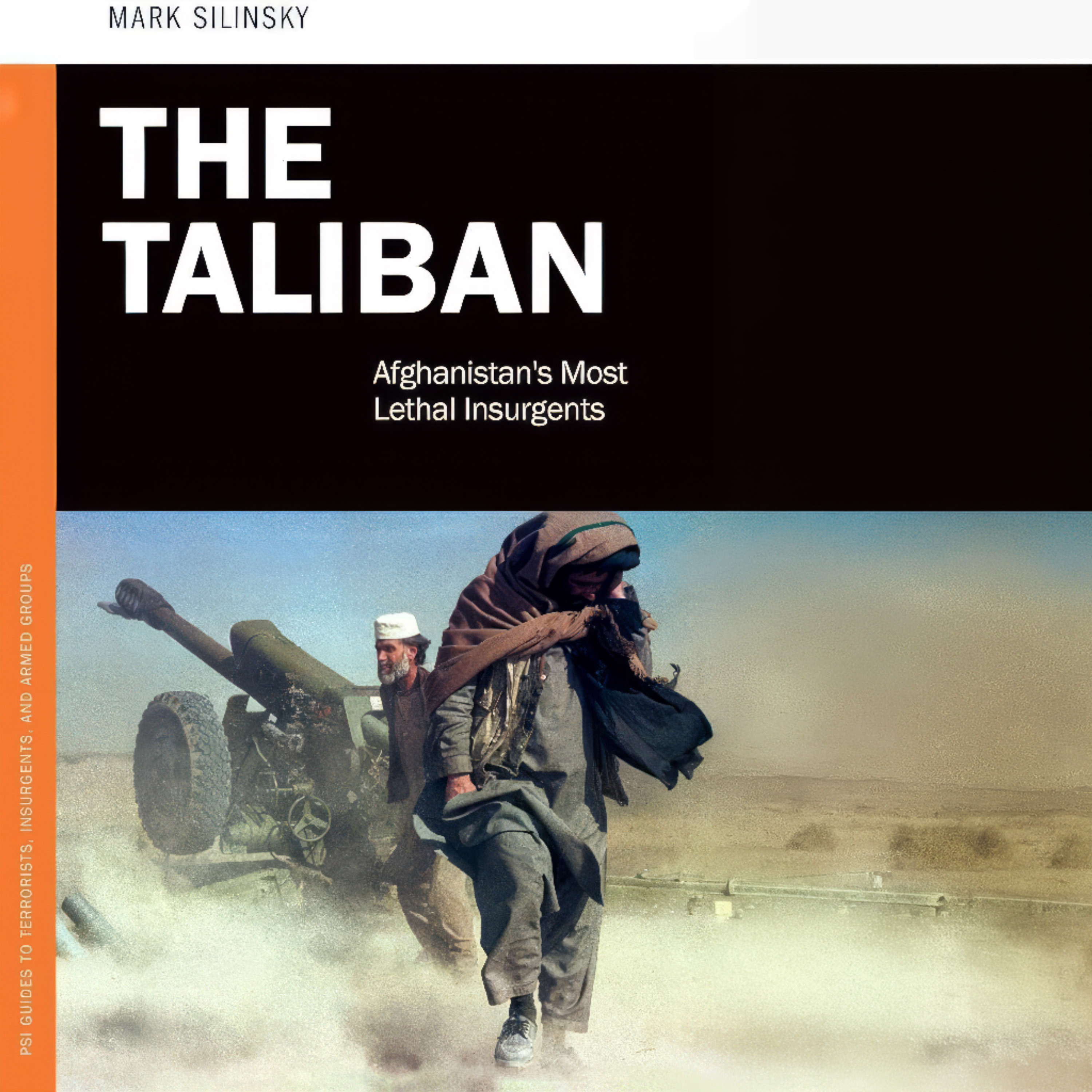
Hello and welcome to a reading from The Taliban – Afghanistan’s Most Lethal Insurgent Group, written by Mark Silinsky and published by Praeger, an imprint of Bloomsbury Publishing in New York, New York. This reading is brought to you by Kensington Security Consulting, where we bring education to national security.
Humor was back in style. Laughing was officially reviled by the Taliban’s mullahs as silly, superfluous, and girlish. But an underground stock of Afghan jokes continued to circulate, of varying quality and cleanliness. Some of the jokes made a public comeback when comedy, including political jokes, was legalized again.
Often, the jokes had a universal quality with a parochial twist. For example, a standard American yarn might begin, “So, a New Yorker, a Texan, and a Californian go into a bar and …” In the same comedic spirit, an Afghan gagman began his routine, “There are five brothers, a Hazara, a Charikari, a Panshiri, a Shiberghani, and a Kandahari,” and then indulged in regional and ethnic stereotypes that sent his audience into side-splitting laughter. Other routines included a popular male comic impersonating a belly dancer.
Yesterday’s woolly-minded mullahs and their martinets were today’s fair game for parody. The now-crushed Taliban became a favored target of acidic humor, and the master of caricature was Mubariz Bidar. Dressed in a long black turban and toting a toy AK-47, the Mubariz Show parodied mullahs howling at boys to shave their Titanic haircuts. In restaurants, on the radio and television, and in shops and homes, Afghans were laughing. Some of it was sweet revenge.
Buzkashi, a game often chaotic, naturally brutal, and always popular in Afghanistan, surged in popularity again after the Taliban retreated. Two horse-mounted, whip-clutching teams vie for possession of a headless goat carcass, which they carry around a flagpole to earn one point. Players thrash their opponents' horses. One enthusiast explained, "We haven't seen this game played in more than 5 years. It's part of our culture, and we're very happy to have it back again." An Englishman described buzkashi as a game “quite like rugby on four legs.”
Beyond laughter, songs, and games, there was time for Afghans to reflect on the religious state of their country and to recall an Islam practiced earlier and differently. Islam rested at the very soul of Afghanistan. Islam had withstood a surge of Buddhist enthusiasm in the 900s, the animism and paganism of the Mongols, and the atheism of the Soviets. Most Afghans were still strongly connected to their religion. Islam was in Afghanistan to stay. But many had become cynical, and in the early post-Taliban months, many mosques were often vacant.
A lachrymose mullah, who served in Kabul for 32 years, opined, “When the Taliban came, they defamed the name of Islam. They beat everyone; they forced people to pray. People became disillusioned with Islam because of the Taliban.” The more optimistic Afghans looked forward to greater religious freedom. As one mullah said, “At the time of the Taliban, most people’s prayers weren’t heartfelt because people were forced to pray. Now, I think people pray for real, because God released them from the Taliban.”
Profile 11: Rapping Sosan - “We Were Kings and Queen in our Own Land”
“Listen to my story! Listen to my pain and suffering!” Rap lyrics of Sosan Firooz_
Perhaps it’s the Taliban’s abhorrence of popular singing, as well as their scorn for free-spirited women, that explains the popularity of Afghanistan’s first notable female rapper, Sosan Firooz. Anyone so detested by Taliban mullahs would draw an audience among Afghan youth. It might be the artistic genre itself, rap music, which is heard in clubs and on city streets around the world. Perhaps her songs’ cross-cultural lyrics bridge Pashtun, Tajik, Uzbek, Hazara, and myriad other ethnic and clan lines. Finally, it might be the 23-year-old, pretty, and plucky singer herself who explains her appeal. Young men and adolescent boys think she is sexy, and girls want to look and sing like her.
Like many Afghans, Sosan is a child of poverty, and her lyrics echo the despair of her early youth. She lived in exile in Iran, where her family had fled to escape the Taliban in 1996, and she hated it there. As paupers, her family washed dishes in restaurants and swept streets, scrounging for food and, according to her songs, enduring the taunts and snickers of Iranians. These are the lyrics of her song "Our Neighbors:"
“In the country of strange our child was abused
Our educated ones became street workers…
We were kings and queens in our own land
But here, we are waiters and dish washers.”
Some of Sosan’s works have a patriotic appeal, which also explains her popularity. Like other rappers, Sosan is angry, and her art laments the despair of the Afghan diaspora. But many of her verses shine with hope for Afghanistan’s tomorrow.
Sosan has her internet video fans, but she also has detractors, including family members. Her uncle no longer speaks to her family because he considers Sosan flirty and frisky. But her father is her biggest fan and left his civil service job to serve as her bodyguard, chauffeur, and secretary.
There are those in the West who admire her sassy creativity, even if they cannot understand the lyrics, which are in Dari. Sosan’s words plead for Afghan girls and women to be treated with equality and dignity. She also condemns narcotics as a national tragedy. Accompanying her songs on a website are pictures of the young ingénue in rap poses and Western grabs. Blog commentary on popular Western sites, such as the Huffington Post, wishes her the best but fears the worst. One comment from Ramshackle, a blogger, anticipates, “There will be a sad and predictable update to this story.”
Thank you for listening to this reading from “The Taliban – Afghanistan’s Most Lethal Insurgent Group.” If you enjoyed it, please consider subscribing and liking it. Nothing in this book represents the official position of any person or agency of the United States government. On behalf of Kensington Security Consulting, thank you for listening.