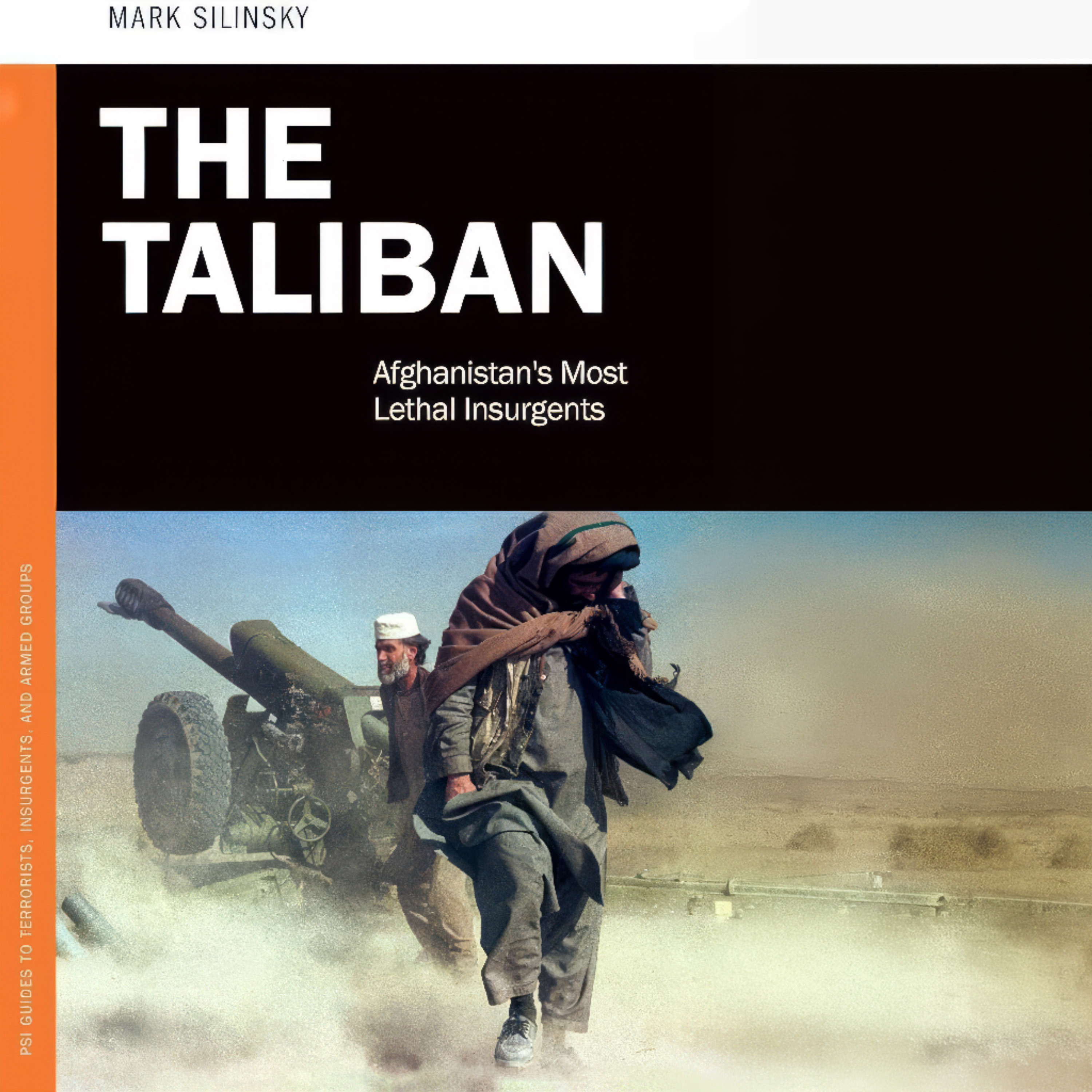
Thank you for listening to this reading from “The Taliban – Afghanistan’s Most Lethal Insurgent Group.” If you enjoyed it, please consider subscribing and liking it. Nothing in this book represents the official position of any person or agency of the United States government. On behalf of Kensington Security Consulting, thank you for listening. The reading looks at efforts to build the Afghan police force.
An al Qaeda Strategist Analyzes the Early fight
Soon after the initial American victories and the Taliban defeats, al Qaeda leaders began to write lessons from the war. One student and practitioner of war was Said al-Adel (see profile 22), a former Egyptian special forces officer and later an al-Qaeda military operations commander. Al-Adel wrote a series of articles on lessons learned in Afghanistan for his Islamist compatriots in Iraq. Through these articles, he evaluated the war in Afghanistan and offered suggestions about how Muslims could defeat Americans.
According to al-Adel, the Taliban were very inventive in provisioning and billeting soldiers and their families. Hot meals were provided to fighting men, often during long battles. Administrative affairs were decentralized, and each staging ground for battle had a mobile kitchen. Al-Adel and others were impressed by the ability to keep Taliban fighters clothed, fed, and sometimes upbeat during battle.
In Kandahar, the Taliban used a zone defense to fend off American attacks. They reformulated the pre-September 2001 defensive tactics to concentrate on protecting sectors. They created three sectors: Airport and Camp Operations Sector, City Operations Sector, and Emergency Force Sector. The Emergency Force, unlike the Airport and Camp units, was mobile. It was well equipped with modern trucks to deploy rapidly in the greater Kandahar area. It had anti-armor, anti-aircraft, and howitzers, and contained the best fighters. These zone defenses delayed but could not possibly prevent the conquest by the fortified Northern Alliance fighters, who were supported by US air power.
For offensive operations, the Taliban would divide into groups of 10, which would work independently during the day and more closely coordinate in night operations. They preferred operating in units of 10 men to avoid concentrating forces en mass, which would give the Coalition Forces opportunity to attack with air forces.
Veteran Taliban would lead these groups of 10 men and engage Coalition Forces in ambushes and direct fire fights. Less-experienced Taliban forces would serve in secondary positions to gain experience and ready themselves as a reserve force. Taliban used sewers as avenues of approach. The Taliban could also quickly evacuate women and children from parts of a city to nearby villages in anticipation of hostilities. Non-combatants could be sheltered or removed from the combat zone when fighting began. When Taliban soldiers were injured, they were often transported to hospitals or field units in Pakistan. Casualties were generally not left in Afghan hospitals. This impressed non-Taliban military observers.
Maintaining effective communications was a constant challenge for the Taliban because of the advanced U.S. electronic capabilities and the Taliban’s relatively primitive systems. Even here, the Taliban showed inventiveness by sending multiple couriers and using different routes during battle. These lessons would impact future operations.
The Fighting Finishes- Temporarily
Unlike other wars, there were few named battles in the Coalition’s destruction of the Taliban in 2001. There were several quasi-suicidal attacks similar to Japanese banzai attacks of the dying days of the War in the Pacific. Fighters, presumed to be Chechens, became suicide bombers, strapping explosives to their bodies and pretending to surrender before blowing themselves up when captured by Northern Alliance soldiers.[1] By most accounts, the Taliban and their allies fought bravely. In Kunduz, a key city that straddles the only main road to Kabul and the south, American B-52 and F-18 bombers were called in to support the Northern Alliance after the Northern Alliance pleaded for air support. North of Kunduz, Chechen and Arab fighters staged a last stand in the village of Dasht-e-Archi, near Afghanistan's border with Tajikistan. The Taliban lost the engagements but impressed their opponents with their steady determination. The Taliban were not through fighting.
For the first time in 5 years, the warlords of the Afghan north celebrated strategic victory. General Mohammed Qasim Fahim, the middle-aged leader of the Northern Alliance, succeeded the recently murdered and still-treasured Ahmed Shah Masood. Like Masood, Fahim was a Tajik and built his reputation battling the Soviets.
General Abdul Rashid Dostum, an eccentric, often garrulous, and large man, had vast experience as a soldier and politician. An Uzbek Muslim, not at all wedded to the puritanical demands of Sharia, Dostum enjoyed whiskey. He left school at 14 and developed political acumen and street cunning during his rise to power among Uzbeks and other northern Afghans. In the civil war of the 1990s, he remained holed up in a stronghold, called the Fort of War, and ran territory in Northern Afghanistan as a personal fiefdom. The former communist became a capitalist when it became clear the Soviet-leaning government in Kabul was moribund.
By Afghan standards, Dostum has a liberal outlook, which is partially explained by his street-wise pragmatism and bargaining with secular leaders in the pre-Taliban, relatively progressive circles. Under Dostum’s quasi-dictatorial, if idiosyncratic, rule in the north, girls and women attended school and worked. However, Dostum was hardly a gentle heart. He would be accused of imprisoning Taliban in shipping containers, in which they slowly died of suffocation and heat exhaustion in 2001.
General Ismail Khan, the "Lion of Herat," a Tajik, was supported by the Iranians. Though known for his corruption, he, like Dostum, was far less misogynistic than the Taliban and gave women some opportunities, though limited. He developed administrative experience as governor in Herat after the Russians left. Khan’s relations with the United States were troubling for many years because of his often- opaque connections to Iran. The Bush administration accused him of allowing Iran to infiltrate weapons, supplies, and operatives into Herat Province. Administration spokesmen claimed that Iranian intelligence and military advisors were active in Herat, to which Khan responded in 2002, “I've got plenty of military experience. I don't need foreign advisers.” There were other Northern Alliance leaders who would assume different positions of influence.
Profile 7: Zardad and Shah: The Pashtun Master and his Human Dog
Non-Taliban warlords could be every bit as bestial as the Taliban. One such case was that of small-time warlord and his prisoner-accomplice. Faryadi Sarwar Zardad, who was motivated by greed and viciousness, not religion or ethnicity, maintained his private house of horrors in a small area outside of Kabul, called Sarobi. Between 1992 and 1996, Zardad controlled a small militia who patrolled roads near Sarobi, on which travelers would pass to visit Kabul or other areas. Zardad would arrest travelers, including international aid workers, and imprison them in his self-made prison. He would beat them until they yielded their money and valuables. Even then, he would often shoot or mutilate some.
As a boy, Zardad gained skill killing and torturing victims. He joined the Mujahedeen when he was 17 and rose to command 2,000 men against the Soviets. He explained his involvement in the anti-Soviet Jihad, “Of course we killed many people, but we never harmed the civilian population.”
But civilians who trespassed in Zardad’s zone of operations in the mid-1990s could certainly be harmed in unimaginably monstrous ways. Zardad liked to hurt people. Among his many tortures was his use of a captive “man-dog,” Abdullah Shah, who attacked prisoners like a wild dog, biting off and swallowing their testicles and chewing and gnawing their flesh. There are different accounts about the relationship between Zardad and Shah. Some witnesses said that Zardad kept Shah, literally, in chains, which Zardad would remove in front of a captive. He would then sick Shah on the hapless and certainly confused prey and watch the spirited performance. Shah was then, once again, enchained and returned to his living pit through a hole in the floor. Others observed a more collegial relationship. It was less of a master-dog relationship than one of a morbid partnership.
Zardad escaped the Taliban’s advance toward Kabul in 1998 and fled to London, where he worked delivering pizza. There are no reports that he tried to harm or bite anyone. But the 41-year-old Pashtun was arrested and tried in the Old Bailey under international war crimes laws in 2005 and sentenced to 20 years in prison. His old partner, Mr. Shah, did not fare as well. In Kabul, he was the first person to receive a death sentence since the fall of the Taliban. Shah’s trial was secretly filmed by Afghan documentarians who made the movie, “Zardad’s Dog.” In 2002, for the enormity of his crimes of killing 20 people including his wife, whom he burnt alive, he was shot in the back of the head in Kabul’s Pul-e-Charkhi prison, with the approval of Hamid Karzai.
Thank you for listening to this reading from “The Taliban – Afghanistan’s Most Lethal Insurgent Group.” If you enjoyed it, please consider subscribing and liking it. Nothing in this book represents the official position of any person or agency of the United States government. On behalf of Kensington Security Consulting, thank you for listening.