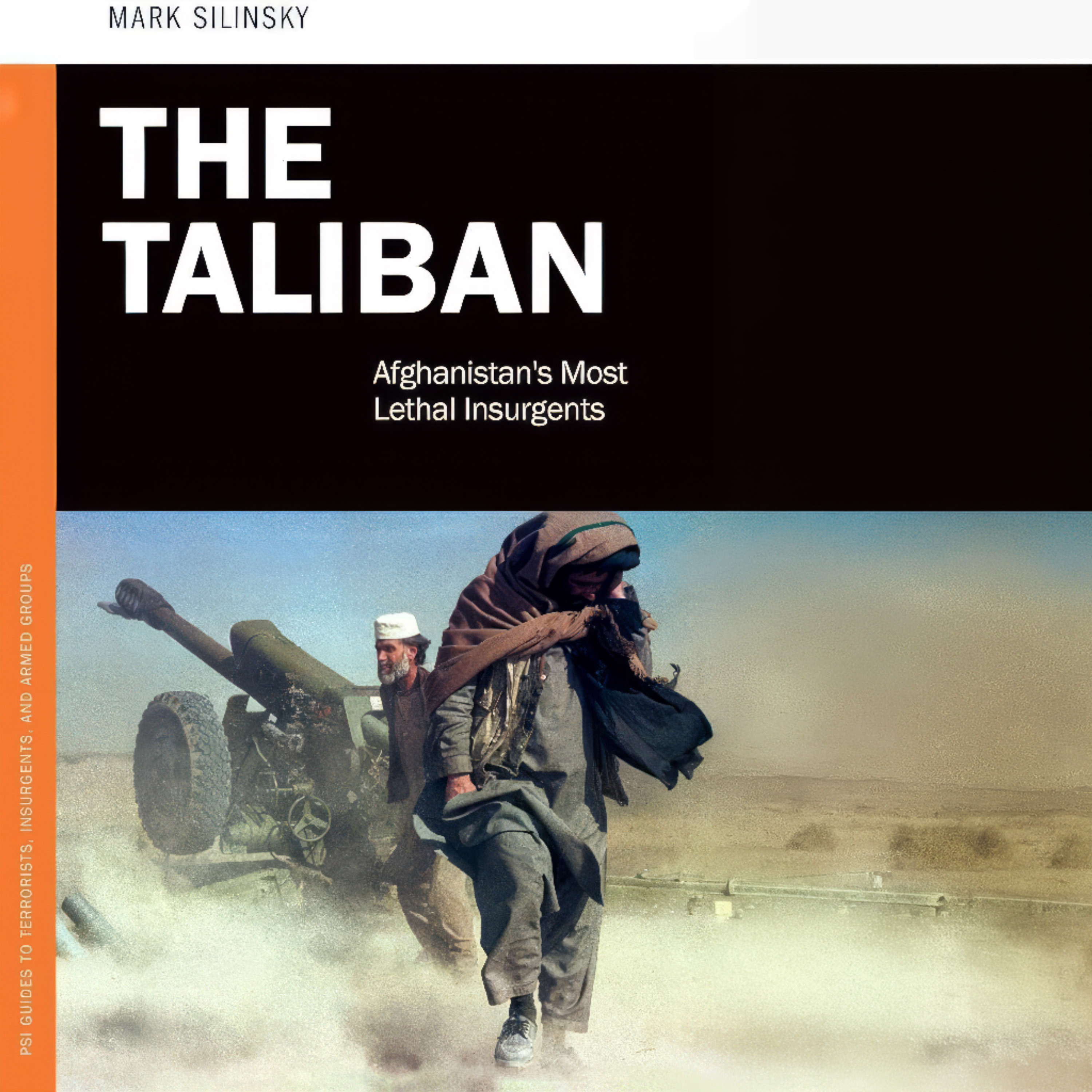
Hello and welcome to a reading from The Taliban – Afghanistan’s Most Lethal Insurgent Group, written by Mark Silinsky and published by Praeger, an imprint of Bloomsbury Publishing in New York, New York. This reading is brought to you by Kensington Security Consulting, where we bring education to national security.
To Build a Civil Service
A quality civil service has been a key goal in developing Afghanistan. In 2001, the victors in Bonn found a hollow civil service. There was a lack of capacity and weak communication between Kabul and outlying provinces. Under the Taliban, public administrators were poorly and infrequently paid; unprofessional, as they were directed by theocrats; and marginally trained in public administration skills. They were also cowed by the mullahs who controlled important decision-making and could end their careers and even their lives very quickly. It was not surprising that post-Taliban donors to Afghanistan were alarmed at the lack of experience, talent, ambition, and general competence in the civil service.
An effective Afghan civil service would spur all other development sectors and increase stability. In larger cities, civil servants would issue construction permits; maintain basic infrastructure, including roads, power stations, water facilities, sanitation, and communications; and perform other civil service duties. This, in turn, would improve health, education, communications, the rule of law, and security. According to the plan, the government's credibility would be boosted if vital services improved, and citizens would become greater stakeholders in reconstruction and development issues. This would weaken the Taliban's attractiveness, and the Taliban knew it.
To Build Communications
Economists in Bonn concluded that improvements in communications would spur growth across all development sectors. The Afghan economy would grow if costs, expenses, and demand levels were communicated broadly. Civil servants in Kabul needed to communicate with counterparts in the provinces for administrative purposes, and the education and health sectors were dependent on harnessing the power of the internet to modernize. Increased security required soldiers to communicate at all levels, particularly for close-support combat operations and for the rule of law.
In a country that is isolated, illiterate, and unstable, the side that can better communicate its agenda and coordinate civil and military operations has a distinct advantage. In addition to telephonic communications, radio communications are particularly important in Afghanistan because of the extraordinarily high level of illiteracy. In some areas, the female illiteracy rate is nearly 99%. Radio is the only way the government can communicate its democratization programs, advise farmers on agricultural issues and families on health issues, and warn of security threats by the Taliban. Strong communications enable villagers to contact the ANA, ANP, or ISAF operators. For this reason, the insurgents have placed a high premium on destroying radio towers and have stepped up their use of radio technology to communicate their political agenda. This battle for the “information space” in Afghanistan continues.
Profile 9: Zakia Zaki and her Voice of Peace
Atop a hill in a lush landscape 70 kilometers north of Kabul, Zakia Zaki and her husband broadcast to 200,000 listeners 4 hours each day. A pioneer woman in Afghan broadcasting, her “Voice of Peace” was initially funded by the French in a Tajik locale in the Panjshir Valley. Its warm voice resonated as an alternative to the Taliban’s cold message of absolute obedience. Her hero was Ahmed Shah Massoud, who helped win the financial support necessary to keep the old equipment running and the staff paid.
When the Coalition invaded in 2001, the U.S. continued funding the station to broadcast local news, women’s issues, music, children’s shows, and household and educational programs. The dark-complexioned, 35-year-old Zakia explained in 2004, “This is the only place where they (women) dare to speak out.” She received warm letters from all over Parwan, Kapisa, and Kabul provinces. An inviting sign on the studio’s door read “Voice of Peace” above a picture of a flying dove and a pretty, smiling woman. But inside the broadcasting facility, there was an ambient dread of Taliban attacks. The night letters came, and so did verbal threats. This did not deter Zakia, who was also a teacher, loved by her students.
In June 2007, as Zakia slept with her 20-month-old infant in her arms in her Kabul home, two Taliban entered and shot her seven times in the head, blowing off half her face. Her 8-year-old son was in the room, too. Immediately, the Taliban called other women journalists, chuckling, boasting, and threatening, “At least people can recognize her from one side of her face. We will shoot your face, and nobody will recognize you.” Another threat came soon, “Daughter of America! We will kill you as we killed her.”
Zaki was neither the first nor the last female broadcaster killed. In 2005, Shaim Rezayee, an Afghan video jockey who spun popular tunes and dressed in jeans, was shot and killed. After Zaki was shot, another newscaster was murdered in her home. Police apprehended six suspects in Zaki's killing, but they were all released. Authorities determined there was not enough evidence to secure a conviction. a conviction.