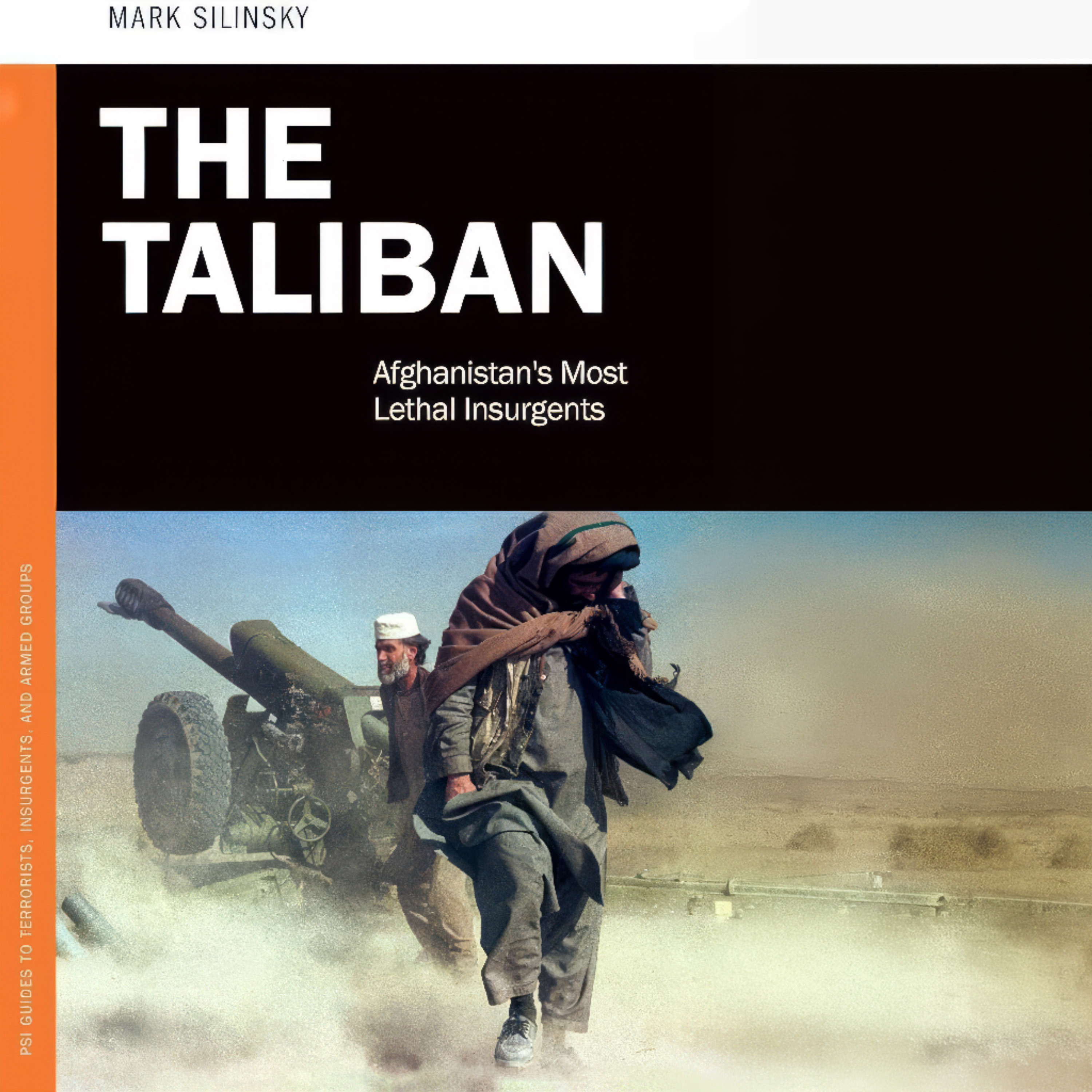
Hello and welcome to a reading from The Taliban – Afghanistan’s Most Lethal Insurgent Group, written by Mark Silinsky and published by Praeger, an imprint of Bloomsbury Publishing in New York, New York. This reading is brought to you by Kensington Security Consulting, where we bring education to national security.
Roadside Bombs and “Pink Mist”
Roadside bombs continue to terrorize soldiers and hinder movement. Like ambushes hidden among the greenery of the Afghan spring, roadside bombs have a devastating psychological impact on Coalition Forces. About 70% of attacks on Coalition Forces are caused by roadside bombs, and their sophistication has increased over the past 11 years. Many bombs are still quite simple but remain powerful, deadly, and difficult to detect.
` Afghanistan was heavily mined during the war against the Soviets. In farms, footpaths, and roads, landmines injured and killed Afghans for generations. The so-called “butterfly bomb" was the weapon, frequently planted in areas suspected of harboring mujahedin, designed to maim insurgents. These munitions could not tell the difference between fighters and civilians and were triggered by the weight of an average person. Hundreds of thousands of these bombs were dropped by helicopters. As they fell, their small wings fluttered, earning them their seemingly gentle nickname.
The dread of landmines became a dramatic theme for journalists and dramatists. In David Edgar's play, Black Tulips, Soviet soldiers are briefed by a sapper on the profusion and lethality of their own landmines, which were retrieved by the mujahedin and used against Soviet armor resourcefully. The mujahedin would place an anti-personnel mine on top of other mines, and the blast power would destroy armor. The Taliban used this tactic effectively against ISAF forces. The tactic still works.
The Soviets left stockpiles of munitions for the Afghans, but there are many other sources of weapons. Today, bombs and bomb components pour into Afghanistan from other countries, namely Pakistan, Iran, and China. British diplomats claimed that advanced anti-aircraft missiles, components for armor-piercing roadside bombs, and land mines were discovered and traced back to Chinese factories. But Pakistan is, by far, the major source of munitions and chemical elements needed to fabricate improvised bombs. Particularly threatening has been the stream of ammonium nitrate. Senator Richard Blumenthal has demanded, "The Pakistanis need to prove that they are stopping and stemming the flow of fertilizer." His is not a lone voice.
Much of the ammonium nitrate is imported from Pakistan, but most of the bombs are fabricated in Afghanistan. In one raid in 2009, Coalition Forces uncovered 225,000 kilograms, or half a million pounds, of ammonium nitrate. This single haul could have powered thousands of bombs. A typical improvised bomb weighs less than 30 kilograms. Seizures of ammonium-nitrate fertilizer in Afghanistan doubled in the first 7 months of 2012 compared to the same period last year in 2011. According to a senior U.S. advisor, “We are sweeping ammonium nitrate fertilizer off the battlefield at historic rates. But the bombs are going up at historic rates, too, and it is directly related. It is a supply issue."
Roadside bombs are very difficult to detect. For this reason, Coalition Forces have experimented with both offensive and defensive tactics and vehicles. Transportation vehicles have become more rugged. Mine-protected troop carriers have been developed to withstand direct hits from roadside bombs, with personnel escaping with relatively minor injuries. Mini-flails have become much more effective than the traditional flails, attached in front of armored anti-mine vehicles. But there is the constant dread by soldiers and Marines on patrol. U.S. Marine Cpl. Matt Bowman explained, “We were on patrol. We ran into an IED. I was the one who got hit by it.” The high school wrestler from Indiana lost both legs above the knee and most of his left hand.